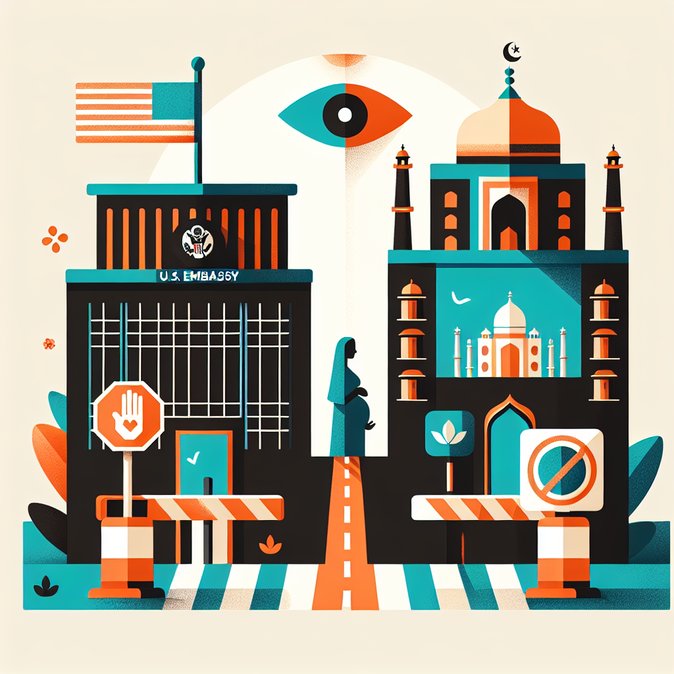
In a fresh advisory issued on 12 December, the U.S. Embassy in India cautioned tourist-visa applicants that misrepresenting pregnancy intent to obtain U.S. citizenship for future children—so-called birth tourism—may lead to visa refusal and multi-year bans. cite
turn8search0
The warning comes alongside the broader social-media vetting rollout and follows cases where consular officers denied B1/B2 visas after detecting maternity-clinic bookings in California.
Under amended rules, consular staff can request hospital reservation proofs, doctor’s letters and travel-insurance details if they suspect a purpose inconsistent with stated “tourism” reasons. Applicants already facing appointment reschedules were told to carry updated documentation or risk losing their slot.
For travellers who want an extra layer of certainty before the interview, VisaHQ’s India platform (https://www.visahq.com/india/) can walk applicants through the ever-shifting U.S. evidentiary demands, offer document pre-checks, and flag any red-flag indicators—helping families avoid costly refusals while still keeping legitimate medical or leisure plans on track.
![U.S. Embassy Warns Indians Against ‘Birth-Tourism’ Plans as Visa Scrutiny Widens]()
Immigration consultants say Indian interest in birth tourism had risen about 20 % in the past two years amid fears of tighter family-reunification quotas. The embassy’s notice is intended to deter brokers advertising guaranteed U.S. passports for newborns at package prices of ₹25-30 lakh. cite turn8search1
Practically, employers should brief staff that a routine family vacation late in pregnancy could trigger extensive questioning at both the visa window and the U.S. port of entry. Corporates sponsoring spouse travel for project managers should ensure medical coverage satisfies the U.S. public-charge rule to avoid inadmissibility findings.
The embassy emphasised that legitimate medical-tourism cases—such as high-risk pregnancies referred to U.S. specialists—remain admissible, but must be substantiated with evidence of ability to pay.
Under amended rules, consular staff can request hospital reservation proofs, doctor’s letters and travel-insurance details if they suspect a purpose inconsistent with stated “tourism” reasons. Applicants already facing appointment reschedules were told to carry updated documentation or risk losing their slot.
For travellers who want an extra layer of certainty before the interview, VisaHQ’s India platform (https://www.visahq.com/india/) can walk applicants through the ever-shifting U.S. evidentiary demands, offer document pre-checks, and flag any red-flag indicators—helping families avoid costly refusals while still keeping legitimate medical or leisure plans on track.

Immigration consultants say Indian interest in birth tourism had risen about 20 % in the past two years amid fears of tighter family-reunification quotas. The embassy’s notice is intended to deter brokers advertising guaranteed U.S. passports for newborns at package prices of ₹25-30 lakh. cite turn8search1
Practically, employers should brief staff that a routine family vacation late in pregnancy could trigger extensive questioning at both the visa window and the U.S. port of entry. Corporates sponsoring spouse travel for project managers should ensure medical coverage satisfies the U.S. public-charge rule to avoid inadmissibility findings.
The embassy emphasised that legitimate medical-tourism cases—such as high-risk pregnancies referred to U.S. specialists—remain admissible, but must be substantiated with evidence of ability to pay.