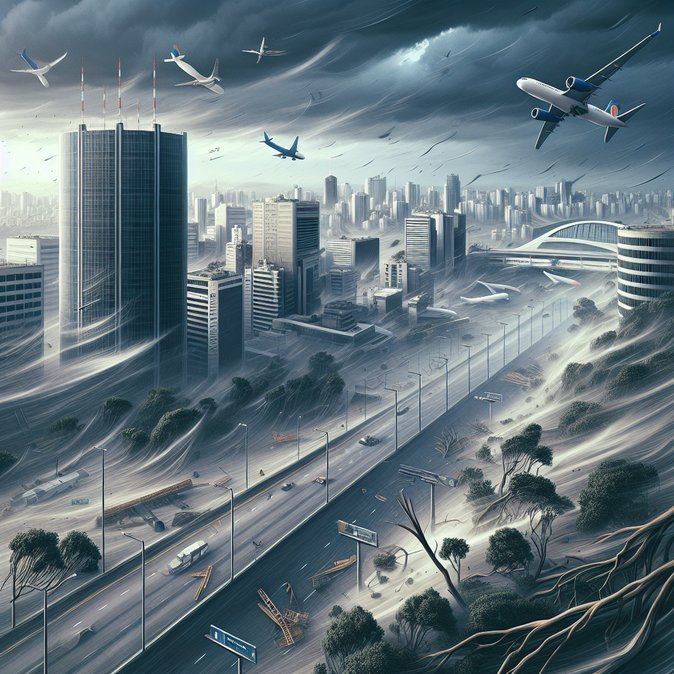
An extratropical cyclone that barrelled across south-eastern Brazil on the evening of 10 December left a trail of downed trees, snapped power lines and travel chaos in Latin America’s largest business hub. By the early hours of 11 December more than 1.4 million customers in Greater São Paulo were without electricity, according to utility Enel, and water-pumping stations failed in several districts.
Airports bore the immediate brunt. Congonhas (CGH)—the country’s busiest shuttle airport for corporate travellers—suspended operations for several hours on Wednesday night and racked up 212 cancellations within 24 hours. International hub Guarulhos (GRU) reported at least 140 delays and 17 cancellations, forcing some long-haul services to divert to Rio de Janeiro and Brasília. Airlines LATAM, GOL and Azul issued flexible re-booking policies, but crew mis-positioning rippled through domestic networks, threatening onward connections to Miami, Lisbon and Santiago.
Amid the scheduling upheaval, travellers should also confirm that their entry documents are current. VisaHQ’s online platform (https://www.visahq.com/brazil/) streamlines Brazilian visa processing, provides real-time application tracking and can arrange courier pick-ups—helping passengers stay focused on rebooking flights and adjusting itineraries instead of paperwork.
![Cyclone Blackout Cancels Nearly 400 Flights in São Paulo, Disrupting Business Travel Nationwide]()
For corporate travel managers, the disruption could not come at a worse time: December is peak season for year-end client visits and intra-company meetings. Travel-risk firms are advising employers to add 48-hour buffers to São Paulo itineraries, confirm hotel back-up power capability, and remind staff of passenger-rights rules under ANAC Resolution 400, which obliges carriers to offer re-accommodation or refunds for delays exceeding four hours.
Logistics providers are also feeling the hit. Cargo terminals at GRU instituted priority lanes for temperature-sensitive freight, while ride-share wait times doubled amid traffic-light outages and detours around the 231 fallen trees. Conference organisers, meanwhile, are activating hybrid participation options until power stabilises.
Meteorologists expect winds to subside by the evening of 12 December, but Enel has not provided a firm restoration timeline—prompting harsh criticism from Mayor Ricardo Nunes and fuelling calls for tighter oversight of foreign-owned utilities. Travellers should therefore brace for continued sporadic cancellations and intermittent blackouts over the weekend.
Airports bore the immediate brunt. Congonhas (CGH)—the country’s busiest shuttle airport for corporate travellers—suspended operations for several hours on Wednesday night and racked up 212 cancellations within 24 hours. International hub Guarulhos (GRU) reported at least 140 delays and 17 cancellations, forcing some long-haul services to divert to Rio de Janeiro and Brasília. Airlines LATAM, GOL and Azul issued flexible re-booking policies, but crew mis-positioning rippled through domestic networks, threatening onward connections to Miami, Lisbon and Santiago.
Amid the scheduling upheaval, travellers should also confirm that their entry documents are current. VisaHQ’s online platform (https://www.visahq.com/brazil/) streamlines Brazilian visa processing, provides real-time application tracking and can arrange courier pick-ups—helping passengers stay focused on rebooking flights and adjusting itineraries instead of paperwork.
For corporate travel managers, the disruption could not come at a worse time: December is peak season for year-end client visits and intra-company meetings. Travel-risk firms are advising employers to add 48-hour buffers to São Paulo itineraries, confirm hotel back-up power capability, and remind staff of passenger-rights rules under ANAC Resolution 400, which obliges carriers to offer re-accommodation or refunds for delays exceeding four hours.
Logistics providers are also feeling the hit. Cargo terminals at GRU instituted priority lanes for temperature-sensitive freight, while ride-share wait times doubled amid traffic-light outages and detours around the 231 fallen trees. Conference organisers, meanwhile, are activating hybrid participation options until power stabilises.
Meteorologists expect winds to subside by the evening of 12 December, but Enel has not provided a firm restoration timeline—prompting harsh criticism from Mayor Ricardo Nunes and fuelling calls for tighter oversight of foreign-owned utilities. Travellers should therefore brace for continued sporadic cancellations and intermittent blackouts over the weekend.