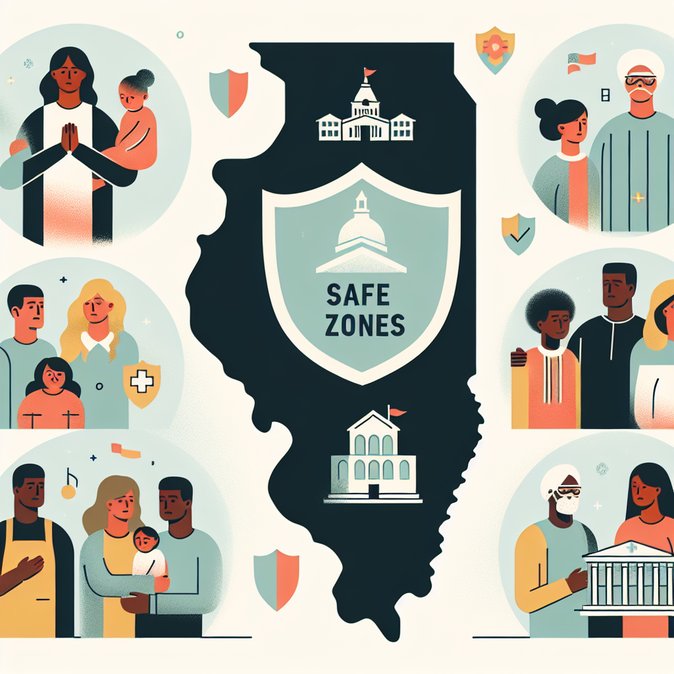
Illinois Governor JB Pritzker signed sweeping legislation on 9 December that bars federal immigration agents from making civil arrests at or near courthouses, hospitals, universities, and day-care centres statewide. The law, which takes effect immediately, also allows individuals to sue federal officers for at least US$10,000 if they are detained in violation of the new rules, and prohibits educational institutions from threatening to reveal a person’s immigration status.
The statute—one of the broadest “sensitive-location” shields in the nation—was crafted amid an uptick in ICE operations dubbed “Operation Midway Blitz,” during which more than 4,000 people were arrested in the Chicago area, many with no serious criminal record. State lawmakers said those arrests sowed fear in immigrant communities and disrupted everything from school attendance to routine medical appointments.
Amid these shifting requirements, companies can lean on VisaHQ’s end-to-end immigration management platform to keep employees compliant. Through its U.S. portal (https://www.visahq.com/united-states/), VisaHQ aggregates federal and state rules, tracks policy changes like Illinois’s sensitive-location shield, and prepares visa and travel documents for assignees—giving HR teams a single dashboard and real-time alerts to navigate America’s patchwork enforcement landscape.
![Illinois enacts strong sanctuary-style protections for immigrants near schools, hospitals and courthouses]()
For corporate mobility planners, the measure offers greater predictability when assigning foreign employees to Illinois, the Midwest’s largest business-travel market. Multinationals with regional headquarters in Chicago and research hubs in Urbana-Champaign can reassure assignees that everyday activities—picking up children, visiting university labs, or attending court for civil matters—will not expose them to surprise immigration detention. Nevertheless, in-house counsel should note that federal law still permits immigration enforcement elsewhere and that the statute may face constitutional challenges under the Supremacy Clause.
The Department of Homeland Security called the law “unconstitutional,” signalling a possible legal battle that could mirror litigation over similar protections in California and New York. Until courts weigh in, companies should train local security teams and HR staff on the law’s liability provisions. Any request by federal officers for access to a protected facility should trigger immediate legal review.
Illinois joins a growing list of states erecting buffers around core civic institutions, reflecting a broader fragmentation of U.S. immigration enforcement. For businesses, the patchwork means relocation policies must be state-specific: what is permissible for ICE in Texas on Monday may be banned in Illinois on Tuesday. The new law underscores the need for updated compliance checklists and traveller briefings whenever employees cross state lines for work.
The statute—one of the broadest “sensitive-location” shields in the nation—was crafted amid an uptick in ICE operations dubbed “Operation Midway Blitz,” during which more than 4,000 people were arrested in the Chicago area, many with no serious criminal record. State lawmakers said those arrests sowed fear in immigrant communities and disrupted everything from school attendance to routine medical appointments.
Amid these shifting requirements, companies can lean on VisaHQ’s end-to-end immigration management platform to keep employees compliant. Through its U.S. portal (https://www.visahq.com/united-states/), VisaHQ aggregates federal and state rules, tracks policy changes like Illinois’s sensitive-location shield, and prepares visa and travel documents for assignees—giving HR teams a single dashboard and real-time alerts to navigate America’s patchwork enforcement landscape.

For corporate mobility planners, the measure offers greater predictability when assigning foreign employees to Illinois, the Midwest’s largest business-travel market. Multinationals with regional headquarters in Chicago and research hubs in Urbana-Champaign can reassure assignees that everyday activities—picking up children, visiting university labs, or attending court for civil matters—will not expose them to surprise immigration detention. Nevertheless, in-house counsel should note that federal law still permits immigration enforcement elsewhere and that the statute may face constitutional challenges under the Supremacy Clause.
The Department of Homeland Security called the law “unconstitutional,” signalling a possible legal battle that could mirror litigation over similar protections in California and New York. Until courts weigh in, companies should train local security teams and HR staff on the law’s liability provisions. Any request by federal officers for access to a protected facility should trigger immediate legal review.
Illinois joins a growing list of states erecting buffers around core civic institutions, reflecting a broader fragmentation of U.S. immigration enforcement. For businesses, the patchwork means relocation policies must be state-specific: what is permissible for ICE in Texas on Monday may be banned in Illinois on Tuesday. The new law underscores the need for updated compliance checklists and traveller briefings whenever employees cross state lines for work.