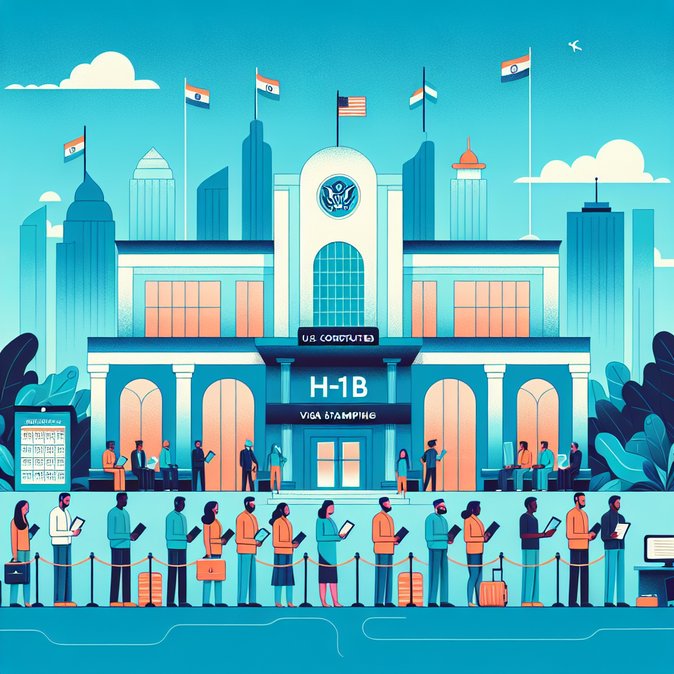
Indian H-1B workers who flew home for year-end vacations are suddenly caught in limbo after the U.S. State Department began mass-rescheduling of visa-stamping appointments at consulates in Delhi, Mumbai, Chennai, Hyderabad and Kolkata. E-mails sent late on 9 December moved interviews that had been scheduled for mid-December all the way to March–May 2026, citing “additional administrative processing.”
Consular officials have confirmed that the disruption is linked to a new rule that will require all work-visa applicants to provide five years of social-media history beginning 15 December 2025. Until the posts are screened by Washington’s continuous-vetting system, no visa can be issued. The U.S. Embassy in India has issued a formal advisory warning that applicants who turn up on their original dates will be denied entry to the compound.
In this context, travelers can benefit from specialized assistance: VisaHQ’s India portal (https://www.visahq.com/india/) offers end-to-end support with appointment scheduling, document preparation and real-time status monitoring, helping applicants stay ahead of sudden policy shifts and identify alternative processing options when consular calendars change without notice.
![U.S. social-media vetting stalls H-1B visa stamping in India, thousands of tech workers stranded]()
Immigration attorneys say the knock-on effects are immediate: employees who cannot return to the United States on time risk payroll interruptions, loss of client projects and even termination under “non-availability” clauses in employment contracts. “If you haven’t travelled yet, stay put,” attorney Rebecca Chen told clients in a widely shared webinar, adding that companies should activate remote-work contingency plans and consider filing for premium revalidation of status in the U.S. where possible.
Indian IT services majors such as TCS and Infosys are scrambling to re-route critical staff through Canada or Mexico for ‘automatic re-validation’, but capacity is limited and costs are spiralling. Industry body NASSCOM has asked the External Affairs Ministry to intervene with U.S. counterparts, warning that prolonged delays could jeopardise project deliveries worth an estimated USD 1.6 billion this quarter.
Practical take-aways for travellers: (1) monitor the consulate’s appointment portal daily for earlier slots that may open; (2) ensure that all social-media handles and aliases are accurately declared on the DS-160; (3) carry proof of continued employment and payroll while in India; and (4) purchase travel-disruption insurance that covers immigration delays. Companies are advised to stagger year-end home leave in 2026 and to maintain at least 30 days of operational buffer for H-1B staff rotations.
Consular officials have confirmed that the disruption is linked to a new rule that will require all work-visa applicants to provide five years of social-media history beginning 15 December 2025. Until the posts are screened by Washington’s continuous-vetting system, no visa can be issued. The U.S. Embassy in India has issued a formal advisory warning that applicants who turn up on their original dates will be denied entry to the compound.
In this context, travelers can benefit from specialized assistance: VisaHQ’s India portal (https://www.visahq.com/india/) offers end-to-end support with appointment scheduling, document preparation and real-time status monitoring, helping applicants stay ahead of sudden policy shifts and identify alternative processing options when consular calendars change without notice.

Immigration attorneys say the knock-on effects are immediate: employees who cannot return to the United States on time risk payroll interruptions, loss of client projects and even termination under “non-availability” clauses in employment contracts. “If you haven’t travelled yet, stay put,” attorney Rebecca Chen told clients in a widely shared webinar, adding that companies should activate remote-work contingency plans and consider filing for premium revalidation of status in the U.S. where possible.
Indian IT services majors such as TCS and Infosys are scrambling to re-route critical staff through Canada or Mexico for ‘automatic re-validation’, but capacity is limited and costs are spiralling. Industry body NASSCOM has asked the External Affairs Ministry to intervene with U.S. counterparts, warning that prolonged delays could jeopardise project deliveries worth an estimated USD 1.6 billion this quarter.
Practical take-aways for travellers: (1) monitor the consulate’s appointment portal daily for earlier slots that may open; (2) ensure that all social-media handles and aliases are accurately declared on the DS-160; (3) carry proof of continued employment and payroll while in India; and (4) purchase travel-disruption insurance that covers immigration delays. Companies are advised to stagger year-end home leave in 2026 and to maintain at least 30 days of operational buffer for H-1B staff rotations.