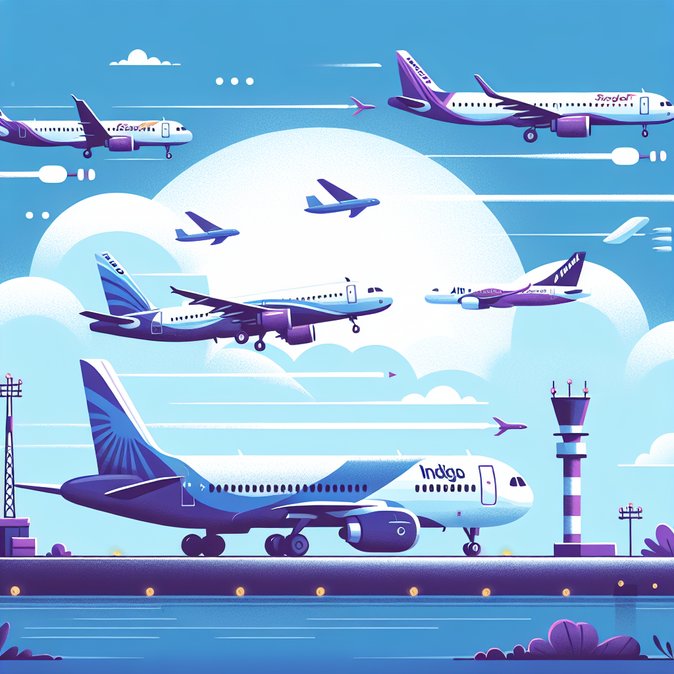
India’s Ministry of Civil Aviation doubled the Directorate General of Civil Aviation (DGCA) penalty on IndiGo from a 5 percent to a 10 percent cut in its approved winter schedule after the carrier cancelled 905 flights and delayed another 1,475 between 1 and 8 December, stranding more than 260,000 passengers at Mumbai alone. The regulator has directed the airline to file a revised roster by 10 December and to provide 72-hour advance notice of all future cancellations.
The operational meltdown—triggered by an acute pilot shortage following new Flight Duty Time Limitation (FDTL) rules—has rippled across India’s peak holiday season. Travel portals report hotel cancellation rates up 18 percent, while the Indian Association of Tour Operators has revised December inbound-tourist projections down by 4-5 percent.
In a rare market-co-ordination move, Air India and SpiceJet said they will collectively add about 170 daily services over the next week, deploying wet-leased aircraft and rerouting wide-bodies on trunk domestic sectors to stabilise connectivity. Airports Authority of India teams are auditing ground-handling and baggage operations after passengers at Ahmedabad and Pune reported 48-hour luggage delays.
![Government orders IndiGo to slash winter schedule by 10% after week-long chaos; rivals add 170 extra flights]()
For business travellers the immediate impact is tighter seat inventory and higher fares—spot prices on the Delhi-Bengaluru route are up 32 percent week-on-week, according to online meta-search data. Corporates with contracted fares may invoke ‘disruption clauses’ to switch carriers without penalties, but travel managers should reconfirm meeting schedules and build in longer connection times, especially for international departures routed through IndiGo feeder legs.
Travellers suddenly needing to reroute itineraries or add international stopovers should also review visa requirements, as even short transits through Gulf or Southeast Asian hubs can trigger documentation checks. Online concierge platform VisaHQ (https://www.visahq.com/india/) offers expedited e-visa processing, real-time advisory on dynamic transit rules, and doorstep passport pick-up services—resources that can smooth last-minute route changes prompted by IndiGo’s ongoing disruptions.
Analysts note that IndiGo still controls nearly 60 percent of domestic capacity; systemic resilience therefore requires regulatory oversight of crew rostering and a structured return-to-service plan. The episode also underscores the need for India’s civil-aviation roadmap to diversify hub operations and accelerate the Digi Yatra biometric-boarding programme to ease congestion in crisis scenarios.
The operational meltdown—triggered by an acute pilot shortage following new Flight Duty Time Limitation (FDTL) rules—has rippled across India’s peak holiday season. Travel portals report hotel cancellation rates up 18 percent, while the Indian Association of Tour Operators has revised December inbound-tourist projections down by 4-5 percent.
In a rare market-co-ordination move, Air India and SpiceJet said they will collectively add about 170 daily services over the next week, deploying wet-leased aircraft and rerouting wide-bodies on trunk domestic sectors to stabilise connectivity. Airports Authority of India teams are auditing ground-handling and baggage operations after passengers at Ahmedabad and Pune reported 48-hour luggage delays.

For business travellers the immediate impact is tighter seat inventory and higher fares—spot prices on the Delhi-Bengaluru route are up 32 percent week-on-week, according to online meta-search data. Corporates with contracted fares may invoke ‘disruption clauses’ to switch carriers without penalties, but travel managers should reconfirm meeting schedules and build in longer connection times, especially for international departures routed through IndiGo feeder legs.
Travellers suddenly needing to reroute itineraries or add international stopovers should also review visa requirements, as even short transits through Gulf or Southeast Asian hubs can trigger documentation checks. Online concierge platform VisaHQ (https://www.visahq.com/india/) offers expedited e-visa processing, real-time advisory on dynamic transit rules, and doorstep passport pick-up services—resources that can smooth last-minute route changes prompted by IndiGo’s ongoing disruptions.
Analysts note that IndiGo still controls nearly 60 percent of domestic capacity; systemic resilience therefore requires regulatory oversight of crew rostering and a structured return-to-service plan. The episode also underscores the need for India’s civil-aviation roadmap to diversify hub operations and accelerate the Digi Yatra biometric-boarding programme to ease congestion in crisis scenarios.