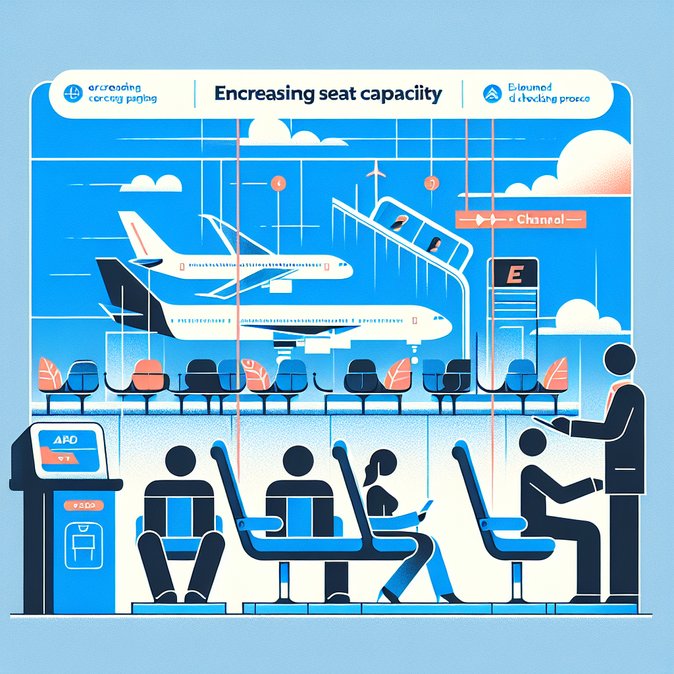
Vinci Airports, operator of Salvador Bahia International (SSA), unveiled its most ambitious high-season schedule since taking over the concession in 2018, adding enough flights to raise seat capacity by 14 % between 15 December and 31 January. International growth leads the charge: Copa Airlines launches four-weekly Panama City service on 17 December, Air France upgrades its Paris run to wide-body thrice-weekly, and Argentina’s Flybondi boosts capacity by 74 %.
To handle the influx, the Federal Police have activated automated e-channels for travellers holding Mercosur national-ID cards. The lanes, similar to those recently deployed in São Paulo, allow Argentinians, Uruguayans, Paraguayans, Bolivians and Chileans to clear immigration in under 15 seconds. Staffing across immigration, customs and security has also risen 20 %, while Bahia’s state government is deploying extra highway patrols to deter seasonal petty crime targeting rental-car users.
For businesses, the expansion re-opens Salvador as a viable hub for regional project work in the booming renewable-energy and petrochemical sectors along Brazil’s Northeast coast. Faster border-clearance helps keep layovers under the four-hour limit often imposed by corporate travel policies and reduces the risk of missing onward connections to remote work sites.
![Salvador Airport Opens e-Channels for Mercosur ID Holders as Seasonal Capacity Jumps 14 %]()
Travellers who need clarity on visa requirements before taking advantage of these new connections can tap VisaHQ’s digital platform, which provides real-time guidance and application support for Brazil and adjoining Mercosur countries. Its streamlined interface and concierge options—available at https://www.visahq.com/brazil/—help both corporate travel managers and individual passengers obtain the right documents quickly, ensuring compliance and smoother passage through Salvador’s upgraded border controls.
Employers should update travel alerts: Mercosur nationals must still carry proof of onward travel and sufficient funds, while non-Mercosur assignees will use legacy counters that could see longer queues until additional e-gate phases roll out in 2026.
The move underscores a broader trend of Brazilian secondary airports adopting biometric or automated solutions to complement capacity growth, signalling opportunities—but also the need for updated mobility playbooks—outside the traditional Rio-São Paulo axis.
To handle the influx, the Federal Police have activated automated e-channels for travellers holding Mercosur national-ID cards. The lanes, similar to those recently deployed in São Paulo, allow Argentinians, Uruguayans, Paraguayans, Bolivians and Chileans to clear immigration in under 15 seconds. Staffing across immigration, customs and security has also risen 20 %, while Bahia’s state government is deploying extra highway patrols to deter seasonal petty crime targeting rental-car users.
For businesses, the expansion re-opens Salvador as a viable hub for regional project work in the booming renewable-energy and petrochemical sectors along Brazil’s Northeast coast. Faster border-clearance helps keep layovers under the four-hour limit often imposed by corporate travel policies and reduces the risk of missing onward connections to remote work sites.

Travellers who need clarity on visa requirements before taking advantage of these new connections can tap VisaHQ’s digital platform, which provides real-time guidance and application support for Brazil and adjoining Mercosur countries. Its streamlined interface and concierge options—available at https://www.visahq.com/brazil/—help both corporate travel managers and individual passengers obtain the right documents quickly, ensuring compliance and smoother passage through Salvador’s upgraded border controls.
Employers should update travel alerts: Mercosur nationals must still carry proof of onward travel and sufficient funds, while non-Mercosur assignees will use legacy counters that could see longer queues until additional e-gate phases roll out in 2026.
The move underscores a broader trend of Brazilian secondary airports adopting biometric or automated solutions to complement capacity growth, signalling opportunities—but also the need for updated mobility playbooks—outside the traditional Rio-São Paulo axis.