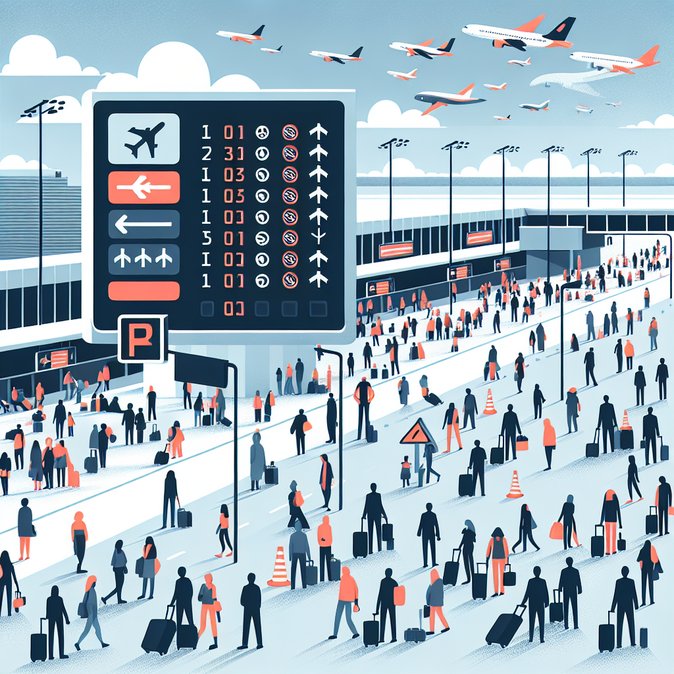
São Paulo/Guarulhos International Airport (GRU)—the main gateway for corporate travel into Brazil—quietly commissioned 42 next-generation Automated Border-Control e-gates in Terminal 3 on 6 December, with performance data released yesterday showing a 40 % reduction in queue times during the morning ‘super-bank’ of arrivals. Supplied by SITA, each gate integrates an e-passport reader, facial-recognition camera and fingerprint scanner, cutting clearance to around ten seconds and eliminating manual passport stamps for eligible travellers.
Who can use them? Brazilian nationals plus holders of ICAO-compliant chip passports from Mercosur, the EU, UK, US, Canada, Australia, Japan and several other jurisdictions. The upgrade replaces kiosks installed for the 2014 World Cup and represents phase one of a R$250 million federal biometric-border programme slated for 2026-27.
Before taking advantage of the streamlined e-gate process, travelers may still need to confirm visa requirements or secure the correct entry documents. VisaHQ’s Brazil portal (https://www.visahq.com/brazil/) simplifies this by offering real-time visa checks, digital applications, and courier support, ensuring both corporate mobility teams and individual passengers have the proper paperwork in place well ahead of departure.
![Guarulhos Airport Switches On 42 Biometric e-Gates, Slashing Arrival Queues by 40 %]()
For employers, the impact is immediate: fewer missed connections to domestic shuttles, shorter duty-of-care exposure in crowded halls, and the ability to route high-value executives through Brazil’s busiest hub with more predictable timings. GRU handles about 4,000 international arrivals per hour at peak; the e-gates free up 18 PF officers for risk-based secondary screening, enhancing security without slowing throughput.
Travellers must still complete Brazil’s digital customs declaration (e-DBV) before landing. Mobility teams should update pre-trip briefings to instruct eligible assignees to use the ‘Portas Rápidas’ lanes and to ensure passports have at least one empty page for the exit stamp, which remains manual at most airports.
The success at GRU is likely to accelerate planned deployments in Rio’s Galeão and Brasília airports ahead of mid-2026 tourism spikes, signalling a broader modernization of Brazil’s border-control infrastructure.
Who can use them? Brazilian nationals plus holders of ICAO-compliant chip passports from Mercosur, the EU, UK, US, Canada, Australia, Japan and several other jurisdictions. The upgrade replaces kiosks installed for the 2014 World Cup and represents phase one of a R$250 million federal biometric-border programme slated for 2026-27.
Before taking advantage of the streamlined e-gate process, travelers may still need to confirm visa requirements or secure the correct entry documents. VisaHQ’s Brazil portal (https://www.visahq.com/brazil/) simplifies this by offering real-time visa checks, digital applications, and courier support, ensuring both corporate mobility teams and individual passengers have the proper paperwork in place well ahead of departure.

For employers, the impact is immediate: fewer missed connections to domestic shuttles, shorter duty-of-care exposure in crowded halls, and the ability to route high-value executives through Brazil’s busiest hub with more predictable timings. GRU handles about 4,000 international arrivals per hour at peak; the e-gates free up 18 PF officers for risk-based secondary screening, enhancing security without slowing throughput.
Travellers must still complete Brazil’s digital customs declaration (e-DBV) before landing. Mobility teams should update pre-trip briefings to instruct eligible assignees to use the ‘Portas Rápidas’ lanes and to ensure passports have at least one empty page for the exit stamp, which remains manual at most airports.
The success at GRU is likely to accelerate planned deployments in Rio’s Galeão and Brasília airports ahead of mid-2026 tourism spikes, signalling a broader modernization of Brazil’s border-control infrastructure.