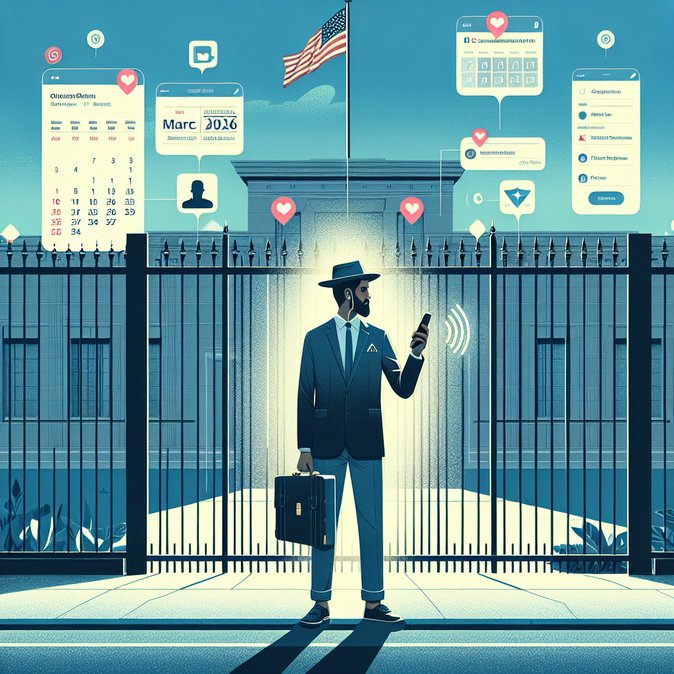
A sudden wave of e-mails from U.S. consulates on the evening of 8 December left thousands of H-1B and H-4 applicants in India staring at blank calendars. Confirmed interview slots—some booked months in advance and many already preceded by biometric enrolment—were summarily pushed to dates as far away as March 2026. The move follows a policy directive that will introduce expanded social-media screening for most work-visa categories from 15 December, forcing consular posts in New Delhi, Mumbai, Chennai, Hyderabad and Kolkata to re-sequence caseloads.
For Indian IT service providers, start-ups and multinationals that rely on H-1B talent exchanges, the disruption could not have come at a worse time. December traditionally sees a spike in short-term travel as project teams rotate and new calendar-year statements of work begin. HR managers now face the prospect of redeploying staff internally or absorbing costly project delays. “We have 37 engineers whose U.S. start dates are now uncertain,” said the mobility head of a Bengaluru SaaS firm, adding that client penalty clauses may be triggered if replacements are not found quickly.
Adding to the confusion, the U.S. Embassy in New Delhi issued an advisory on 9 December instructing applicants to appear only on the rescheduled date mentioned in the system; walk-ins on the original date will be turned away. Immigration lawyers warn that those whose Indian visas are expiring while they remain stuck may need to file extension applications with the Foreigners Regional Registration Office or risk overstay penalties under India’s new Immigration & Foreigners Act, 2025.
![U.S. defers thousands of H-1B visa appointments in India, new social-media vetting triggers chaos]()
For applicants scrambling to make sense of these sudden shifts, VisaHQ can be an invaluable ally. Its India portal (https://www.visahq.com/india/) provides real-time appointment alerts, document checklists and personalised support, helping travellers and HR teams navigate last-minute consular changes and keep projects on track despite shifting policies.
Industry groups such as NASSCOM and the U.S.–India Business Council have asked the State Department for clarity on the length of the deferral and whether emergency slots will be opened for travellers with firm joining dates. In the meantime, stakeholders are advising assignees to avoid non-essential travel, maintain valid immigration status in both countries, and gather additional social-media history that may now be requested at interview.
While most expect normal scheduling to resume once the new vetting platform stabilises, experts believe the episode underlines a structural risk: India now accounts for almost 75 % of all H-1B petitions, and any change in U.S. security policy disproportionately affects Indian talent pipelines. Companies with large U.S. footprints are therefore revisiting EU, Japan and GCC deployment options to hedge against future shocks.
For Indian IT service providers, start-ups and multinationals that rely on H-1B talent exchanges, the disruption could not have come at a worse time. December traditionally sees a spike in short-term travel as project teams rotate and new calendar-year statements of work begin. HR managers now face the prospect of redeploying staff internally or absorbing costly project delays. “We have 37 engineers whose U.S. start dates are now uncertain,” said the mobility head of a Bengaluru SaaS firm, adding that client penalty clauses may be triggered if replacements are not found quickly.
Adding to the confusion, the U.S. Embassy in New Delhi issued an advisory on 9 December instructing applicants to appear only on the rescheduled date mentioned in the system; walk-ins on the original date will be turned away. Immigration lawyers warn that those whose Indian visas are expiring while they remain stuck may need to file extension applications with the Foreigners Regional Registration Office or risk overstay penalties under India’s new Immigration & Foreigners Act, 2025.

For applicants scrambling to make sense of these sudden shifts, VisaHQ can be an invaluable ally. Its India portal (https://www.visahq.com/india/) provides real-time appointment alerts, document checklists and personalised support, helping travellers and HR teams navigate last-minute consular changes and keep projects on track despite shifting policies.
Industry groups such as NASSCOM and the U.S.–India Business Council have asked the State Department for clarity on the length of the deferral and whether emergency slots will be opened for travellers with firm joining dates. In the meantime, stakeholders are advising assignees to avoid non-essential travel, maintain valid immigration status in both countries, and gather additional social-media history that may now be requested at interview.
While most expect normal scheduling to resume once the new vetting platform stabilises, experts believe the episode underlines a structural risk: India now accounts for almost 75 % of all H-1B petitions, and any change in U.S. security policy disproportionately affects Indian talent pipelines. Companies with large U.S. footprints are therefore revisiting EU, Japan and GCC deployment options to hedge against future shocks.