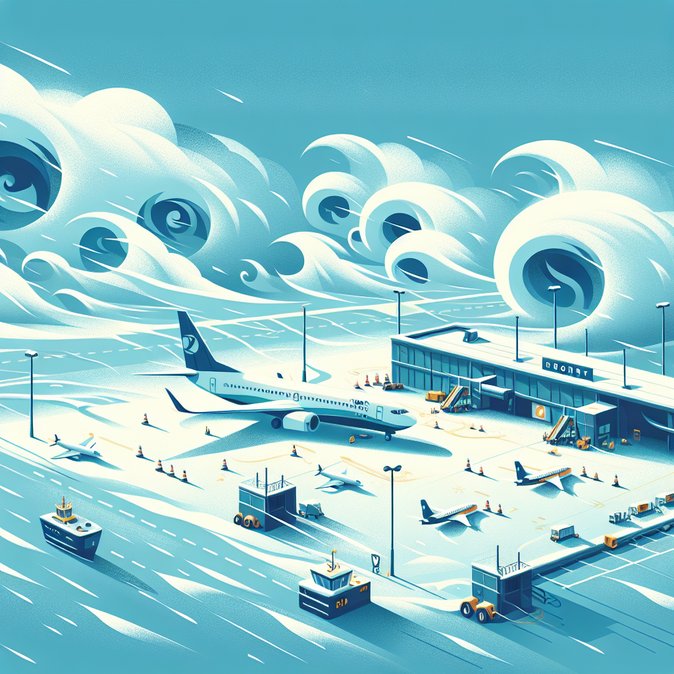
Business and leisure travelers woke up on 9 December to find Ireland’s transport network in disarray after Storm Bram swept across the country overnight. Met Éireann issued Status Orange wind warnings nationwide, with gusts topping 160 km/h along the south-west coast. The high winds forced Dublin Airport to cancel at least 42 rotations (21 arrivals, 21 departures) and divert several trans-Atlantic services, while Cork, Shannon and Ireland West (Knock) airports reported additional cancellations and delays. Aer Lingus scrubbed its lunchtime Knock–Heathrow flight EI 916, and Ryanair warned of rolling delays throughout the day.
The impact was felt well beyond the runways. Irish Ferries and Stena Line cancelled multiple sailings on the Dublin–Holyhead and Rosslare–Fishguard routes, stranding hundreds of motorists and freight drivers. Road authorities urged commuters to avoid non-essential travel as fallen trees and debris blocked sections of the M8 and N25, and power outages left more than 22,000 premises in the dark across Cork, Wexford and Limerick.
For global mobility managers, the sudden disruption highlights the importance of real-time contingency planning during Ireland’s winter storm season. Multinationals with assignments in Dublin’s Silicon Docks and Cork’s pharma corridor scrambled to rebook staff on limited evening departures, while some firms activated remote-work protocols for inbound project teams now stuck abroad. Travel-risk providers noted a spike in requests for onward rail and hotel arrangements as passengers tried to bypass clogged airport terminals.
![Storm Bram Grounds Over 40 Flights and Shakes Ireland’s Holiday Travel Plans]()
Amid the chaos, it’s easy to overlook documentation requirements that could derail an already fraught itinerary. VisaHQ’s Ireland portal (https://www.visahq.com/ireland/) allows travelers and corporate coordinators to verify visa rules, arrange expedited processing and track applications in real time, ensuring that sudden reroutes through third-country hubs or last-minute rebookings don’t leave passengers stranded at the border.
Airlines expect operations to normalise gradually as the storm tracks north-east, but ground handlers warn that displaced aircraft and crew rosters could create knock-on effects for at least 24 hours. Travelers are advised to monitor carrier apps, reconfirm chauffeur or rental-car pick-ups, and allow extra time for security screening once services resume. The episode will also feed into the ongoing debate about Dublin Airport’s capacity cap, with daa officials again pointing to weather-related volatility as a reason to lift the 32-million-passenger limit.
Storm Bram’s timing—just a fortnight before the Christmas peak—serves as a reminder that severe weather remains one of the biggest single-day disruptors for Ireland-bound mobility programmes. Companies with critical year-end moves should keep flexible booking classes and consider Dublin–Amsterdam–US routings as backups if UK hubs become congested.
The impact was felt well beyond the runways. Irish Ferries and Stena Line cancelled multiple sailings on the Dublin–Holyhead and Rosslare–Fishguard routes, stranding hundreds of motorists and freight drivers. Road authorities urged commuters to avoid non-essential travel as fallen trees and debris blocked sections of the M8 and N25, and power outages left more than 22,000 premises in the dark across Cork, Wexford and Limerick.
For global mobility managers, the sudden disruption highlights the importance of real-time contingency planning during Ireland’s winter storm season. Multinationals with assignments in Dublin’s Silicon Docks and Cork’s pharma corridor scrambled to rebook staff on limited evening departures, while some firms activated remote-work protocols for inbound project teams now stuck abroad. Travel-risk providers noted a spike in requests for onward rail and hotel arrangements as passengers tried to bypass clogged airport terminals.

Amid the chaos, it’s easy to overlook documentation requirements that could derail an already fraught itinerary. VisaHQ’s Ireland portal (https://www.visahq.com/ireland/) allows travelers and corporate coordinators to verify visa rules, arrange expedited processing and track applications in real time, ensuring that sudden reroutes through third-country hubs or last-minute rebookings don’t leave passengers stranded at the border.
Airlines expect operations to normalise gradually as the storm tracks north-east, but ground handlers warn that displaced aircraft and crew rosters could create knock-on effects for at least 24 hours. Travelers are advised to monitor carrier apps, reconfirm chauffeur or rental-car pick-ups, and allow extra time for security screening once services resume. The episode will also feed into the ongoing debate about Dublin Airport’s capacity cap, with daa officials again pointing to weather-related volatility as a reason to lift the 32-million-passenger limit.
Storm Bram’s timing—just a fortnight before the Christmas peak—serves as a reminder that severe weather remains one of the biggest single-day disruptors for Ireland-bound mobility programmes. Companies with critical year-end moves should keep flexible booking classes and consider Dublin–Amsterdam–US routings as backups if UK hubs become congested.