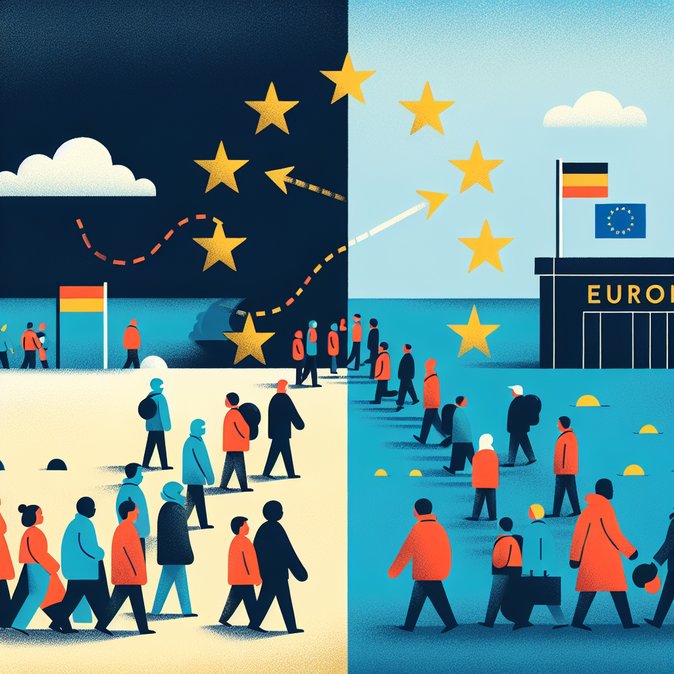
Spain found itself increasingly isolated in Brussels on 8–9 December after Interior-Minister Fernando Grande-Marlaska voted against a Council agreement that clears the way for the European Union to open migrant-return centres in third countries and sets a lower-than-expected annual “solidarity quota” for relocating asylum-seekers inside the bloc. The political deal, part of the final package of the EU Pact on Migration and Asylum, authorises Member States to conclude bilateral pacts with non-EU countries so that people whose asylum claims are rejected can be processed and expelled outside Europe—even if they have only transited through the country in question. The text drops the previous requirement that there be a “meaningful connection” between the migrant and the designated safe country, an idea inspired by Italy’s separate deal with Albania.
Madrid argued that the plan raises “serious legal, political and economic doubts” and warned of diplomatic backlash in North-African and Latin-American nations that feature in the EU’s first list of so-called safe countries (Colombia, Morocco, Egypt, Tunisia, India, Bangladesh and Kosovo). Spain also protested that the new solidarity mechanism for 2026—21 000 relocations and €420 million in financial contributions—falls well short of the 30 000 relocations and €600 million originally proposed by the Commission and backed by the Spanish government.
For Madrid, the lower figures matter: Spain, together with Greece, Italy and Cyprus, is officially classified as “under migratory pressure” and therefore a major beneficiary of intra-EU relocations. Officials fear that fewer places and less cash will mean longer stays in overstretched reception centres on the Iberian mainland and in the Canary Islands.
![Spain Rejects EU Deal to Toughen Migration Rules and Outsource Deportations]()
For readers who need practical assistance navigating Spain’s ever-evolving immigration landscape—whether for business travel, work permits or family reunification—VisaHQ offers streamlined visa and document services. Their dedicated Spain page (https://www.visahq.com/spain/) provides real-time entry requirements, step-by-step application support and digital submission tools that can help avoid costly delays as European rules tighten.
Corporate mobility managers should note that the decision effectively locks in a harder border environment from mid-2026, when the pact becomes fully operational. Faster inadmissibility decisions, reduced appeal rights and the possibility of offshore processing will shorten the window in which rejected applicants can remain in the EU. Employers that sponsor humanitarian or family-reunification cases will need to adapt their timelines and ensure that documentation is watertight before filing.
At the same time, the dispute underscores Spain’s more liberal stance on migration inside the bloc. Although Madrid lost the vote, it signalled its determination to press for larger relocation quotas during the 2026 budget negotiations and hinted that it could channel extra national funds to reception hotspots if EU support proves insufficient. The political divide increases uncertainty for globally mobile staff who rely on Spain as a Schengen entry point, but also reinforces the country’s image as one of the more welcoming destinations for skilled migrants within Europe.
Madrid argued that the plan raises “serious legal, political and economic doubts” and warned of diplomatic backlash in North-African and Latin-American nations that feature in the EU’s first list of so-called safe countries (Colombia, Morocco, Egypt, Tunisia, India, Bangladesh and Kosovo). Spain also protested that the new solidarity mechanism for 2026—21 000 relocations and €420 million in financial contributions—falls well short of the 30 000 relocations and €600 million originally proposed by the Commission and backed by the Spanish government.
For Madrid, the lower figures matter: Spain, together with Greece, Italy and Cyprus, is officially classified as “under migratory pressure” and therefore a major beneficiary of intra-EU relocations. Officials fear that fewer places and less cash will mean longer stays in overstretched reception centres on the Iberian mainland and in the Canary Islands.

For readers who need practical assistance navigating Spain’s ever-evolving immigration landscape—whether for business travel, work permits or family reunification—VisaHQ offers streamlined visa and document services. Their dedicated Spain page (https://www.visahq.com/spain/) provides real-time entry requirements, step-by-step application support and digital submission tools that can help avoid costly delays as European rules tighten.
Corporate mobility managers should note that the decision effectively locks in a harder border environment from mid-2026, when the pact becomes fully operational. Faster inadmissibility decisions, reduced appeal rights and the possibility of offshore processing will shorten the window in which rejected applicants can remain in the EU. Employers that sponsor humanitarian or family-reunification cases will need to adapt their timelines and ensure that documentation is watertight before filing.
At the same time, the dispute underscores Spain’s more liberal stance on migration inside the bloc. Although Madrid lost the vote, it signalled its determination to press for larger relocation quotas during the 2026 budget negotiations and hinted that it could channel extra national funds to reception hotspots if EU support proves insufficient. The political divide increases uncertainty for globally mobile staff who rely on Spain as a Schengen entry point, but also reinforces the country’s image as one of the more welcoming destinations for skilled migrants within Europe.