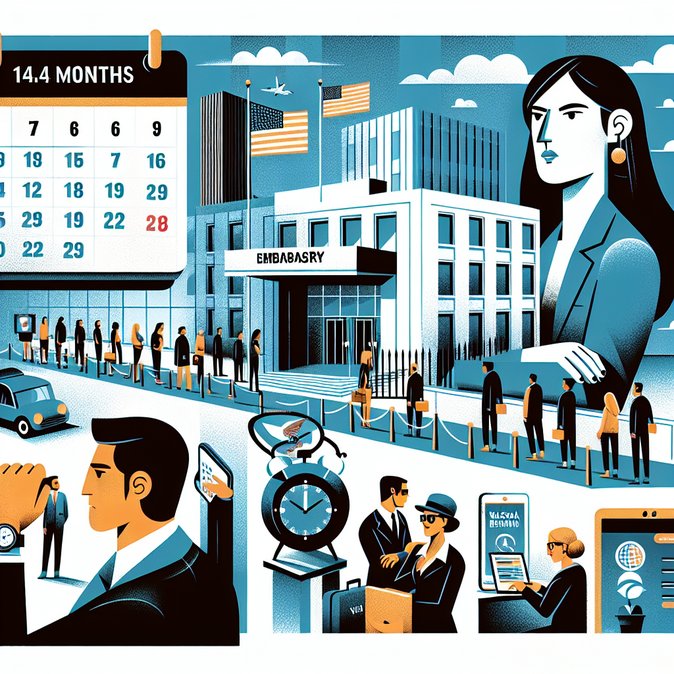
Fresh statistics released on 7 December by the US State Department show that applicants in Abu Dhabi must now wait an average 14.4 months for a B-1/B-2 interview, overtaking all other Gulf posts and ranking among the slowest worldwide. Dubai’s queue, by contrast, sits just under ten months, while Calgary, Canada tops the overall chart at 24 months.
Consular analysts attribute the Abu Dhabi bottleneck to the embassy’s dual mission: it handles immigrant-visa workload for several regional posts, siphoning officers away from non-immigrant windows. Pent-up demand after the pandemic, a surge in UAE outbound tourism and corporate travel, and staffing constraints have combined to stretch appointment calendars deep into 2026.
Travel managers struggling with the new delays can leverage VisaHQ’s UAE platform (https://www.visahq.com/united-arab-emirates/) to navigate slot availability, prepare documentation and identify alternative consulates. The service consolidates real-time scheduling data, flags eligibility for interview-waiver or ESTA pathways and coordinates courier hand-offs, shaving precious weeks off the process.
![Abu Dhabi Now Has World’s Longest Wait for US Tourist Visas—14 Months on Average]()
For UAE-based multinationals the implications are serious. Short-notice client meetings, training rotations and trade-show visits to the United States now face lengthy lead-times or rerouting via other consulates. HR teams are advised to book slots as soon as travel is contemplated, use the interview-waiver renewal option where eligible, monitor the portal for cancellations and budget for multiple consulate visits because biometrics appointments may be separated.
Industry groups warn the delay could dent bilateral trade as executives pivot meetings to neutral hubs such as London or Istanbul. The US Embassy has signalled relief only after additional consular officers arrive in mid-2026.
Mobility best practice: maintain a running visa-slot tracker, encourage staff to hold valid US visas even without imminent trips and explore ESTA-eligible nationalities for dual-citizen employees.
Consular analysts attribute the Abu Dhabi bottleneck to the embassy’s dual mission: it handles immigrant-visa workload for several regional posts, siphoning officers away from non-immigrant windows. Pent-up demand after the pandemic, a surge in UAE outbound tourism and corporate travel, and staffing constraints have combined to stretch appointment calendars deep into 2026.
Travel managers struggling with the new delays can leverage VisaHQ’s UAE platform (https://www.visahq.com/united-arab-emirates/) to navigate slot availability, prepare documentation and identify alternative consulates. The service consolidates real-time scheduling data, flags eligibility for interview-waiver or ESTA pathways and coordinates courier hand-offs, shaving precious weeks off the process.

For UAE-based multinationals the implications are serious. Short-notice client meetings, training rotations and trade-show visits to the United States now face lengthy lead-times or rerouting via other consulates. HR teams are advised to book slots as soon as travel is contemplated, use the interview-waiver renewal option where eligible, monitor the portal for cancellations and budget for multiple consulate visits because biometrics appointments may be separated.
Industry groups warn the delay could dent bilateral trade as executives pivot meetings to neutral hubs such as London or Istanbul. The US Embassy has signalled relief only after additional consular officers arrive in mid-2026.
Mobility best practice: maintain a running visa-slot tracker, encourage staff to hold valid US visas even without imminent trips and explore ESTA-eligible nationalities for dual-citizen employees.