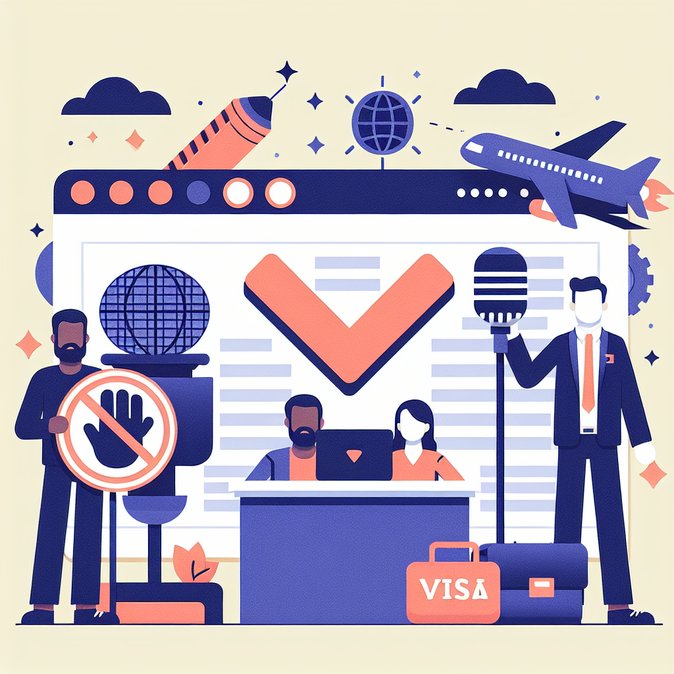
A confidential State Department cable made public on Saturday instructs U.S. consular posts worldwide to refuse visas to applicants who have worked on fact-checking, “disinformation” or content-moderation teams that the administration believes suppressed Americans’ free speech.
Officials told reporters the policy is a direct response to former President Trump’s own social-media bans in 2021 and is designed to keep “foreign censorship operatives” out of U.S. workplaces. Visa officers are now required to scour résumés, press coverage and social-media footprints for keywords such as “trust and safety,” “online safety” or “misinformation.” Evidence of participation can trigger inadmissibility under INA §212(a)(3)(A)(ii)—ideology grounds usually reserved for espionage or terror propaganda.
The guidance applies to all non-immigrant categories—including H-1B tech workers and O-1 digital-media professionals—raising alarms among global platforms with moderation hubs in Ireland, Singapore and India. Companies may have to reroute skilled hires to Canada or Europe or split functions between U.S. and offshore teams to avoid visa denials.
![State Department Orders Visa Denials for Foreign ‘Censors’ and Content Moderators]()
Companies and individual professionals trying to chart a path through these fast-changing rules can lean on specialized services such as VisaHQ, whose U.S. portal (https://www.visahq.com/united-states/) monitors consular updates in real time and offers tailored guidance on alternative visa routes or third-country processing. This can help HR departments recalibrate hiring plans and keep projects on track even when roles involve sensitive content-governance duties.
Civil-liberties groups blasted the move as a violation of the First Amendment and of U.S. commitments under trade agreements that protect cross-border services. But proponents argue it will protect domestic political discourse.
Practically, employers should expect new administrative processing and be prepared to defend the job duties of any applicant who has ever touched content-governance or misinformation-response work.
Officials told reporters the policy is a direct response to former President Trump’s own social-media bans in 2021 and is designed to keep “foreign censorship operatives” out of U.S. workplaces. Visa officers are now required to scour résumés, press coverage and social-media footprints for keywords such as “trust and safety,” “online safety” or “misinformation.” Evidence of participation can trigger inadmissibility under INA §212(a)(3)(A)(ii)—ideology grounds usually reserved for espionage or terror propaganda.
The guidance applies to all non-immigrant categories—including H-1B tech workers and O-1 digital-media professionals—raising alarms among global platforms with moderation hubs in Ireland, Singapore and India. Companies may have to reroute skilled hires to Canada or Europe or split functions between U.S. and offshore teams to avoid visa denials.

Companies and individual professionals trying to chart a path through these fast-changing rules can lean on specialized services such as VisaHQ, whose U.S. portal (https://www.visahq.com/united-states/) monitors consular updates in real time and offers tailored guidance on alternative visa routes or third-country processing. This can help HR departments recalibrate hiring plans and keep projects on track even when roles involve sensitive content-governance duties.
Civil-liberties groups blasted the move as a violation of the First Amendment and of U.S. commitments under trade agreements that protect cross-border services. But proponents argue it will protect domestic political discourse.
Practically, employers should expect new administrative processing and be prepared to defend the job duties of any applicant who has ever touched content-governance or misinformation-response work.