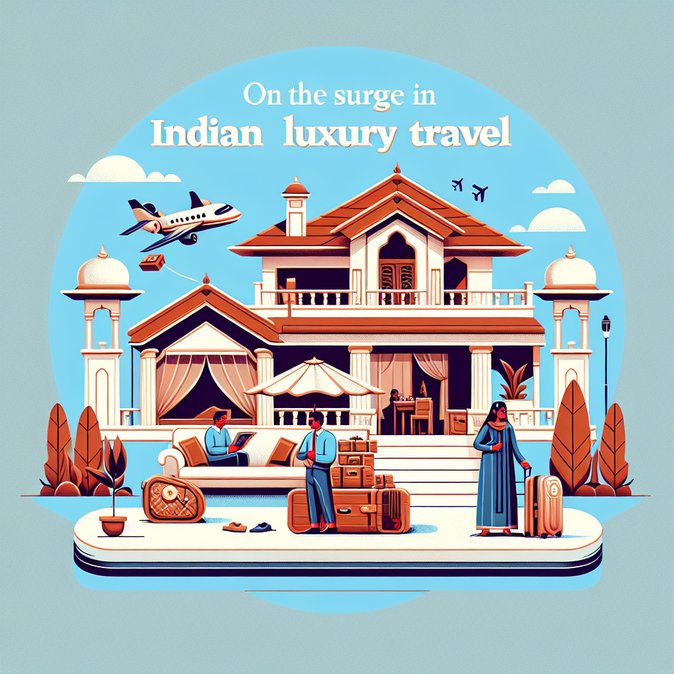
At the International Luxury Travel Market (ILTM) in Cannes on 7 December, Visa’s Chief Economist Dr Simon Baptist unveiled card-spending insights indicating that households earning over US $100,000 in India will rise steeply through 2030—far out-pacing China, Japan and Europe.
The anonymised data show Indians allocate a disproportionately large share of overseas spend to retail, reinforcing perceptions of India as a high-value outbound market for luxury brands and destination-marketing organisations.
For travellers keen to convert this growing purchasing power into seamless journeys abroad, VisaHQ can take the hassle out of visa formalities. Through its intuitive platform (https://www.visahq.com/india/), the company offers step-by-step guidance, document verification and concierge processing for hundreds of destinations—ensuring that premium Indian globetrotters spend less time on paperwork and more time enjoying the luxury experiences they value.
![Visa Inc.’s ILTM data: India to overtake China as fastest-growing source of affluent travelers]()
Visa also highlighted that India’s 6 % GDP trajectory contrasts sharply with a cooling Chinese economy, suggesting sustained outbound demand even if other emerging markets soften.
For global mobility teams the findings matter because premium-leisure behaviour often filters into executive-travel expectations—think five-star accommodation, high-speed connectivity and flexible cancellation terms. Destinations courting MICE and incentive travel may need to tailor offers to Indian tastes such as extended family suites, Jain-vegetarian menus and shopping excursions.
The card network urged hoteliers to upgrade Wi-Fi and digital-payment acceptance, noting that AI-rich sectors are generating new wealth pockets in Bangalore, Hyderabad and Pune whose residents already book suite-class rooms abroad.
While not a policy change, the dataset gives quantitative backing to what airlines and visa-issuance statistics have hinted at for months: India is on track to become the next engine of high-spend global mobility, and infrastructure—from airport lounges to VAT-refund desks—must scale accordingly.
The anonymised data show Indians allocate a disproportionately large share of overseas spend to retail, reinforcing perceptions of India as a high-value outbound market for luxury brands and destination-marketing organisations.
For travellers keen to convert this growing purchasing power into seamless journeys abroad, VisaHQ can take the hassle out of visa formalities. Through its intuitive platform (https://www.visahq.com/india/), the company offers step-by-step guidance, document verification and concierge processing for hundreds of destinations—ensuring that premium Indian globetrotters spend less time on paperwork and more time enjoying the luxury experiences they value.
Visa also highlighted that India’s 6 % GDP trajectory contrasts sharply with a cooling Chinese economy, suggesting sustained outbound demand even if other emerging markets soften.
For global mobility teams the findings matter because premium-leisure behaviour often filters into executive-travel expectations—think five-star accommodation, high-speed connectivity and flexible cancellation terms. Destinations courting MICE and incentive travel may need to tailor offers to Indian tastes such as extended family suites, Jain-vegetarian menus and shopping excursions.
The card network urged hoteliers to upgrade Wi-Fi and digital-payment acceptance, noting that AI-rich sectors are generating new wealth pockets in Bangalore, Hyderabad and Pune whose residents already book suite-class rooms abroad.
While not a policy change, the dataset gives quantitative backing to what airlines and visa-issuance statistics have hinted at for months: India is on track to become the next engine of high-spend global mobility, and infrastructure—from airport lounges to VAT-refund desks—must scale accordingly.