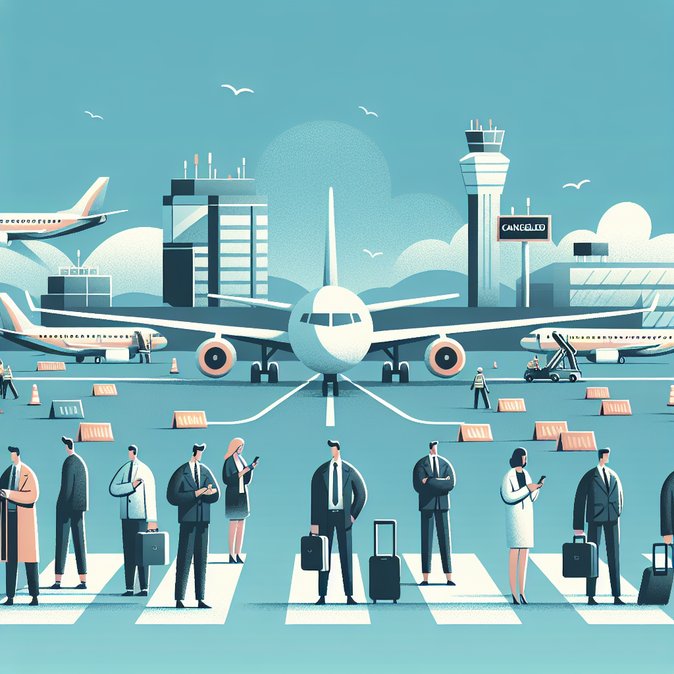
India’s largest carrier, IndiGo, entered its sixth straight day of operational chaos on 7 December after new crew-duty rules left it chronically short-staffed. The airline scrubbed more than 400 flights on Sunday alone—on top of 2,100 cancellations earlier in the week—stranding tens of thousands of passengers at Delhi, Mumbai, Hyderabad, Kolkata and other hubs.
The immediate cause is Phase-2 of India’s Flight Duty Time Limitation (FDTL) regime, which increases mandatory pilot rest. IndiGo admits its rostering models were not ready when the rules became binding on 1 December. With 60 % domestic market share, any disruption at IndiGo ripples across the entire travel ecosystem—business people miss client meetings, corporate relocation timelines slip, and inbound project teams face knock-on hotel and visa-date changes.
For travellers suddenly juggling new flight dates, visa validity can become an unexpected pain point. VisaHQ’s dedicated India platform (https://www.visahq.com/india/) lets passengers and mobility coordinators apply for, amend or extend visas online—often in rush mode—so last-minute itinerary changes don’t derail compliance or travel plans. The service also tracks evolving consular lead times and documentation rules, giving companies one less variable to worry about during airline disruptions.
![IndiGo’s massive flight cancellations trigger government fare caps and refund deadline]()
The Ministry of Civil Aviation stepped in on 6 December, capping one-way economy fares at ₹7,500–₹18,000 and ordering the airline to clear every pending refund by 8 p.m. on 7 December. The Directorate-General of Civil Aviation (DGCA) has also issued a 24-hour show-cause notice to IndiGo’s CEO and accountable manager for alleged planning failures and has threatened enforcement action under the Aircraft Rules, 1937.
For mobility managers the incident is a stark reminder that India’s booming aviation market still lacks redundancy. Companies with frequent intra-India travel are revisiting split-carrier policies, purchasing fully-flexible fares despite higher costs, and reassessing which city pairs might need rail or charter back-ups until IndiGo’s network stabilises—something the airline now pegs at “on or before 10 December”.
Longer term, the episode will accelerate pressure on airlines to invest in crew-planning software and on regulators to phase in future duty-time changes with clearer transition timetables. Until then, business travellers should expect packed flights, fare volatility once caps lift, and slot shortages at constrained metros.
The immediate cause is Phase-2 of India’s Flight Duty Time Limitation (FDTL) regime, which increases mandatory pilot rest. IndiGo admits its rostering models were not ready when the rules became binding on 1 December. With 60 % domestic market share, any disruption at IndiGo ripples across the entire travel ecosystem—business people miss client meetings, corporate relocation timelines slip, and inbound project teams face knock-on hotel and visa-date changes.
For travellers suddenly juggling new flight dates, visa validity can become an unexpected pain point. VisaHQ’s dedicated India platform (https://www.visahq.com/india/) lets passengers and mobility coordinators apply for, amend or extend visas online—often in rush mode—so last-minute itinerary changes don’t derail compliance or travel plans. The service also tracks evolving consular lead times and documentation rules, giving companies one less variable to worry about during airline disruptions.

The Ministry of Civil Aviation stepped in on 6 December, capping one-way economy fares at ₹7,500–₹18,000 and ordering the airline to clear every pending refund by 8 p.m. on 7 December. The Directorate-General of Civil Aviation (DGCA) has also issued a 24-hour show-cause notice to IndiGo’s CEO and accountable manager for alleged planning failures and has threatened enforcement action under the Aircraft Rules, 1937.
For mobility managers the incident is a stark reminder that India’s booming aviation market still lacks redundancy. Companies with frequent intra-India travel are revisiting split-carrier policies, purchasing fully-flexible fares despite higher costs, and reassessing which city pairs might need rail or charter back-ups until IndiGo’s network stabilises—something the airline now pegs at “on or before 10 December”.
Longer term, the episode will accelerate pressure on airlines to invest in crew-planning software and on regulators to phase in future duty-time changes with clearer transition timetables. Until then, business travellers should expect packed flights, fare volatility once caps lift, and slot shortages at constrained metros.