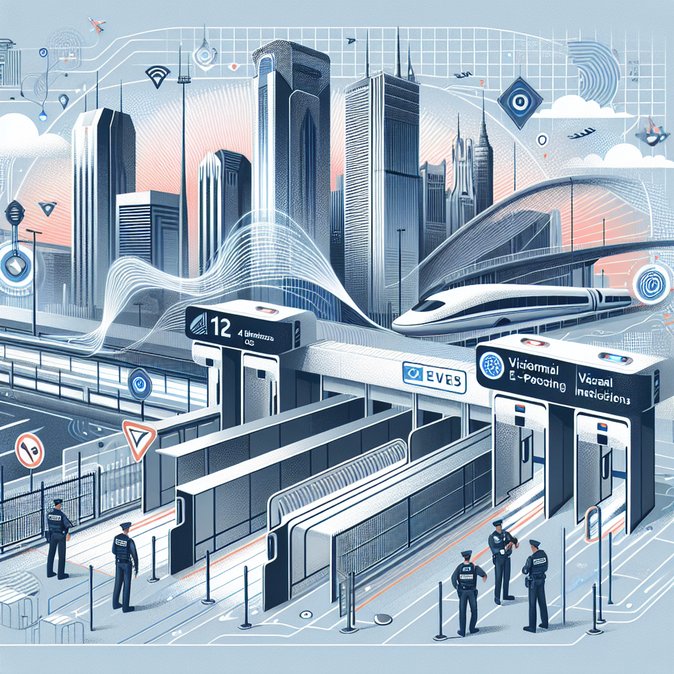
São Paulo/Guarulhos International Airport (GRU) completed the first phase of its border-modernisation plan late on Friday, 5 December, replacing all legacy Automated Border Control kiosks in Terminal 3 with 42 fully biometric e-Gates supplied by SITA. The new lanes combine high-resolution facial-recognition cameras, fingerprint scanners and e-passport readers in a single transaction that takes most travellers under 10 seconds to clear. Airport operations director Marcelo Vasconcellos said initial trials show passenger throughput rising by roughly 40 %, an essential gain for Brazil’s busiest hub, which often handles more than 4,000 international arrivals per hour during morning peaks.
For the Federal Police, which oversees immigration, the equipment frees officers from routine passport-stamping so they can focus on secondary inspections and intelligence-led risk profiling. That matters because Brazil expects a record eight million foreign visitors in 2026, buoyed by the COP-30 climate summit in Belém and continued growth in regional corporate travel.
![Guarulhos Rolls Out 42 Next-Generation Biometric e-Gates, Slashing Arrival Queues]()
Eligibility mirrors Brazil’s existing ABC programme: Brazilians and holders of ICAO-compliant “chip” passports from Mercosur, the EU, UK, US, Canada, Australia, Japan and several other nations can use the gates. Travellers simply place the passport on the reader, remove masks or hats and face the camera; a green light opens the barrier once biometric and document checks match.
GRU’s phase-two project—28 additional e-Gates for Terminals 1 and 2—starts in February 2026 and will be followed by biometric boarding and CT smart-security lanes. The airport authority argues that faster, contact-free processing will reinforce São Paulo’s position as Latin America’s premier connecting hub, a selling point for multinational mobility managers routing executives through Brazil.
Practical tip: companies should update traveller profiles to ensure the “country of passport” field is accurate in global distribution systems; mismatches between ticket data and passport chips can trigger e-Gate rejections and manual inspection delays.
For the Federal Police, which oversees immigration, the equipment frees officers from routine passport-stamping so they can focus on secondary inspections and intelligence-led risk profiling. That matters because Brazil expects a record eight million foreign visitors in 2026, buoyed by the COP-30 climate summit in Belém and continued growth in regional corporate travel.
Eligibility mirrors Brazil’s existing ABC programme: Brazilians and holders of ICAO-compliant “chip” passports from Mercosur, the EU, UK, US, Canada, Australia, Japan and several other nations can use the gates. Travellers simply place the passport on the reader, remove masks or hats and face the camera; a green light opens the barrier once biometric and document checks match.
GRU’s phase-two project—28 additional e-Gates for Terminals 1 and 2—starts in February 2026 and will be followed by biometric boarding and CT smart-security lanes. The airport authority argues that faster, contact-free processing will reinforce São Paulo’s position as Latin America’s premier connecting hub, a selling point for multinational mobility managers routing executives through Brazil.
Practical tip: companies should update traveller profiles to ensure the “country of passport” field is accurate in global distribution systems; mismatches between ticket data and passport chips can trigger e-Gate rejections and manual inspection delays.