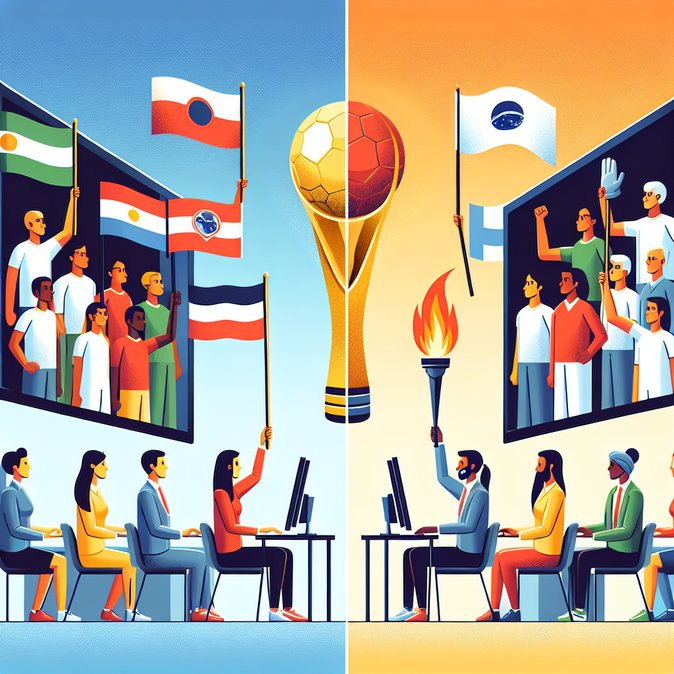
The State Department has quietly instructed all U.S. embassies and consulates to move visa applications connected to two forthcoming mega-events—the 2026 FIFA World Cup (co-hosted by the United States, Mexico, and Canada) and the Los Angeles 2028 Summer Olympics—to the front of the interview line. Consular sections have been told to treat requests from match-ticket holders, accredited media, athletes’ entourages and major sponsors as “mission-critical,” ahead of routine B-1/B-2 visitor visas. More than 400 additional consular officers are being deployed on short-term duty to high-volume posts, and the department has revived a special “FIFA Pass” program first piloted during the 1994 World Cup.
The move comes as the administration seeks to showcase the United States as an accessible destination for global sporting events while still projecting a tough stance on illegal migration. According to internal cables seen by the Associated Press, posts must clear these cases within 15 calendar days, even in locations where general interview-wait times exceed six months. Officials said the goal is to avoid the embarrassment of empty seats and last-minute cancellations that plagued the 2022 Qatar World Cup.
![U.S. fast-tracks visas for 2026 World Cup and 2028 Olympics visitors while tightening H-1B scrutiny]()
At the same time, President Trump is drawing a harder line on employment-based immigration. Separate guidance issued this week directs consular officers to apply “heightened vetting” to H-1B applicants who work in social-media moderation or other roles that “could facilitate censorship of American citizens.” Officers are instructed to review applicants’ employment histories and online activity; those deemed to have suppressed free speech may be refused under INA §212(a)(3). The White House is also floating a $100,000 annual supplemental fee for each H-1B worker, arguing it will deter abuse of the program.
For multinational employers, the split message is stark: expect smoother processing for short-term event travel but steeper costs and scrutiny for long-term talent. Companies planning hospitality or marketing activations around the World Cup should lock in group interview slots now, leveraging the prioritized category. Tech firms, by contrast, face a new layer of compliance risk; immigration counsel should audit job descriptions and social-media policies to anticipate consular questioning.
Practical tip: advise World Cup/Olympics travelers to carry proof of match tickets, hotel reservations, or sponsor letters to trigger the fast-track. H-1B employers should be prepared to document how the foreign national’s duties do not involve viewpoint-based content moderation and to budget for the proposed fee in 2026 workforce planning.
The move comes as the administration seeks to showcase the United States as an accessible destination for global sporting events while still projecting a tough stance on illegal migration. According to internal cables seen by the Associated Press, posts must clear these cases within 15 calendar days, even in locations where general interview-wait times exceed six months. Officials said the goal is to avoid the embarrassment of empty seats and last-minute cancellations that plagued the 2022 Qatar World Cup.

At the same time, President Trump is drawing a harder line on employment-based immigration. Separate guidance issued this week directs consular officers to apply “heightened vetting” to H-1B applicants who work in social-media moderation or other roles that “could facilitate censorship of American citizens.” Officers are instructed to review applicants’ employment histories and online activity; those deemed to have suppressed free speech may be refused under INA §212(a)(3). The White House is also floating a $100,000 annual supplemental fee for each H-1B worker, arguing it will deter abuse of the program.
For multinational employers, the split message is stark: expect smoother processing for short-term event travel but steeper costs and scrutiny for long-term talent. Companies planning hospitality or marketing activations around the World Cup should lock in group interview slots now, leveraging the prioritized category. Tech firms, by contrast, face a new layer of compliance risk; immigration counsel should audit job descriptions and social-media policies to anticipate consular questioning.
Practical tip: advise World Cup/Olympics travelers to carry proof of match tickets, hotel reservations, or sponsor letters to trigger the fast-track. H-1B employers should be prepared to document how the foreign national’s duties do not involve viewpoint-based content moderation and to budget for the proposed fee in 2026 workforce planning.