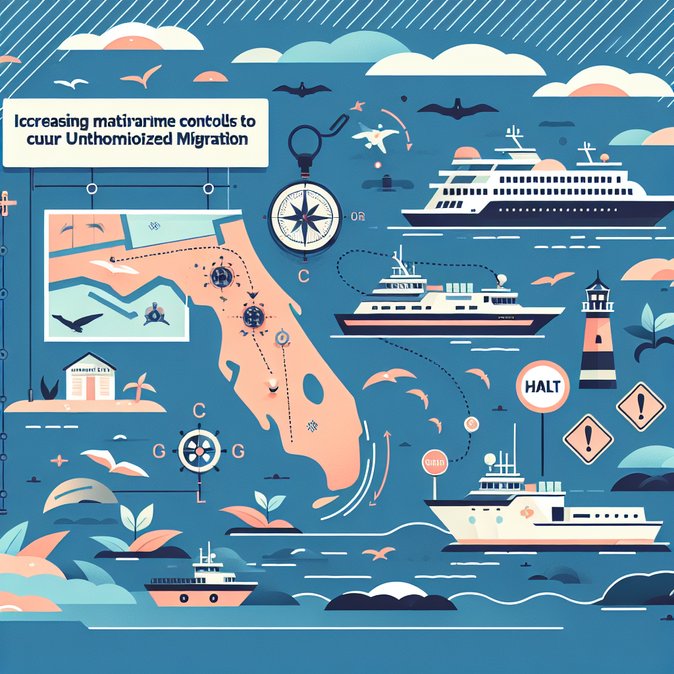
The Bahamian government has unveiled draft legislation that for the first time specifically criminalises human smuggling, imposing fines of up to US $300,000 and prison sentences of up to 15 years for operations that endanger lives, involve pregnant women or move groups larger than ten. Lesser offences, such as facilitating illegal landings, would still draw seven-year terms and six-figure fines. Prime Minister Philip Davis said, “The Bahamas will not be a stepping-stone for illegal migration into the United States.”
Washington has long viewed the archipelago—just 50 miles from Florida—as a critical buffer against Caribbean migrant flows. In May, Secretary of State Marco Rubio pressed CARICOM leaders to adopt tougher measures, warning that the U.S. Coast Guard had intercepted more than 11,000 Haitian and Cuban nationals transiting Bahamian waters in the previous fiscal year. The new bill is widely seen as a response to that diplomacy, aligning Nassau with President Trump’s pledge to “seal maritime routes as tightly as the land border.”
![Bahamas moves to crush migrant-smuggling routes into Florida under U.S. pressure]()
For U.S. border-security planners, a Bahamian crackdown could dramatically reduce the number of interdictions and resultant asylum claims in South Florida, easing pressure on detention beds and immigration courts. Cruise lines and private-yacht operators, however, worry about aggressive boarding tactics and delays in Bahamian territorial waters once the law takes effect.
Corporate mobility managers with assignees in Miami should monitor possible spikes in Coast Guard activity and resultant port congestion. Companies relying on seasonal Caribbean labour may also see recruitment pipelines tighten if smugglers’ fees rise and over-water routes shift.
Action steps: review emergency-travel protocols for staff posted in Nassau; brief assignees on increased vessel inspections; and re-evaluate humanitarian parole strategies that use third-country staging through the Bahamas.
Washington has long viewed the archipelago—just 50 miles from Florida—as a critical buffer against Caribbean migrant flows. In May, Secretary of State Marco Rubio pressed CARICOM leaders to adopt tougher measures, warning that the U.S. Coast Guard had intercepted more than 11,000 Haitian and Cuban nationals transiting Bahamian waters in the previous fiscal year. The new bill is widely seen as a response to that diplomacy, aligning Nassau with President Trump’s pledge to “seal maritime routes as tightly as the land border.”

For U.S. border-security planners, a Bahamian crackdown could dramatically reduce the number of interdictions and resultant asylum claims in South Florida, easing pressure on detention beds and immigration courts. Cruise lines and private-yacht operators, however, worry about aggressive boarding tactics and delays in Bahamian territorial waters once the law takes effect.
Corporate mobility managers with assignees in Miami should monitor possible spikes in Coast Guard activity and resultant port congestion. Companies relying on seasonal Caribbean labour may also see recruitment pipelines tighten if smugglers’ fees rise and over-water routes shift.
Action steps: review emergency-travel protocols for staff posted in Nassau; brief assignees on increased vessel inspections; and re-evaluate humanitarian parole strategies that use third-country staging through the Bahamas.