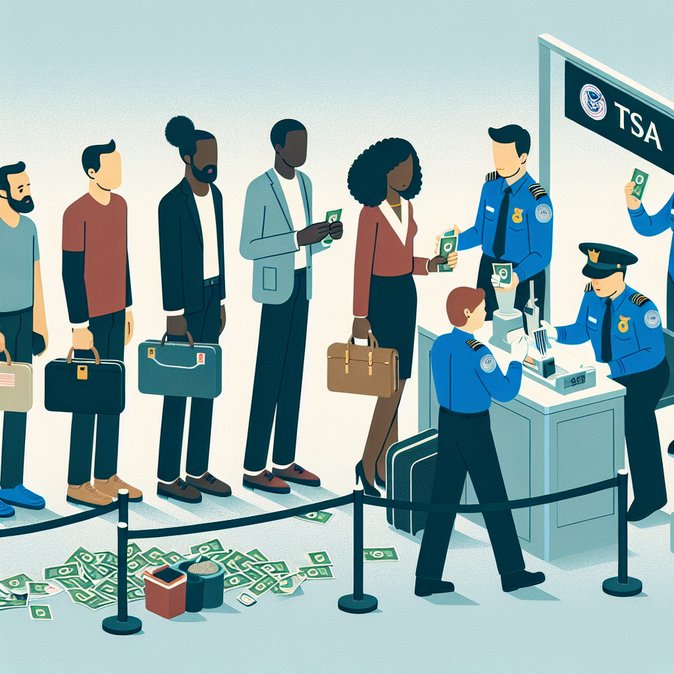
Beginning February 1, 2026, U.S. air passengers who arrive at security checkpoints without a REAL-ID-compliant driver’s license or other acceptable identification will have to pay a non-refundable $45 fee to complete screening, the Transportation Security Administration announced Monday. Since full REAL ID enforcement took effect in May 2025, travelers lacking compliant IDs have been allowed to fly after enhanced secondary screening and a warning. TSA says the fee will be valid for 10 days and is intended to accelerate adoption of secure IDs; about 94 percent of travelers already present acceptable documents.
The charge is higher than the $18 fee TSA floated in a November Federal Register notice, reflecting what officials say are greater-than-expected administrative costs. Passengers who pay on-site could face delays of up to 30 minutes; online payment in advance is encouraged. Children under 18 remain exempt from ID rules. Acceptable alternatives include U.S. and foreign passports, permanent-resident cards, DoD IDs and DHS trusted-traveler cards.
![TSA to Impose $45 Surcharge on Travelers Without REAL-ID-Compliant Identification]()
For corporate travel programs, the new surcharge turns ID compliance from a best-practice into a budget line. Large employers that still reimburse staff for legacy driver’s-license renewals should audit compliance rates and communication campaigns now. Multistate assignee populations are particularly vulnerable because licensing agencies vary in backlogs and appointment availability.
In addition, foreign assignees who rely on state-issued licenses should double-check that recent extensions or reciprocity agreements meet REAL ID standards. Otherwise, they risk both fee exposure and missed flights on short-notice project travel. Mobility teams may wish to issue companywide reminders and consider covering passport-renewal costs as an alternative secure credential.
The charge is higher than the $18 fee TSA floated in a November Federal Register notice, reflecting what officials say are greater-than-expected administrative costs. Passengers who pay on-site could face delays of up to 30 minutes; online payment in advance is encouraged. Children under 18 remain exempt from ID rules. Acceptable alternatives include U.S. and foreign passports, permanent-resident cards, DoD IDs and DHS trusted-traveler cards.

For corporate travel programs, the new surcharge turns ID compliance from a best-practice into a budget line. Large employers that still reimburse staff for legacy driver’s-license renewals should audit compliance rates and communication campaigns now. Multistate assignee populations are particularly vulnerable because licensing agencies vary in backlogs and appointment availability.
In addition, foreign assignees who rely on state-issued licenses should double-check that recent extensions or reciprocity agreements meet REAL ID standards. Otherwise, they risk both fee exposure and missed flights on short-notice project travel. Mobility teams may wish to issue companywide reminders and consider covering passport-renewal costs as an alternative secure credential.