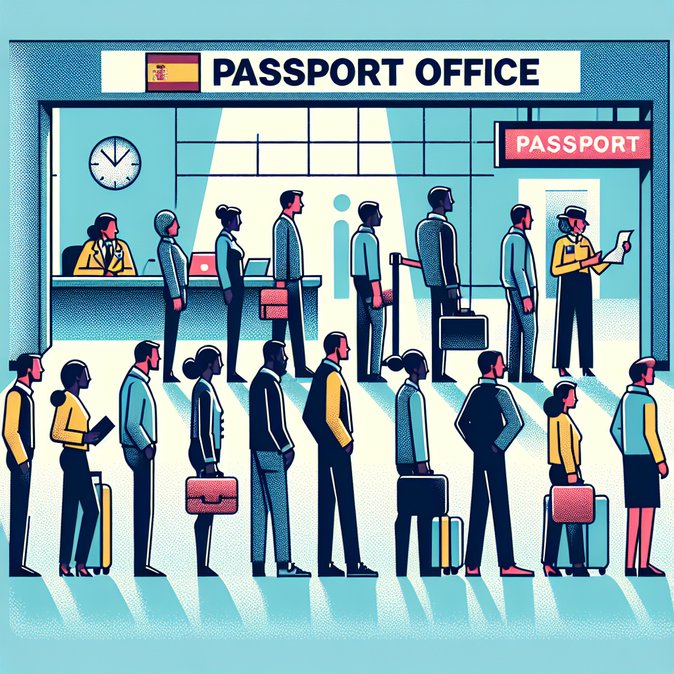
Madrid’s Adolfo Suárez Barajas Airport—the fifth-busiest hub in Europe—started the week with an unexpected labour dispute that caught thousands of holiday and business travellers off-guard. Twenty-one screeners employed by private security contractor Trablisa launched a “huelga de celo” (work-to-rule) at 05:30 on Monday, 2 December, meticulously inspecting every bag and refusing to rotate between lanes. Within 90 minutes, wait times in Terminal 4 stretched to almost 50 minutes, well above Aena’s 15-minute target for priority passengers.
Airport operator Aena accused the workers of breaching a 100 per cent minimum-service decree imposed by the Madrid regional government ahead of the Christmas peak. Trablisa insists the protest was spontaneous, fuelled by anger over unpaid overtime, loss of staff parking subsidies and the company’s refusal to match early-retirement benefits enjoyed by Spain’s national police.
![Work-to-Rule Slowdown at Madrid-Barajas Triggers Hour-Long Security Queues]()
Although queues subsided by midday after supervisors drafted in off-duty staff, the disruption forced dozens of passengers to miss domestic connections and several long-haul departures to Latin America. Passenger-rights group AirHelp reminded travellers that Spain’s EU261 compensation regime does not cover airport-security stoppages—meaning additional costs fall on travellers or their employers.
For corporate mobility managers the incident is a warning shot: even a micro-scale action by two dozen workers can snarl Spain’s largest aviation hub, which handles 140,000 passengers and 1,000 flights on an average Monday. Travel management companies (TMCs) are advising clients to arrive at least two hours before intra-Schengen flights and three hours ahead of long-haul services until talks resume. Aena has threatened legal action against Trablisa if further slowdowns occur and says contingency plans—including redeployment of Guardia Civil officers—will be activated during the peak December 6–9 Constitution-Day holiday.
Unions representing 36,000 private security guards nationwide have hinted at coordinated industrial action in early 2026 unless wage negotiations progress. Should that happen, the knock-on effects could spread to Barcelona-El Prat, Málaga-Costa del Sol and the ferry ports of Algeciras and Valencia, placing Spain’s entire travel ecosystem under pressure during the first full year of the EU’s new Entry/Exit System (EES).
Airport operator Aena accused the workers of breaching a 100 per cent minimum-service decree imposed by the Madrid regional government ahead of the Christmas peak. Trablisa insists the protest was spontaneous, fuelled by anger over unpaid overtime, loss of staff parking subsidies and the company’s refusal to match early-retirement benefits enjoyed by Spain’s national police.

Although queues subsided by midday after supervisors drafted in off-duty staff, the disruption forced dozens of passengers to miss domestic connections and several long-haul departures to Latin America. Passenger-rights group AirHelp reminded travellers that Spain’s EU261 compensation regime does not cover airport-security stoppages—meaning additional costs fall on travellers or their employers.
For corporate mobility managers the incident is a warning shot: even a micro-scale action by two dozen workers can snarl Spain’s largest aviation hub, which handles 140,000 passengers and 1,000 flights on an average Monday. Travel management companies (TMCs) are advising clients to arrive at least two hours before intra-Schengen flights and three hours ahead of long-haul services until talks resume. Aena has threatened legal action against Trablisa if further slowdowns occur and says contingency plans—including redeployment of Guardia Civil officers—will be activated during the peak December 6–9 Constitution-Day holiday.
Unions representing 36,000 private security guards nationwide have hinted at coordinated industrial action in early 2026 unless wage negotiations progress. Should that happen, the knock-on effects could spread to Barcelona-El Prat, Málaga-Costa del Sol and the ferry ports of Algeciras and Valencia, placing Spain’s entire travel ecosystem under pressure during the first full year of the EU’s new Entry/Exit System (EES).