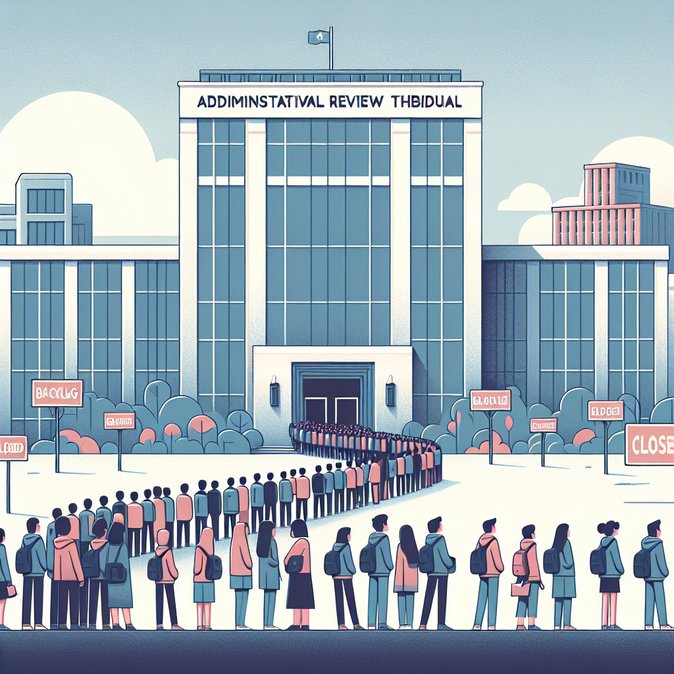
Australia’s Administrative Review Tribunal (ART) has confirmed that almost 46,600 foreign students are waiting for their visa appeals to be decided, an unprecedented queue that officials concede they are ill-equipped to manage. Data tabled at a Senate Estimates hearing on 2 December showed student matters now make up 38 percent of the tribunal’s entire caseload, with more than 13,000 files stuck for one to two years.
ART chief executive Michael Hawkins told senators the backlog represents an “explosion” in recent years as overseas enrolments rebounded post-pandemic and refusal rates climbed under tougher integrity settings. “There’s not a lot of triaging going on because we simply don’t have the resources to attack the study-visa cohort,” Hawkins admitted, adding that newly hired staff would be redirected to student and protection-visa queues.
![Student-Visa Appeals Backlog Surges Past 50,000, Tribunal Admits It Lacks Resources]()
The logjam has real-world consequences. Universities risk losing fee revenue when students defer or withdraw; employers who planned to sponsor graduates face start-date uncertainty; and thousands of international students remain in limbo, unable to travel home or transition to skilled visas. Education agents warn that prolonged waits are already affecting Australia’s competitiveness against Canada and the UK for 2026 intakes.
Migration lawyers say corporates should factor the ART delays into workforce planning: interns or graduate hires on expired visas may need bridging extensions or remote-work arrangements. Industry groups are calling on the government to fund an emergency taskforce and to prioritise digital case-management tools similar to those used by New Zealand’s Immigration & Protection Tribunal.
While the Home Affairs Department continues to process fresh Student (Subclass 500) visas in parallel, observers note that an appeal backlog of this magnitude could undermine the government’s target of capping net overseas migration at 225,000 by 2027 unless systemic fixes are found.
ART chief executive Michael Hawkins told senators the backlog represents an “explosion” in recent years as overseas enrolments rebounded post-pandemic and refusal rates climbed under tougher integrity settings. “There’s not a lot of triaging going on because we simply don’t have the resources to attack the study-visa cohort,” Hawkins admitted, adding that newly hired staff would be redirected to student and protection-visa queues.

The logjam has real-world consequences. Universities risk losing fee revenue when students defer or withdraw; employers who planned to sponsor graduates face start-date uncertainty; and thousands of international students remain in limbo, unable to travel home or transition to skilled visas. Education agents warn that prolonged waits are already affecting Australia’s competitiveness against Canada and the UK for 2026 intakes.
Migration lawyers say corporates should factor the ART delays into workforce planning: interns or graduate hires on expired visas may need bridging extensions or remote-work arrangements. Industry groups are calling on the government to fund an emergency taskforce and to prioritise digital case-management tools similar to those used by New Zealand’s Immigration & Protection Tribunal.
While the Home Affairs Department continues to process fresh Student (Subclass 500) visas in parallel, observers note that an appeal backlog of this magnitude could undermine the government’s target of capping net overseas migration at 225,000 by 2027 unless systemic fixes are found.