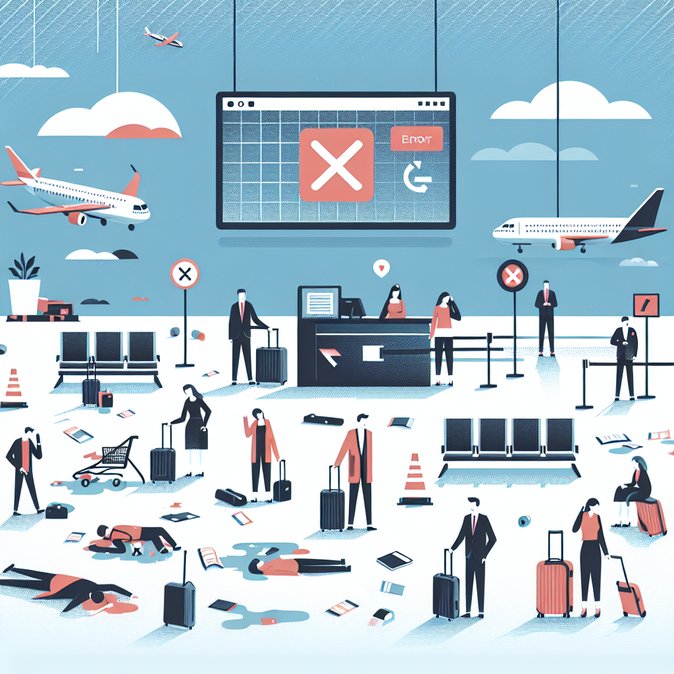
Hundreds of passengers travelling to and from the UAE faced disruption on the evening of 2 December after a third-party IT failure paralysed Air India’s airport check-in systems worldwide. Dubai International (DXB) and Abu Dhabi Zayed International—both heavy Air India stations—reported queues and rolling delays as staff switched to manual boarding-pass issuance. The Indian flag-carrier warned that knock-on delays could continue into 3 December as aircraft rotations fall out of sync.
Although the outage originated outside the airline, it underscored the vulnerability of hub-and-spoke networks that depend on real-time data feeds for security vetting and weight-and-balance calculations. UAE airports process more than 300 Air India group departures a week, and any prolonged disruption cascades across connecting banks, pushing up minimum connection times. Several GCC-based corporates told Global Mobility News they advised employees to allow at least four hours’ buffer for onward connections through Mumbai and Delhi.
![Air India check-in system outage delays UAE-bound flights]()
For mobility managers the incident is another reminder to maintain multi-carrier ticketing options on high-density South Asian routes. Alternative capacity from Emirates, Etihad and flydubai was available, but seat and fare classes quickly tightened as the evening peak approached. Insurers also noted that duty-of-care obligations include providing food, accommodation and re-routing when IT outages strand staff abroad.
Air India said engineers had restored most functions by late evening and that passengers who missed onward flights would be rebooked at no extra cost. The carrier recently migrated to a new passenger-service system as part of its post-privatisation transformation plan; consultants say teething issues are likely until full redundancy is built in.
Travellers flying in the next 24-48 hours should check flight status and complete online check-in where possible to cut airport wait times. Companies may wish to remind staff that UAE immigration counters still require a printed or digital boarding pass with a scannable barcode—even when manual processes are in force.
Although the outage originated outside the airline, it underscored the vulnerability of hub-and-spoke networks that depend on real-time data feeds for security vetting and weight-and-balance calculations. UAE airports process more than 300 Air India group departures a week, and any prolonged disruption cascades across connecting banks, pushing up minimum connection times. Several GCC-based corporates told Global Mobility News they advised employees to allow at least four hours’ buffer for onward connections through Mumbai and Delhi.

For mobility managers the incident is another reminder to maintain multi-carrier ticketing options on high-density South Asian routes. Alternative capacity from Emirates, Etihad and flydubai was available, but seat and fare classes quickly tightened as the evening peak approached. Insurers also noted that duty-of-care obligations include providing food, accommodation and re-routing when IT outages strand staff abroad.
Air India said engineers had restored most functions by late evening and that passengers who missed onward flights would be rebooked at no extra cost. The carrier recently migrated to a new passenger-service system as part of its post-privatisation transformation plan; consultants say teething issues are likely until full redundancy is built in.
Travellers flying in the next 24-48 hours should check flight status and complete online check-in where possible to cut airport wait times. Companies may wish to remind staff that UAE immigration counters still require a printed or digital boarding pass with a scannable barcode—even when manual processes are in force.