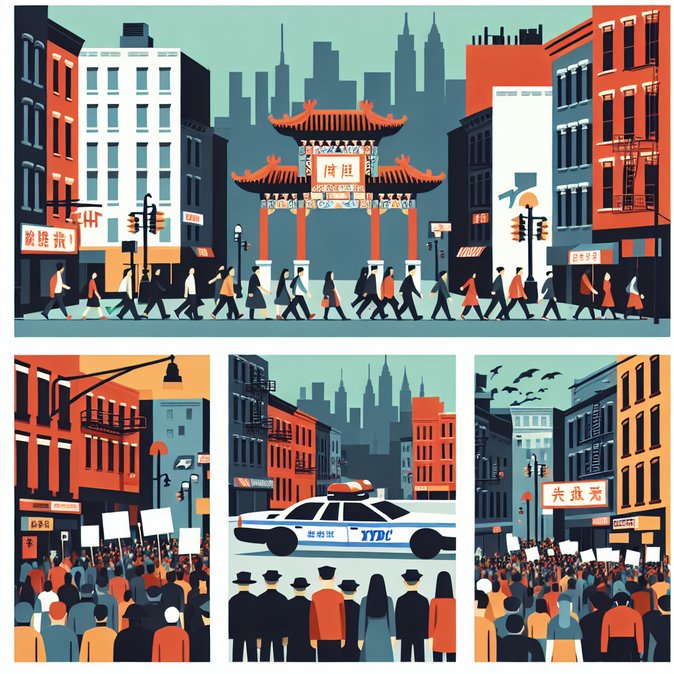
Early Saturday morning, Immigration and Customs Enforcement (ICE) agents attempting to detain undocumented migrants in Manhattan’s Chinatown were confronted by roughly 200 community activists, resulting in a standoff that forced agents to withdraw. Demonstrators erected makeshift barricades, surrounded unmarked ICE vehicles and chanted “No one is illegal,” while livestreams showed brief scuffles with NYPD officers. Police confirmed “multiple” arrests for disorderly conduct and obstruction.
The thwarted raid marks the latest flashpoint in a season of street-level resistance to the Trump administration’s escalation of interior enforcement. Similar community mobilizations have disrupted ICE operations in Charlotte, Chicago and Oakland in recent weeks, complicating agents’ ability to execute workplace warrants and fugitive-operations plans.
![Protesters Block ICE Raid in New York’s Chinatown; Several Arrested]()
For companies employing large immigrant workforces—restaurants, delivery services, construction contractors—the incident highlights operational and reputational risk. Employers must ensure I-9 compliance is watertight; simultaneous visibility of protests can attract media scrutiny of labor practices. Mobility managers relocating foreign nationals to New York should brief them on their rights, including the need for warrants signed by a judge before entering private areas.
Local officials reacted sharply. Mayor-elect Zohran Mamdani condemned ICE tactics as “cruel,” reaffirming New York’s sanctuary-city stance, while NYPD Commissioner Jennifer Tisch reportedly chastised federal counterparts for endangering public safety. DHS, in turn, blamed protesters for violence and warned that “harboring removable aliens” could carry criminal penalties.
Legal experts predict further clashes as New York implements its new “Immigrant Defense Trust Fund,” offering free counsel to detainees, and as ICE refocuses resources on large-scale operations dubbed “Operation Midway Blitz” in Chicago and other sanctuary jurisdictions. Employers should review emergency-response plans, designate spokespersons and train managers on handling warrant presentations without violating worker rights.
The thwarted raid marks the latest flashpoint in a season of street-level resistance to the Trump administration’s escalation of interior enforcement. Similar community mobilizations have disrupted ICE operations in Charlotte, Chicago and Oakland in recent weeks, complicating agents’ ability to execute workplace warrants and fugitive-operations plans.
For companies employing large immigrant workforces—restaurants, delivery services, construction contractors—the incident highlights operational and reputational risk. Employers must ensure I-9 compliance is watertight; simultaneous visibility of protests can attract media scrutiny of labor practices. Mobility managers relocating foreign nationals to New York should brief them on their rights, including the need for warrants signed by a judge before entering private areas.
Local officials reacted sharply. Mayor-elect Zohran Mamdani condemned ICE tactics as “cruel,” reaffirming New York’s sanctuary-city stance, while NYPD Commissioner Jennifer Tisch reportedly chastised federal counterparts for endangering public safety. DHS, in turn, blamed protesters for violence and warned that “harboring removable aliens” could carry criminal penalties.
Legal experts predict further clashes as New York implements its new “Immigrant Defense Trust Fund,” offering free counsel to detainees, and as ICE refocuses resources on large-scale operations dubbed “Operation Midway Blitz” in Chicago and other sanctuary jurisdictions. Employers should review emergency-response plans, designate spokespersons and train managers on handling warrant presentations without violating worker rights.