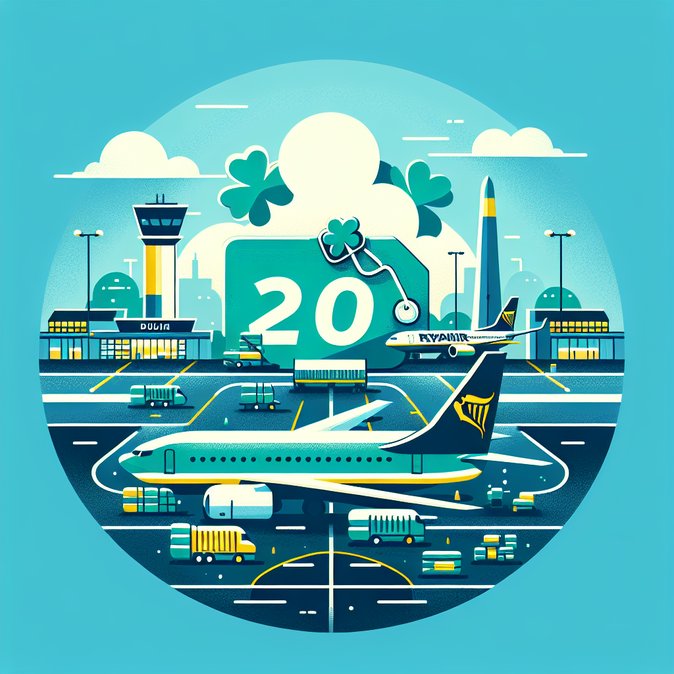
Ryanair has chosen Cyber Monday to launch one of its biggest 24-hour fare promotions of the year, dangling tickets from €14.99 on more than 50 routes out of Dublin, Cork and Shannon for travel between 1 December 2025 and 28 February 2026. Destinations popular with Irish corporates—Liverpool, Manchester, London, Hamburg and Luxembourg—are all included, alongside niche tech hubs such as Turin and Sofia.
The sale explicitly excludes the peak Christmas period (18 December–4 January) but otherwise offers weekday availability, making it attractive for short-notice client visits, internal kick-off meetings and remote-worker commutes. Bookings must be completed by 23:59 Irish time on Monday 1 December. After last year’s post-sale complaints, the carrier has clarified that only 10 % of seats on a flight are offered at the headline price; subsequent inventory will rise in €5 increments.
![Ryanair Cyber-Monday Flash Sale Cuts Dublin Fares to €14.99 for Winter Business Trips]()
For mobility and travel managers the flash sale is an opportunity to lock in Q1 air budgets before traditional ‘Blue-Monday’ price hikes. Organisations with self-booking tools should highlight the narrow booking window and remind employees that ancillary fees—priority boarding, seats and cabin bags—still apply. Ryanair’s new NDC feed now pushes sale fares directly into the main global distribution systems, simplifying policy compliance for TMCs.
The promotion comes amid a capacity crunch at Dublin Airport, where the 32 million-passenger cap is likely to bind again this winter. Airlines fear they will have to redistribute slots if traffic surges beyond the statutory limit, so load-balancing via price incentives on off-peak days helps airlines stay within allocation.
Beyond Ireland, the flash sale underscores a wider European trend: low-cost carriers are using deep discounts to stimulate travel in the shoulder months while negotiating higher airport fees and grappling with delayed Boeing and Airbus deliveries. Corporate buyers who can act quickly stand to benefit from rates that undercut train travel on certain UK-Ireland routes.
The sale explicitly excludes the peak Christmas period (18 December–4 January) but otherwise offers weekday availability, making it attractive for short-notice client visits, internal kick-off meetings and remote-worker commutes. Bookings must be completed by 23:59 Irish time on Monday 1 December. After last year’s post-sale complaints, the carrier has clarified that only 10 % of seats on a flight are offered at the headline price; subsequent inventory will rise in €5 increments.
For mobility and travel managers the flash sale is an opportunity to lock in Q1 air budgets before traditional ‘Blue-Monday’ price hikes. Organisations with self-booking tools should highlight the narrow booking window and remind employees that ancillary fees—priority boarding, seats and cabin bags—still apply. Ryanair’s new NDC feed now pushes sale fares directly into the main global distribution systems, simplifying policy compliance for TMCs.
The promotion comes amid a capacity crunch at Dublin Airport, where the 32 million-passenger cap is likely to bind again this winter. Airlines fear they will have to redistribute slots if traffic surges beyond the statutory limit, so load-balancing via price incentives on off-peak days helps airlines stay within allocation.
Beyond Ireland, the flash sale underscores a wider European trend: low-cost carriers are using deep discounts to stimulate travel in the shoulder months while negotiating higher airport fees and grappling with delayed Boeing and Airbus deliveries. Corporate buyers who can act quickly stand to benefit from rates that undercut train travel on certain UK-Ireland routes.