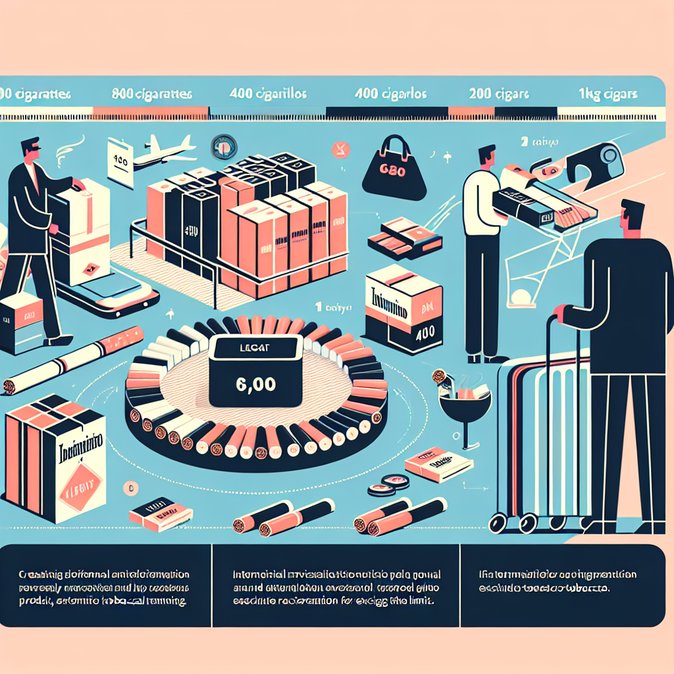
The Irish Revenue Commissioners have announced the first major tightening of personal import allowances for duty-paid tobacco products since EU free-movement rules were introduced in 1993. From Monday 9 December 2025, travellers arriving in Ireland from other EU member-states will face mandatory quantitative limits of 800 cigarettes, 400 cigarillos, 200 cigars and 1 kg of rolling tobacco. The quantities were previously ‘guidelines’—customs officers could still seize goods when they suspected commercial intent, but holiday-makers who produced shop receipts were usually waved through.
Revenue says the guideline approach is no longer sufficient. Legal cigarette consumption fell by 11 % last year after large excise hikes, while convictions for smuggling and illicit resale rose to 49 and 37 respectively. Intelligence suggests organised crime gangs are exploiting ‘‘white van’’ day-trippers who exceed the generous EU duty-free thresholds in countries such as Poland or Bulgaria and then re-sell in Irish pubs. By converting the guideline into a hard cap, officers can now seize any quantity over the limit, even if the owner claims the products are for personal use, and may initiate prosecution.
![Ireland to Seize Excess Duty-Paid Tobacco from 9 December under Tougher Border Rules]()
Business travellers and globally mobile staff who routinely carry gifts or personal supplies between EU offices will need to audit their luggage. Companies running ‘‘fly-in-fly-out’’ maintenance crews have been advised to brief employees and to keep original purchase receipts, as officers will ask for VAT proof. Airlines and ferry operators are updating pre-departure announcements, and Dublin Airport has begun emailing frequent-flyer card holders.
Practically, nothing changes for non-tobacco goods, but mobility managers warn that the tougher stance is a signal of broader customs enforcement. Ireland is under pressure to plug excise revenue gaps and to show Brussels it is capable of policing its external frontier as the EU prepares for the 2026 Entry/Exit System. Consultants expect alcohol and high-value electronics to be the next focus areas.
For employers, the immediate step is communication: include the new caps in travel policies, remind staff that undeclared excess will be confiscated, and warn that a seizure record could complicate future APEC Business Travel Card or Trusted Traveller applications. Multinationals with assignees returning home for Christmas should circulate guidance now.
Revenue says the guideline approach is no longer sufficient. Legal cigarette consumption fell by 11 % last year after large excise hikes, while convictions for smuggling and illicit resale rose to 49 and 37 respectively. Intelligence suggests organised crime gangs are exploiting ‘‘white van’’ day-trippers who exceed the generous EU duty-free thresholds in countries such as Poland or Bulgaria and then re-sell in Irish pubs. By converting the guideline into a hard cap, officers can now seize any quantity over the limit, even if the owner claims the products are for personal use, and may initiate prosecution.

Business travellers and globally mobile staff who routinely carry gifts or personal supplies between EU offices will need to audit their luggage. Companies running ‘‘fly-in-fly-out’’ maintenance crews have been advised to brief employees and to keep original purchase receipts, as officers will ask for VAT proof. Airlines and ferry operators are updating pre-departure announcements, and Dublin Airport has begun emailing frequent-flyer card holders.
Practically, nothing changes for non-tobacco goods, but mobility managers warn that the tougher stance is a signal of broader customs enforcement. Ireland is under pressure to plug excise revenue gaps and to show Brussels it is capable of policing its external frontier as the EU prepares for the 2026 Entry/Exit System. Consultants expect alcohol and high-value electronics to be the next focus areas.
For employers, the immediate step is communication: include the new caps in travel policies, remind staff that undeclared excess will be confiscated, and warn that a seizure record could complicate future APEC Business Travel Card or Trusted Traveller applications. Multinationals with assignees returning home for Christmas should circulate guidance now.