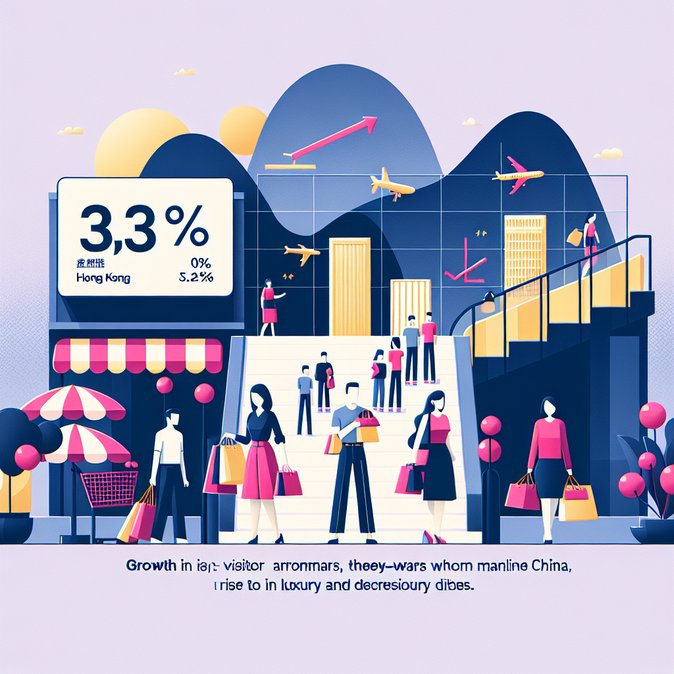
Hong Kong’s retail sector continues to ride the wave of recovering cross-border mobility. Government figures released 1 December show retail sales by value rising 6.9 percent year-on-year in October to HK$35.2 billion—the sixth consecutive monthly increase. Sales volume climbed 5.3 percent.
The momentum is tightly linked to inbound traffic: visitor arrivals hit 4.59 million in October, up 12.2 percent, of which 3.45 million (75 percent) hailed from mainland China. Jewellery, watches and luxury gifts rose 9.5 percent, while the long-sluggish apparel segment finally eked out a 0.9 percent gain after months of decline.
![Mainland Visitor Surge Lifts Hong Kong Retail Sales 6.9 % in October]()
For mobility-dependent sectors, the data confirm that Hong Kong’s strategy of visa-free short stays for most mainland residents and simplified e-channel border clearance is translating into spending. Mall landlords report that MICE delegates connected to fintech and art-auction events are extending stays for leisure shopping, boosting weekday footfall.
Yet structural headwinds persist. Year-to-date sales value is flat and volume still down 1.5 percent versus 2024, underscoring that recovery remains uneven. Corporates relocating staff to Hong Kong will find a more vibrant consumer environment, but cost-of-living allowances should factor in potential upward pressure on rents in prime districts as retail confidence firms.
The government expects tourism pipelines—helped by the relaunch of multiple-entry permits for Shenzhen residents on 1 December—to keep retail recovery on track through Lunar New Year. Mobility managers can anticipate fuller flights and hotel compression during holiday peaks and should secure inventory early.
The momentum is tightly linked to inbound traffic: visitor arrivals hit 4.59 million in October, up 12.2 percent, of which 3.45 million (75 percent) hailed from mainland China. Jewellery, watches and luxury gifts rose 9.5 percent, while the long-sluggish apparel segment finally eked out a 0.9 percent gain after months of decline.

For mobility-dependent sectors, the data confirm that Hong Kong’s strategy of visa-free short stays for most mainland residents and simplified e-channel border clearance is translating into spending. Mall landlords report that MICE delegates connected to fintech and art-auction events are extending stays for leisure shopping, boosting weekday footfall.
Yet structural headwinds persist. Year-to-date sales value is flat and volume still down 1.5 percent versus 2024, underscoring that recovery remains uneven. Corporates relocating staff to Hong Kong will find a more vibrant consumer environment, but cost-of-living allowances should factor in potential upward pressure on rents in prime districts as retail confidence firms.
The government expects tourism pipelines—helped by the relaunch of multiple-entry permits for Shenzhen residents on 1 December—to keep retail recovery on track through Lunar New Year. Mobility managers can anticipate fuller flights and hotel compression during holiday peaks and should secure inventory early.