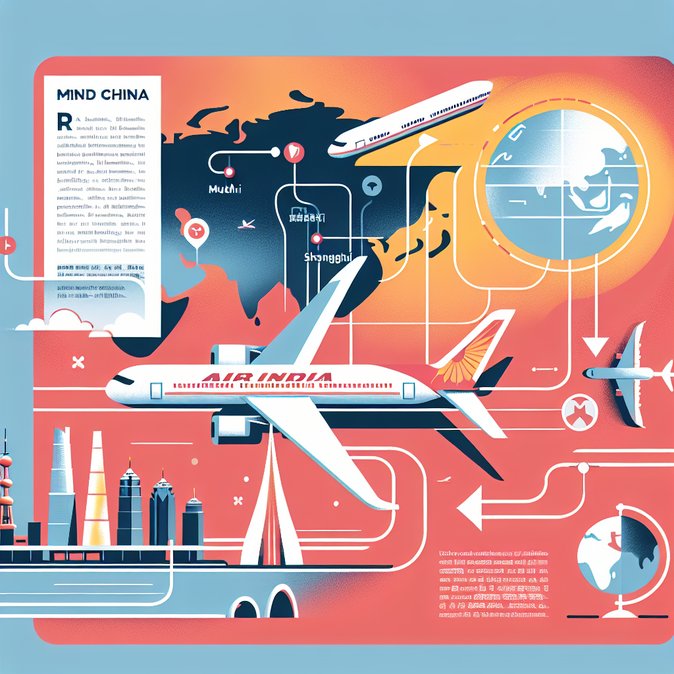
Air India signalled renewed focus on China on 1 December by naming The Aviation Management Limited (TAM Group) as its General Sales Agent for passenger sales across mainland China. The agreement hands TAM responsibility for reservations, ticketing, marketing and trade partnerships at a time when the Tata-owned carrier is rebuilding its long-haul network with new Airbus A350s and retrofitted 777s.
The GSA appointment lays groundwork for the resumption of non-stop Delhi–Shanghai flights on 1 February 2026 and prospective Mumbai–Shanghai service later that year, pending regulatory approvals. Air India suspended China flights in early 2020 due to COVID-19 restrictions and never restarted them, ceding market share to Chinese and Gulf rivals.
![Air India Appoints TAM Group as Mainland China GSA Ahead of Shanghai Relaunch]()
For Indian corporates with manufacturing bases in the Yangtze River Delta, the move promises shorter journey times and reduced reliance on one-stop itineraries via Hong Kong, Bangkok or Singapore. Travel buyers should monitor fare filings: industry sources expect promotional round-trip economy fares below US$500 to regain mindshare against China Eastern and China Southern on the sector.
TAM Group’s extensive mainland agency network is expected to help Air India tap pent-up VFR (visiting-friends-and-relatives) demand among the 50,000-strong Indian diaspora, as well as grow traffic for pharmaceutical, IT-services and higher-education segments. The carrier’s alliance with Vistara (set to merge in 2026) could eventually funnel secondary-city traffic via Delhi.
While flights are still fourteen months away, mobility managers should start factoring the reinstated routes into 2026 budgets, particularly for project teams shuttling between India and China’s east-coast tech hubs.
The GSA appointment lays groundwork for the resumption of non-stop Delhi–Shanghai flights on 1 February 2026 and prospective Mumbai–Shanghai service later that year, pending regulatory approvals. Air India suspended China flights in early 2020 due to COVID-19 restrictions and never restarted them, ceding market share to Chinese and Gulf rivals.

For Indian corporates with manufacturing bases in the Yangtze River Delta, the move promises shorter journey times and reduced reliance on one-stop itineraries via Hong Kong, Bangkok or Singapore. Travel buyers should monitor fare filings: industry sources expect promotional round-trip economy fares below US$500 to regain mindshare against China Eastern and China Southern on the sector.
TAM Group’s extensive mainland agency network is expected to help Air India tap pent-up VFR (visiting-friends-and-relatives) demand among the 50,000-strong Indian diaspora, as well as grow traffic for pharmaceutical, IT-services and higher-education segments. The carrier’s alliance with Vistara (set to merge in 2026) could eventually funnel secondary-city traffic via Delhi.
While flights are still fourteen months away, mobility managers should start factoring the reinstated routes into 2026 budgets, particularly for project teams shuttling between India and China’s east-coast tech hubs.