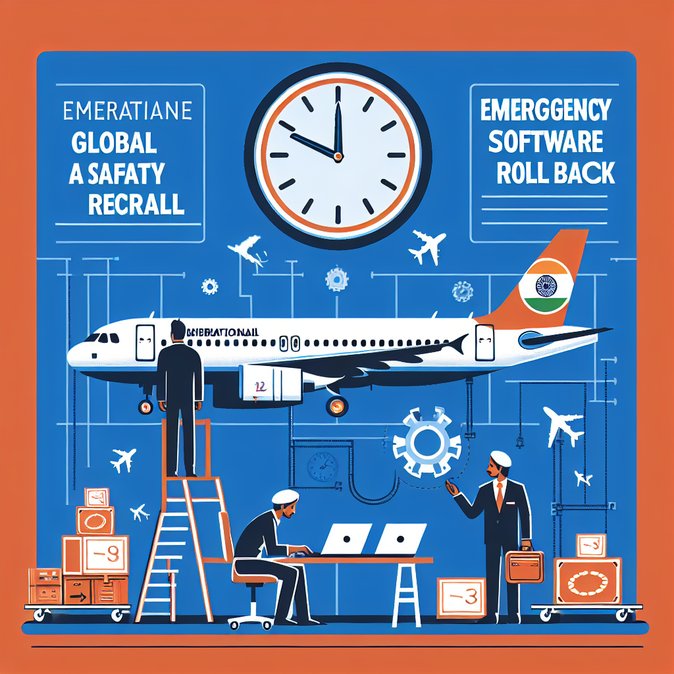
Travellers heading in and out of India over the long weekend breathed a sigh of relief after **Air India** and **IndiGo** completed emergency software downgrades on their Airbus A320-family fleets within 24 hours, following a global safety directive issued late on 29 November. The European regulator ordered more than 6,000 jets worldwide to revert to a previous version of the flight-control program after an October incident caused an unintended altitude drop. Reuters reports that by 30 November both Indian airlines had patched all affected aircraft, preventing widespread cancellations.
India’s Directorate General of Civil Aviation (DGCA) monitored the fixes overnight and warned it would ground any aircraft not updated by midnight Sunday. Air India said 78 narrow-bodies required the two-hour procedure, while IndiGo—Asia’s largest A320 operator—had 132 jets on the list. Only a handful of domestic morning departures were delayed; international rotations to Dubai, Singapore and London left on schedule.
![Airbus A320 software recall triggers scramble but Indian carriers avert major holiday disruption]()
For corporate mobility teams the episode is a reminder that **technical recalls can ripple across visa itineraries, crew rotas and time-sensitive project work**. Had the updates slipped past the DGCA deadline, India could have faced hundreds of flight cancellations during the peak post-Thanksgiving inbound rush of overseas Indians. Firms moving expats or critical spare parts are urged to keep contingency travel plans and monitor manufacturer notices.
The quick fix also underscores improved coordination between Indian carriers, the DGCA and airport operators after the chaotic Pratt & Whitney engine groundings of 2023-24. Both airlines ran overnight maintenance shifts, uploading compliance evidence to the regulator’s eGCA portal in real time. Aviation analysts say the response will bolster passenger confidence ahead of the busy Christmas season and reduce pressure on India’s stretched immigration counters.
Looking ahead, Airbus must release a permanent software patch early in 2026. Until then, DGCA will require airlines to submit monthly health-monitoring reports. Mobility managers should stay alert for further technical directives that could once again compress seat supply on key international routes.
India’s Directorate General of Civil Aviation (DGCA) monitored the fixes overnight and warned it would ground any aircraft not updated by midnight Sunday. Air India said 78 narrow-bodies required the two-hour procedure, while IndiGo—Asia’s largest A320 operator—had 132 jets on the list. Only a handful of domestic morning departures were delayed; international rotations to Dubai, Singapore and London left on schedule.

For corporate mobility teams the episode is a reminder that **technical recalls can ripple across visa itineraries, crew rotas and time-sensitive project work**. Had the updates slipped past the DGCA deadline, India could have faced hundreds of flight cancellations during the peak post-Thanksgiving inbound rush of overseas Indians. Firms moving expats or critical spare parts are urged to keep contingency travel plans and monitor manufacturer notices.
The quick fix also underscores improved coordination between Indian carriers, the DGCA and airport operators after the chaotic Pratt & Whitney engine groundings of 2023-24. Both airlines ran overnight maintenance shifts, uploading compliance evidence to the regulator’s eGCA portal in real time. Aviation analysts say the response will bolster passenger confidence ahead of the busy Christmas season and reduce pressure on India’s stretched immigration counters.
Looking ahead, Airbus must release a permanent software patch early in 2026. Until then, DGCA will require airlines to submit monthly health-monitoring reports. Mobility managers should stay alert for further technical directives that could once again compress seat supply on key international routes.
More From India
View all
Manipur’s Chandel district launches 100 % online biometric registration to curb illegal border crossings

US tax-filing reminders for F-1 and J-1 students spotlight compliance risks for thousands of Indians