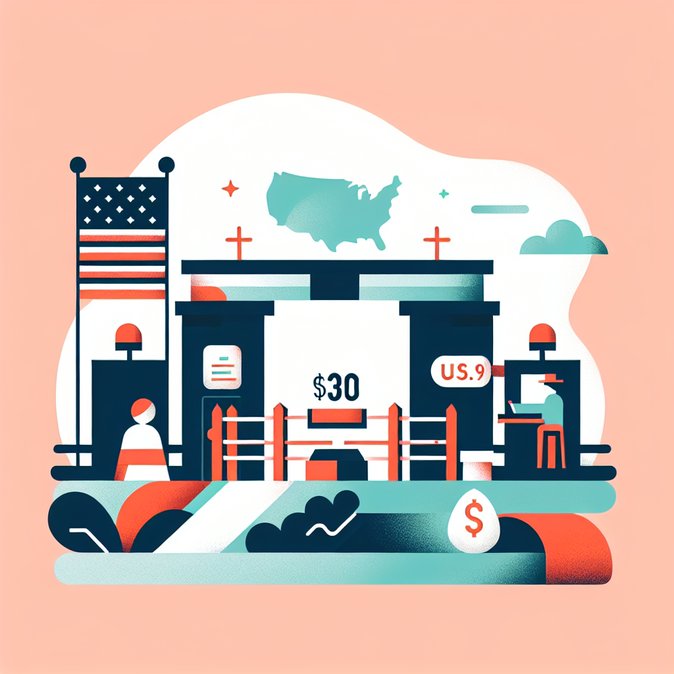
Brazilian mobility managers woke up on November 30 to a surprise tucked inside the Federal Register: the U.S. Department of Homeland Security quietly activated a US$30 fee for every non-immigrant who must obtain an I-94 record when entering the United States by land or when filing the form online up to seven days before arrival. The charge, mandated by the freshly enacted “One Big Beautiful Bill Act,” is indexed to inflation and therefore could rise every fiscal year.
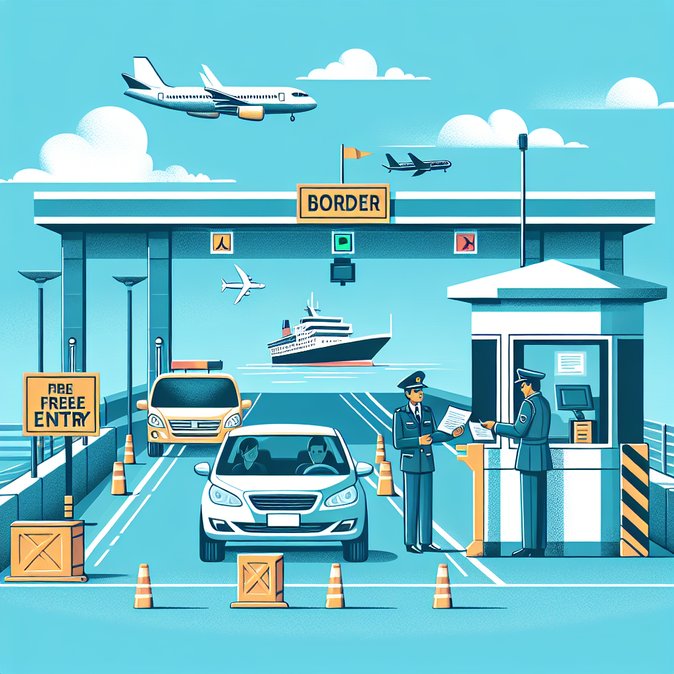
Although most Brazilian leisure and corporate travellers arrive by air—where an electronic I-94 is issued automatically at no cost—the new fee has immediate consequences for executives whose itineraries straddle NAFTA-style supply chains. Typical scenarios include São Paulo-based quality-control teams who fly to Mexico, then drive across the border to inspect maquiladora plants in Texas, or agribusiness buyers who land in Toronto and cross into the United States by car. Each land entry will now trigger a US$30 payment, payable through the CBP One app or at the port of entry.
![U.S. slaps US$30 land-border I-94 fee on Brazilian visitors, forcing cost recalculations for cross-border business trips]()
Beyond the obvious cost increase, the rule introduces administrative friction. Companies must train travellers to retain the digital receipt, verify that reimbursement systems capture the extra expense, and ensure that assignees carrying multiple passports (for example, Brazilian-Italian dual nationals) understand that the fee applies to the document actually used at the border. Immigration counsel are also warning that failure to produce proof of payment during occasional roadside checks could result in fines or expedited-removal proceedings.
Travel-management specialists estimate that a medium-sized Brazilian multinational with 150 cross-border land trips a year will absorb roughly R$23,000 in extra fees—small in absolute terms but enough to eat into already tight mobility budgets. Some firms are considering shifting meetings back onto the U.S. side of the border or rerouting travellers so that the entire trip is completed by air, where no standalone I-94 is required.
Longer term, the move underscores a broader U.S. trend toward cost-recovery in immigration processing. Analysts note that the State Department is finalising a separate “visa integrity” surcharge for certain non-immigrant visas and that Congress is debating a proposal to extend I-94 fees to sea arrivals. Brazilian corporates are therefore advised to embed contingency lines for U.S. government charges into 2026 travel forecasts and to brief travellers on the evolving compliance landscape.
Although most Brazilian leisure and corporate travellers arrive by air—where an electronic I-94 is issued automatically at no cost—the new fee has immediate consequences for executives whose itineraries straddle NAFTA-style supply chains. Typical scenarios include São Paulo-based quality-control teams who fly to Mexico, then drive across the border to inspect maquiladora plants in Texas, or agribusiness buyers who land in Toronto and cross into the United States by car. Each land entry will now trigger a US$30 payment, payable through the CBP One app or at the port of entry.

Beyond the obvious cost increase, the rule introduces administrative friction. Companies must train travellers to retain the digital receipt, verify that reimbursement systems capture the extra expense, and ensure that assignees carrying multiple passports (for example, Brazilian-Italian dual nationals) understand that the fee applies to the document actually used at the border. Immigration counsel are also warning that failure to produce proof of payment during occasional roadside checks could result in fines or expedited-removal proceedings.
Travel-management specialists estimate that a medium-sized Brazilian multinational with 150 cross-border land trips a year will absorb roughly R$23,000 in extra fees—small in absolute terms but enough to eat into already tight mobility budgets. Some firms are considering shifting meetings back onto the U.S. side of the border or rerouting travellers so that the entire trip is completed by air, where no standalone I-94 is required.
Longer term, the move underscores a broader U.S. trend toward cost-recovery in immigration processing. Analysts note that the State Department is finalising a separate “visa integrity” surcharge for certain non-immigrant visas and that Congress is debating a proposal to extend I-94 fees to sea arrivals. Brazilian corporates are therefore advised to embed contingency lines for U.S. government charges into 2026 travel forecasts and to brief travellers on the evolving compliance landscape.