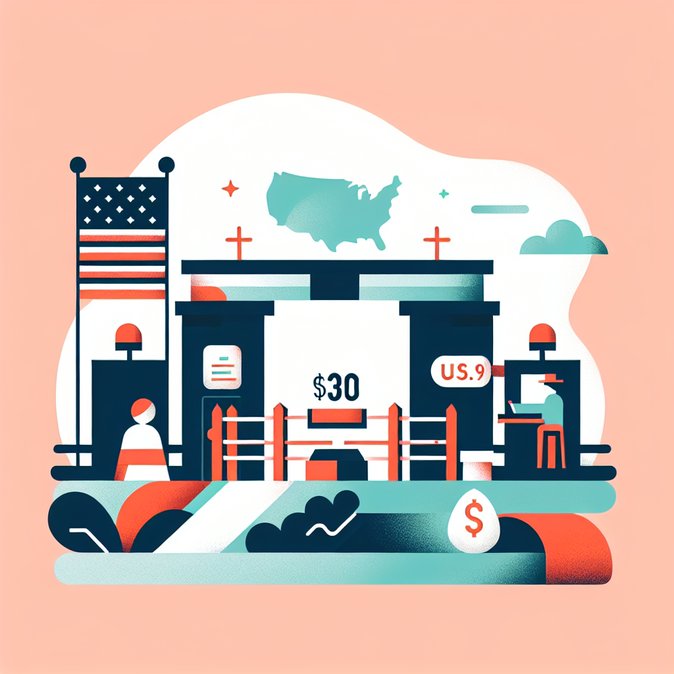
Travel trade outlet *Travel & Tour World* published an explainer on November 29 detailing how Canada, Mexico, Brazil and several Caribbean nations are now subject to the same US$30 I-94 land-border fee under the “One Big Beautiful Bill Act.” While the article largely recaps DHS regulations, it packages the information in a way mobility teams can forward to employees.
For Brazil-based road-warriors who routinely cross the U.S. southern or northern border—truck drivers delivering just-in-time auto parts, auditors visiting maquiladoras, or tech staff toggling between Canadian and U.S. data centres—the piece lays out payment channels, exemption categories and the inflation-indexing mechanism. By putting Brazil in a list with Canada and Mexico, the story underscores that Brasília lacks leverage to negotiate exemptions similar to visa reciprocity deals it pursues elsewhere.
![Travel-industry briefing: new U.S. land-border charge adds to Brazil–U.S. mobility headwinds]()
Why does this matter? Combined with longer U.S. visa interview queues (São Paulo tops 300 days for first-time B visas) and a potential re-imposition of Washington’s “visa integrity fee” next year, the new charge signals a steady rise in the cost-to-serve for Brazil-U.S. mobility. Companies with integrated North American supply chains should revisit cost models and educate travellers on the difference between air and land entries.
The article also flags a compliance wrinkle: travellers who pre-pay online must carry the digital receipt or risk secondary inspection. CBP officers have been instructed to deny fee waivers even when systems are down, placing the onus on travellers to plan ahead.
Taken together, the story reinforces a shift toward user-pay border policies that could influence routing decisions, travel budgets and even the viability of future short-term assignments involving cross-border driving.
For Brazil-based road-warriors who routinely cross the U.S. southern or northern border—truck drivers delivering just-in-time auto parts, auditors visiting maquiladoras, or tech staff toggling between Canadian and U.S. data centres—the piece lays out payment channels, exemption categories and the inflation-indexing mechanism. By putting Brazil in a list with Canada and Mexico, the story underscores that Brasília lacks leverage to negotiate exemptions similar to visa reciprocity deals it pursues elsewhere.

Why does this matter? Combined with longer U.S. visa interview queues (São Paulo tops 300 days for first-time B visas) and a potential re-imposition of Washington’s “visa integrity fee” next year, the new charge signals a steady rise in the cost-to-serve for Brazil-U.S. mobility. Companies with integrated North American supply chains should revisit cost models and educate travellers on the difference between air and land entries.
The article also flags a compliance wrinkle: travellers who pre-pay online must carry the digital receipt or risk secondary inspection. CBP officers have been instructed to deny fee waivers even when systems are down, placing the onus on travellers to plan ahead.
Taken together, the story reinforces a shift toward user-pay border policies that could influence routing decisions, travel budgets and even the viability of future short-term assignments involving cross-border driving.