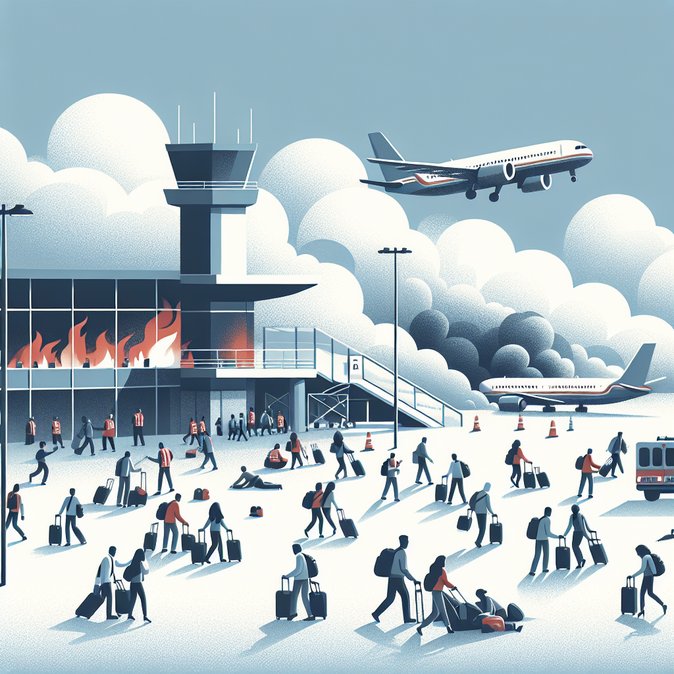
A blaze that broke out shortly after 7 pm on Friday 28 November inside Melbourne Airport’s Terminal 1 baggage-handling area forced the evacuation of approximately 1,500 passengers and halted dozens of Qantas and Jetstar services. Fire Rescue Victoria, supported by the airport’s own fire unit, contained the fire within 25 minutes, preventing its spread to adjoining terminals. No injuries were reported, but thick smoke triggered alarms throughout the domestic pier, compelling authorities to clear airside and landside areas.
While structural engineers declared the building safe just after 9 pm, the knock-on effect was significant. Aircraft already on approach were forced to hold or divert, while several domestic flights taxied to remote stands where passengers waited up to two hours for bus disembarkation. Inside the terminal, long re-check-in queues formed as airlines scrambled to re-schedule services and locate misplaced luggage.
![Melbourne Airport Terminal 1 Fire Triggers Mass Evacuation and Evening Flight Chaos]()
Jetstar’s separate Airbus software grounding compounded the disruption, leaving hundreds of travellers searching for scarce hotel rooms and alternative flights. Business travellers connecting through Melbourne faced missed onward meetings and additional accommodation costs, underscoring the vulnerability of single-hub itineraries.
The incident is the second infrastructure-related disruption at Tullamarine this month, following road-works that have added up to an hour to landside transit times. Aviation-security experts praised the swift response but called for a review of fire-suppression systems in baggage areas, which contain dense concentrations of combustible materials.
Qantas advised domestic passengers to monitor travel apps for rolling updates through the weekend. Corporate travel managers were urged to activate traveller-tracking tools and consider rerouting high-priority staff through Sydney or Brisbane until operations stabilise.
While structural engineers declared the building safe just after 9 pm, the knock-on effect was significant. Aircraft already on approach were forced to hold or divert, while several domestic flights taxied to remote stands where passengers waited up to two hours for bus disembarkation. Inside the terminal, long re-check-in queues formed as airlines scrambled to re-schedule services and locate misplaced luggage.

Jetstar’s separate Airbus software grounding compounded the disruption, leaving hundreds of travellers searching for scarce hotel rooms and alternative flights. Business travellers connecting through Melbourne faced missed onward meetings and additional accommodation costs, underscoring the vulnerability of single-hub itineraries.
The incident is the second infrastructure-related disruption at Tullamarine this month, following road-works that have added up to an hour to landside transit times. Aviation-security experts praised the swift response but called for a review of fire-suppression systems in baggage areas, which contain dense concentrations of combustible materials.
Qantas advised domestic passengers to monitor travel apps for rolling updates through the weekend. Corporate travel managers were urged to activate traveller-tracking tools and consider rerouting high-priority staff through Sydney or Brisbane until operations stabilise.