
Dominican Republic customs
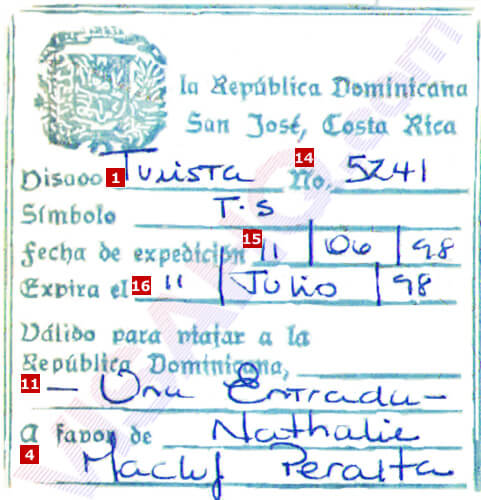
Apply for visa
Free import
• Adult travelers: 20 packs of cigarettes or 25 cigars or 200 g of tobacco.
• Adult travelers: up to 5 L of alcoholic drinks (wine, beer, rum, whisky or other liquor).
• Gifts, including duty-free purchases, worth up to USD 500 in total. This exemption can be used only once every 3 months.
• Personal effects for the trip: clothing, shoes, cosmetics, toiletries, books and magazines in non-commercial quantities, 1 laptop and 1 tablet (new or used), sports and camping equipment for personal use, and up to 5 toys for children.
• Medicines for personal use. Medicines containing controlled or psychotropic substances must be carried with the doctor's prescription.
• Equipment used by travelers with disabilities.
• All travelers must complete the e-Ticket, the electronic entry and exit form that includes the customs declaration, at eticket.migracion.gob.do (up to 7 days before travel). Goods above the allowances, and gifts once the USD 500 exemption has been used in the last 3 months, must be declared and are taxed.
Currency
• There is no limit on the amount of money you may bring in.
• Cash, bearer securities and other bearer negotiable instruments of USD 10,000 or more (or the equivalent in Dominican pesos or another currency) must be declared to customs on arrival, with documents showing where the money comes from. Failure to declare, or a false declaration, can lead to confiscation of the money, a fine and a prison sentence of 6 months to 1 year.
Prohibited
• Illegal drugs and psychotropic substances without a prescription
• Contaminating substances and other goods that affect national security
Restricted
• Firearms and ammunition: visitors may bring weapons in only temporarily for official security missions or shooting competitions. The request must be filed with a Dominican embassy or consulate at least 30 days before the event, for approval by the Ministry of Foreign Affairs and the Ministry of Defence. Do not travel with a firearm without this approval.
• Fruit, vegetables, plants, seeds, meat, dairy products, eggs, honey and other food of plant or animal origin must be declared. They are subject to Ministry of Agriculture and Ministry of Public Health rules and are checked by agricultural quarantine officers and detector dogs; items that do not meet the requirements are confiscated.
• Live wild animals and plants, and products made from protected species, need a permit from the Ministry of Environment and Natural Resources (CITES rules apply).
• Dogs and cats need a health certificate issued by a veterinarian and endorsed by an official veterinarian at the place of departure, showing the owner's address in the Dominican Republic, the animal's identification (microchip or tattoo), vaccinations and internal and external parasite treatment, with the vaccination record. The pet must be examined within 72 hours before departure and vaccinated against rabies (inactivated vaccine) at least 30 days and no more than 12 months before departure; the 30-day wait does not apply to adult dogs with a continuous rabies vaccination history. Puppies and kittens must be at least 3 months old when vaccinated against rabies. Service animals must meet the same requirements.
• Adult travelers: 20 packs of cigarettes or 25 cigars or 200 g of tobacco.
• Adult travelers: up to 5 L of alcoholic drinks (wine, beer, rum, whisky or other liquor).
• Gifts, including duty-free purchases, worth up to USD 500 in total. This exemption can be used only once every 3 months.
• Personal effects for the trip: clothing, shoes, cosmetics, toiletries, books and magazines in non-commercial quantities, 1 laptop and 1 tablet (new or used), sports and camping equipment for personal use, and up to 5 toys for children.
• Medicines for personal use. Medicines containing controlled or psychotropic substances must be carried with the doctor's prescription.
• Equipment used by travelers with disabilities.
• All travelers must complete the e-Ticket, the electronic entry and exit form that includes the customs declaration, at eticket.migracion.gob.do (up to 7 days before travel). Goods above the allowances, and gifts once the USD 500 exemption has been used in the last 3 months, must be declared and are taxed.
Currency
• There is no limit on the amount of money you may bring in.
• Cash, bearer securities and other bearer negotiable instruments of USD 10,000 or more (or the equivalent in Dominican pesos or another currency) must be declared to customs on arrival, with documents showing where the money comes from. Failure to declare, or a false declaration, can lead to confiscation of the money, a fine and a prison sentence of 6 months to 1 year.
Prohibited
• Illegal drugs and psychotropic substances without a prescription
• Contaminating substances and other goods that affect national security
Restricted
• Firearms and ammunition: visitors may bring weapons in only temporarily for official security missions or shooting competitions. The request must be filed with a Dominican embassy or consulate at least 30 days before the event, for approval by the Ministry of Foreign Affairs and the Ministry of Defence. Do not travel with a firearm without this approval.
• Fruit, vegetables, plants, seeds, meat, dairy products, eggs, honey and other food of plant or animal origin must be declared. They are subject to Ministry of Agriculture and Ministry of Public Health rules and are checked by agricultural quarantine officers and detector dogs; items that do not meet the requirements are confiscated.
• Live wild animals and plants, and products made from protected species, need a permit from the Ministry of Environment and Natural Resources (CITES rules apply).
• Dogs and cats need a health certificate issued by a veterinarian and endorsed by an official veterinarian at the place of departure, showing the owner's address in the Dominican Republic, the animal's identification (microchip or tattoo), vaccinations and internal and external parasite treatment, with the vaccination record. The pet must be examined within 72 hours before departure and vaccinated against rabies (inactivated vaccine) at least 30 days and no more than 12 months before departure; the 30-day wait does not apply to adult dogs with a continuous rabies vaccination history. Puppies and kittens must be at least 3 months old when vaccinated against rabies. Service animals must meet the same requirements.