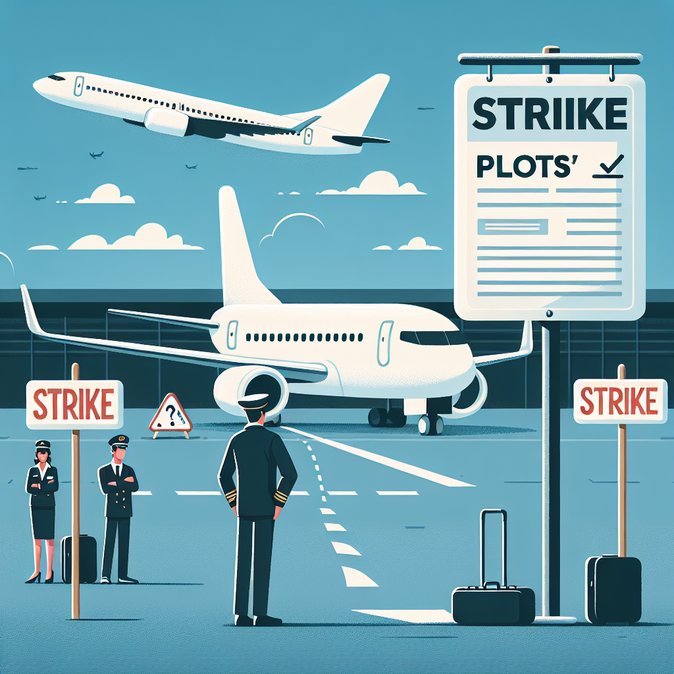
Germany’s air transport network is bracing for fresh turbulence after Vereinigung Cockpit (VC), the union representing 5,200 Lufthansa mainline, Lufthansa Cargo and CityLine pilots, announced a 48-hour walk-out from 00:01 CET on Monday 13 April until 23:59 CET on Tuesday 14 April 2026. The industrial action comes barely 48 hours after cabin-crew stoppages forced the cancellation of more than 520 flights and stranded an estimated 90,000 passengers during the post-Easter travel rush. VC says the strike is aimed at “unlocking movement” in stalled talks over pay progression, pension top-ups and limits on wet-leasing. Management maintains that pilot compensation already outpaces peers and insists any further increases must be tied to productivity gains as the airline battles higher fuel costs and geopolitical reroutings.
Operationally, Lufthansa has begun proactive cancellations: about 1,200 flights—mainly short-haul feeder services into Frankfurt (FRA) and Munich (MUC)—have already been pulled from the system, with long-haul rotations prioritised where crews can be positioned ahead of the strike window.
Travel industry analysts warn that knock-on effects will ripple across alliance partners and interline itineraries, potentially delaying cargo flows just as manufacturers ramp up after the Easter shutdown.
![Lufthansa pilots call 48-hour strike for 13–14 April, threatening major disruption at German hubs]()
If your itinerary involves non-Schengen legs or colleagues arriving from further afield, VisaHQ can help smooth the process. The service’s dedicated Germany portal (https://www.visahq.com/germany/) lists up-to-date entry requirements, allows for digital applications and offers courier assistance—particularly useful when strikes force last-minute rerouting and turnarounds.
For corporate mobility managers, the immediate task is contingency rebooking. Lufthansa is offering free changes or refunds for tickets issued on or before 11 April and has relaxed fare rules to allow passengers to reroute via Zurich, Vienna or Brussels on group-owned carriers.
Travellers whose meetings cannot be rescheduled are being advised to consider rail alternatives on Germany’s dense ICE network, though seat availability will tighten quickly.
Longer-term, the confrontation underscores structural fragility in Germany’s connectivity just as the country courts foreign investment under its revamped Skilled Immigration Act. With inflation still sticky and multiple labour agreements up for renewal, mobility planners should expect further strike waves through the summer schedule and build larger time-buffers into assignment planning.
Operationally, Lufthansa has begun proactive cancellations: about 1,200 flights—mainly short-haul feeder services into Frankfurt (FRA) and Munich (MUC)—have already been pulled from the system, with long-haul rotations prioritised where crews can be positioned ahead of the strike window.
Travel industry analysts warn that knock-on effects will ripple across alliance partners and interline itineraries, potentially delaying cargo flows just as manufacturers ramp up after the Easter shutdown.

If your itinerary involves non-Schengen legs or colleagues arriving from further afield, VisaHQ can help smooth the process. The service’s dedicated Germany portal (https://www.visahq.com/germany/) lists up-to-date entry requirements, allows for digital applications and offers courier assistance—particularly useful when strikes force last-minute rerouting and turnarounds.
For corporate mobility managers, the immediate task is contingency rebooking. Lufthansa is offering free changes or refunds for tickets issued on or before 11 April and has relaxed fare rules to allow passengers to reroute via Zurich, Vienna or Brussels on group-owned carriers.
Travellers whose meetings cannot be rescheduled are being advised to consider rail alternatives on Germany’s dense ICE network, though seat availability will tighten quickly.
Longer-term, the confrontation underscores structural fragility in Germany’s connectivity just as the country courts foreign investment under its revamped Skilled Immigration Act. With inflation still sticky and multiple labour agreements up for renewal, mobility planners should expect further strike waves through the summer schedule and build larger time-buffers into assignment planning.