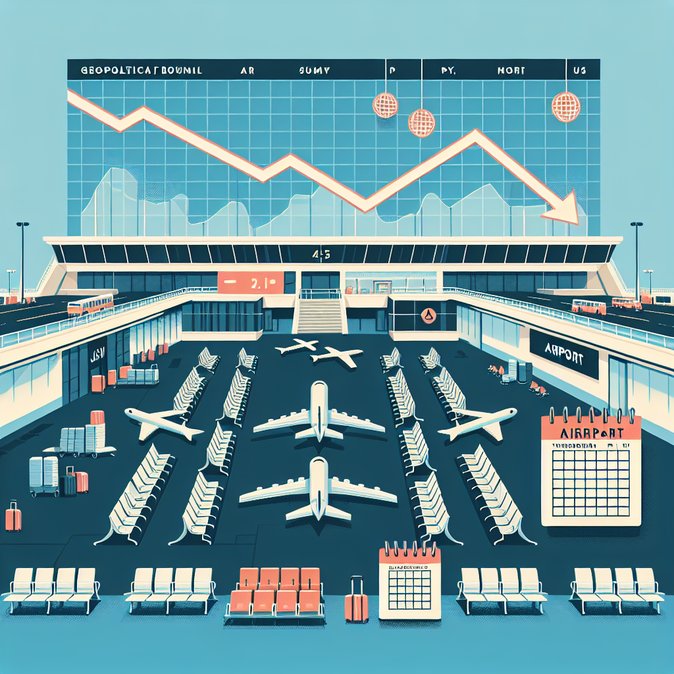
Hermes Airports, the operator of Larnaca and Paphos international airports, confirmed that Cyprus felt an abrupt shockwave from the wider Middle-East conflict during March. In data released this week and picked up in Cyprus Mail’s 12 April business wrap-up, the company said 599,218 travellers used the two gateways last month, down from 707,204 in March 2025 – a year-on-year fall of 15.3 %.
![Cyprus Airports See 15.3 % March Passenger Drop as Regional Conflict Hits Mobility]()
Amid the turbulence, many travellers are also scrambling to verify entry requirements. VisaHQ can remove that headache: its dedicated Cyprus page (https://www.visahq.com/cyprus/) lets companies and individuals check visa rules, complete applications online and track approvals in real time, helping mobility managers avoid last-minute documentation snags.
Larnaca bore the brunt with a 17.1 % decline, while Paphos traffic slipped 10.7 %. The contraction ended a run of record-breaking months for Cyprus aviation and underscores how fast geopolitical events can upend corporate travel plans. Several Gulf and Israeli carriers trimmed frequencies or temporarily rerouted aircraft after the Iran war pushed up insurance costs and complicated over-flights. Tour operators subsequently reduced seat blocks, leaving travel managers scrambling to re-book Easter rotations for project teams and expatriate families. For businesses with regional headquarters in Limassol or Nicosia, the figures translate into tighter capacity, rising fares and longer journey times just as multinationals prepare for the summer assignment cycle. HR mobility leads are already reporting higher relocation budgets; one Big-Four firm told Cyprus Mail it is budgeting an extra 12 % for airfare on intra-EMEA moves originating in March-April. Government agencies are responding on two fronts. First, the Deputy Ministry of Tourism is accelerating joint marketing campaigns in the UK and Germany to reassure leisure travellers that Cyprus remains a safe hub outside the conflict zone. Second, the Transport Ministry is reviewing slot allocation priorities so that critical connectivity – notably to London, Athens and Tel Aviv – is protected if further regional turbulence occurs. Practical take-away: mobility teams should lock in summer seat allotments early, build routing flexibility (e.g., via Athens) into travel policies and monitor airline waiver updates daily. Employers relocating staff in Q2 should budget for peak-season surcharges and consider temporary serviced accommodation if arrival dates shift.
Amid the turbulence, many travellers are also scrambling to verify entry requirements. VisaHQ can remove that headache: its dedicated Cyprus page (https://www.visahq.com/cyprus/) lets companies and individuals check visa rules, complete applications online and track approvals in real time, helping mobility managers avoid last-minute documentation snags.
Larnaca bore the brunt with a 17.1 % decline, while Paphos traffic slipped 10.7 %. The contraction ended a run of record-breaking months for Cyprus aviation and underscores how fast geopolitical events can upend corporate travel plans. Several Gulf and Israeli carriers trimmed frequencies or temporarily rerouted aircraft after the Iran war pushed up insurance costs and complicated over-flights. Tour operators subsequently reduced seat blocks, leaving travel managers scrambling to re-book Easter rotations for project teams and expatriate families. For businesses with regional headquarters in Limassol or Nicosia, the figures translate into tighter capacity, rising fares and longer journey times just as multinationals prepare for the summer assignment cycle. HR mobility leads are already reporting higher relocation budgets; one Big-Four firm told Cyprus Mail it is budgeting an extra 12 % for airfare on intra-EMEA moves originating in March-April. Government agencies are responding on two fronts. First, the Deputy Ministry of Tourism is accelerating joint marketing campaigns in the UK and Germany to reassure leisure travellers that Cyprus remains a safe hub outside the conflict zone. Second, the Transport Ministry is reviewing slot allocation priorities so that critical connectivity – notably to London, Athens and Tel Aviv – is protected if further regional turbulence occurs. Practical take-away: mobility teams should lock in summer seat allotments early, build routing flexibility (e.g., via Athens) into travel policies and monitor airline waiver updates daily. Employers relocating staff in Q2 should budget for peak-season surcharges and consider temporary serviced accommodation if arrival dates shift.