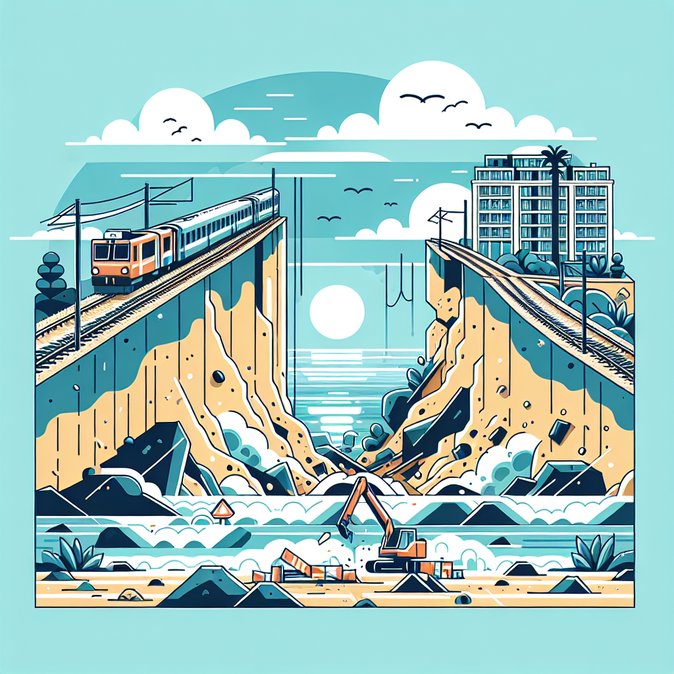
In welcome news for north–south connectivity, the Adriatic railway corridor between Termoli and Montenero di Bisaccia reopened at 06:00 on 10 April 2026 following emergency earth-moving works to stabilise the Petacciato landslide. The blockage had severed a critical freight and passenger artery for 48 hours, forcing Trenitalia to reroute Intercity services via Rome and bus-bridge regional commuters in Molise. La Stampa reports that traffic is “gradually resuming”, yet speed restrictions and single-track working are adding up to 70 minutes to journeys. The slope above the track slipped after torrential spring rains, buckling rails and toppling signalling poles. Geologists from RFI installed inclinometers and a 120-metre rockfall fence before authorising limited traffic, but warn that further rainfall could trigger closures.
![Adriatic Main Line Reopens After Petacciato Landslide but Schedule Chaos Continues]()
Whether you’re a business traveller needing to reach Italy’s industrial south or a holidaymaker rebooking a rail itinerary, VisaHQ can help ensure your travel documents keep pace with shifting schedules. The platform offers quick, online visa and passport services for Italy and over 200 other destinations, complete with real-time tracking and expert support—visit https://www.visahq.com/italy/ for details.
The incident exposes infrastructure fragility along Italy’s eastern seaboard, where sea-cliff erosion and unstable clay soils intersect vital logistics corridors used by automotive exporters shipping via Ancona and Bari ports. For corporate mobility teams the reopening means expatriate staff can again travel between northern headquarters and southern plants without detouring via the congested Florence-Rome high-speed spine. Freight forwarders, however, predict three days of backlog clearance before normal wagon flows resume, potentially delaying just-in-time parts deliveries to Abruzzo’s aerospace cluster. Insurers remind companies to review business-interruption clauses that treat landslide-induced rail stoppages as force majeure events. Long-term, RFI has earmarked €400 million for landslide mitigation on the Bologna-Lecce axis, including drainage tunnels and remote-sensor networks. Environmental groups urge the government to accelerate works, citing climate-change models that show a 30 % rise in extreme-rain episodes for Molise by 2030. Travellers can check the ViaggiaTreno app for live updates; Trenitalia is honouring tickets on alternative routes until 14 April.

Whether you’re a business traveller needing to reach Italy’s industrial south or a holidaymaker rebooking a rail itinerary, VisaHQ can help ensure your travel documents keep pace with shifting schedules. The platform offers quick, online visa and passport services for Italy and over 200 other destinations, complete with real-time tracking and expert support—visit https://www.visahq.com/italy/ for details.
The incident exposes infrastructure fragility along Italy’s eastern seaboard, where sea-cliff erosion and unstable clay soils intersect vital logistics corridors used by automotive exporters shipping via Ancona and Bari ports. For corporate mobility teams the reopening means expatriate staff can again travel between northern headquarters and southern plants without detouring via the congested Florence-Rome high-speed spine. Freight forwarders, however, predict three days of backlog clearance before normal wagon flows resume, potentially delaying just-in-time parts deliveries to Abruzzo’s aerospace cluster. Insurers remind companies to review business-interruption clauses that treat landslide-induced rail stoppages as force majeure events. Long-term, RFI has earmarked €400 million for landslide mitigation on the Bologna-Lecce axis, including drainage tunnels and remote-sensor networks. Environmental groups urge the government to accelerate works, citing climate-change models that show a 30 % rise in extreme-rain episodes for Molise by 2030. Travellers can check the ViaggiaTreno app for live updates; Trenitalia is honouring tickets on alternative routes until 14 April.