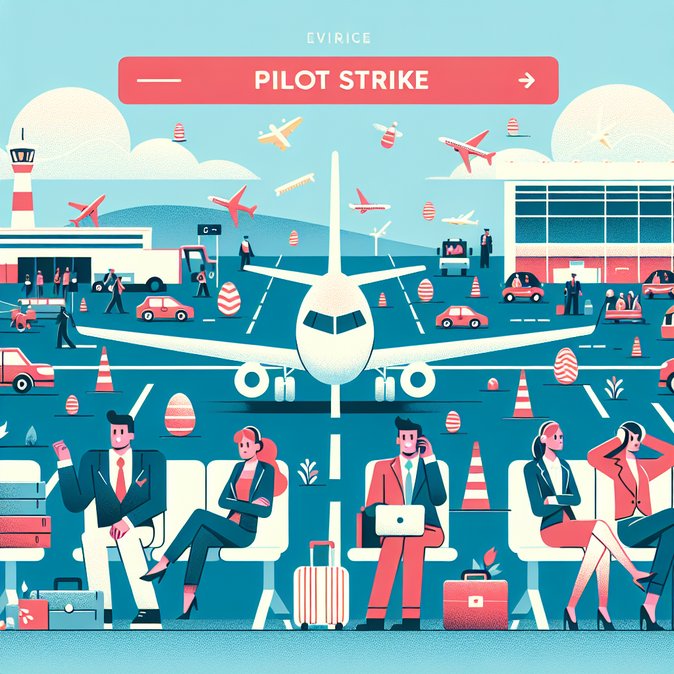
Lufthansa’s third major labour action of 2026 hit just as millions of Germans were returning from the Easter break. From 00:01 to 22:00 on Friday, 10 April, some 20,000 flight attendants represented by the Independent Flight Attendants’ Organisation (UFO) walked out after wage talks collapsed. The carrier pre-emptively cancelled more than 520 flights—about three-quarters of its planned departures from Frankfurt and Munich—affecting an estimated 100,000 travellers. UFO accuses management of failing to present “any negotiable offer” on pay, roster stability and career progression. Lufthansa CEO Jens Ritter publicly apologised, admitting the strike “really hurts” the airline both financially and reputationally. While group sisters SWISS and Austrian Airlines up-gauged aircraft to rescue long-haul connections, domestic and intra-Schengen services bore the brunt; many passengers were given Deutsche Bahn rail vouchers for same-day travel within Germany.
![One-day cabin-crew strike on 10 April strands 100,000 passengers as Lufthansa scrambles to restore schedule]()
For international travellers caught up in the turmoil—or anyone planning a future trip—having the right entry documents in place is crucial. VisaHQ’s dedicated Germany page (https://www.visahq.com/germany/) lets you check visa requirements, submit applications online and receive real-time status updates, so unexpected schedule changes don’t turn into border problems. The platform can also advise on Schengen overstay implications should strikes prolong your stay, removing one more worry from an already stressful situation.
Knock-on effects lingered into Saturday as crew positioning and aircraft rotations normalised. Cirium data show Lufthansa’s on-time performance dropped to 31 % on 10 April and was still only 64 % by midday on the 11th. Analysts at HSBC now expect the carrier to miss its Q2 punctuality target of 80 %, potentially triggering penalty clauses in corporate volume contracts. For mobility managers the episode highlights the need for robust disruption plans. VDR recommends inserting a ‘labour-action clause’ in travel policy that allows employees to self-book alternative transport up to a capped budget without prior approval. Travellers should also retain receipts: although strikes are usually deemed “extraordinary circumstances,” compensation may apply if notification came less than 14 days beforehand and re-routing was not offered. UFO and Lufthansa have agreed to resume negotiations on 15 April under the auspices of the Federal Conciliation Service. Should talks fail, the union says it is prepared to escalate to a 48-hour action in May—adding further uncertainty for spring and summer business travel.
For international travellers caught up in the turmoil—or anyone planning a future trip—having the right entry documents in place is crucial. VisaHQ’s dedicated Germany page (https://www.visahq.com/germany/) lets you check visa requirements, submit applications online and receive real-time status updates, so unexpected schedule changes don’t turn into border problems. The platform can also advise on Schengen overstay implications should strikes prolong your stay, removing one more worry from an already stressful situation.
Knock-on effects lingered into Saturday as crew positioning and aircraft rotations normalised. Cirium data show Lufthansa’s on-time performance dropped to 31 % on 10 April and was still only 64 % by midday on the 11th. Analysts at HSBC now expect the carrier to miss its Q2 punctuality target of 80 %, potentially triggering penalty clauses in corporate volume contracts. For mobility managers the episode highlights the need for robust disruption plans. VDR recommends inserting a ‘labour-action clause’ in travel policy that allows employees to self-book alternative transport up to a capped budget without prior approval. Travellers should also retain receipts: although strikes are usually deemed “extraordinary circumstances,” compensation may apply if notification came less than 14 days beforehand and re-routing was not offered. UFO and Lufthansa have agreed to resume negotiations on 15 April under the auspices of the Federal Conciliation Service. Should talks fail, the union says it is prepared to escalate to a 48-hour action in May—adding further uncertainty for spring and summer business travel.