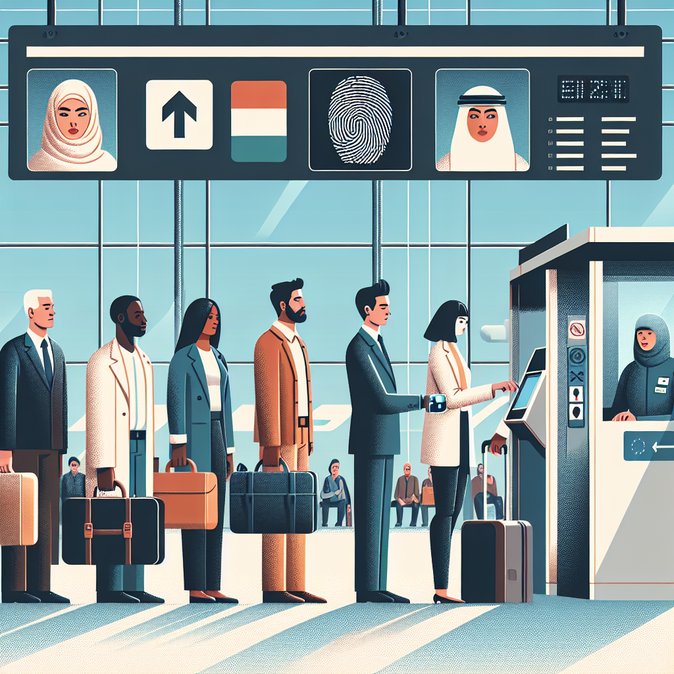
Less than 24 hours after the Entry/Exit System (EES) became mandatory, fresh data illustrate both its security value and potential operational headaches. According to Pax Global Media, EU officials report that since phased testing began last October, the system has logged 52 million crossings, flagged nearly 700 travellers as security threats and denied entry to more than 27,000 people—several hundred of them at German air and land borders. In Frankfurt, Bundespolizei spokesperson Nina Kiefer said 18 passengers were refused entry on the first full EES day—mostly for previous over-stays that the old paper-stamp regime failed to detect. Munich Airport encountered longer-than-normal queues at midday on 10 April when several kiosks needed rebooting, prompting manual fallback. Processing times stabilised by evening but airport operator FMG warns that if even 10 % of kiosks are out of service during the summer rush, wait times could balloon past 90 minutes. For multinational employers relocating staff to Germany, the upside is better visibility of days spent in Schengen. Deloitte’s immigration practice advises clients to download raw EES data once the EU portal opens later this quarter to reconcile against internal travel-tracking tools and avoid inadvertent 90/180-day breaches.
![Early EES statistics: 27,000 entries refused—Munich and Frankfurt brace for peak-season queues]()
At this stage, many travellers are discovering gaps in their paperwork only when they reach the border; VisaHQ can help long before that happens. The company’s digital platform—available at https://www.visahq.com/germany/—consolidates visa, passport and Schengen entry requirements in one dashboard, guiding users through each document step and flagging potential over-stay risks in the post-EES environment, which can save both time and penalties.
Travel suppliers are also adapting. Lufthansa and Eurowings now instruct ground agents to remind non-EU premium passengers to pre-register via the ‘Travel to Europe’ mobile app to speed up kiosk time. Meanwhile, Berlin BER is trialling a priority lane for business-class and trusted-traveller programme members, though regulators stress any fast-track must still collect the full biometric dataset. In the short term, corporates are urged to tell travellers to leave extra buffer time and to record any EES-related delays, which might support future compensation claims if missed connections occur. The Interior Ministry says a public dashboard with daily queue-time averages across major German airports will launch by June.

At this stage, many travellers are discovering gaps in their paperwork only when they reach the border; VisaHQ can help long before that happens. The company’s digital platform—available at https://www.visahq.com/germany/—consolidates visa, passport and Schengen entry requirements in one dashboard, guiding users through each document step and flagging potential over-stay risks in the post-EES environment, which can save both time and penalties.
Travel suppliers are also adapting. Lufthansa and Eurowings now instruct ground agents to remind non-EU premium passengers to pre-register via the ‘Travel to Europe’ mobile app to speed up kiosk time. Meanwhile, Berlin BER is trialling a priority lane for business-class and trusted-traveller programme members, though regulators stress any fast-track must still collect the full biometric dataset. In the short term, corporates are urged to tell travellers to leave extra buffer time and to record any EES-related delays, which might support future compensation claims if missed connections occur. The Interior Ministry says a public dashboard with daily queue-time averages across major German airports will launch by June.
More From Germany
View all
Lufthansa pilots call 48-hour strike for April 13-14, threatening major disruption at German hubs
One-day cabin-crew strike on 10 April strands 100,000 passengers as Lufthansa scrambles to restore schedule