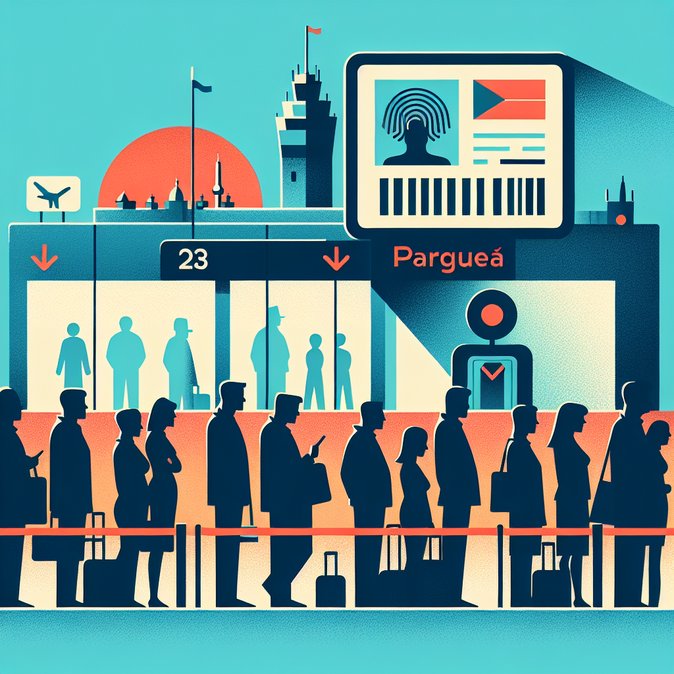
Prague’s Václav Havel Airport entered a new era of border management on 10 April when the European Union’s long-delayed Entry/Exit System (EES) was switched on at all external Schengen checkpoints. Under the scheme, every traveller from a non-EU country must have four fingerprints and a facial image captured on first entry, with subsequent crossings verified against the biometric record instead of a passport stamp. The European Commission said that, since the pilot phase began in October, the system has already refused entry to more than 27,000 people—700 of them flagged as security risks. For Czechia the change was immediately visible. Prague Airport reported peak-period queues stretching well beyond the passport hall, and airlines urged passengers on long-haul and UK/US flights to arrive at least three hours in advance.
![Biometric Entry/Exit System Launch Triggers Long Queues at Prague Airport]()
For travellers and mobility managers looking to stay ahead of these changes, VisaHQ offers an easy way to verify documentation requirements, track allowable days in the Schengen Area, and submit ETIAS pre-authorisations as soon as they go live. Its Czech Republic portal (https://www.visahq.com/czech-republic/) consolidates the latest entry rules and provides live support, helping visitors and employers minimise the risk of non-compliance.
According to Airports Council International Europe, some airports across the bloc experienced border-control waits of two to three hours on day one, prompting calls for flexibility to suspend EES temporarily if lines become excessive. The Interior Ministry has redeployed additional police officers and installed extra self-service kiosks at Terminal 1, but officials concede the Easter-holiday surge will test capacity. Business-travel managers are warning companies to factor longer connection times into itineraries and to brief visitors on the need for clean, unbandaged fingers—henna tattoos and recent cuts have caused repeated scan failures. Beyond the initial teething troubles, the EES promises big compliance implications for Czech employers. The automated system will make an overstay calculable to the minute; HR teams that rotate non-EU staff between Schengen countries will need watertight day-count monitoring. Later this year, the biometric database will feed into ETIAS, the new €7 pre-travel authorisation that will apply even to U.S., U.K. and Canadian nationals. Companies that rely on last-minute assignments may therefore have to build extra lead-time into travel approvals. Travel-technology providers are racing to integrate EES status alerts into booking tools so that assignees know whether their biometrics are already on file. Until those solutions mature, experts recommend carrying proof of previous EES enrolment to speed up manual fallback procedures. In the medium term, Prague is expected to expand its e-gate fleet and open dedicated fast-track lanes for frequent business travellers, but the projects will not be completed before the summer peak.

For travellers and mobility managers looking to stay ahead of these changes, VisaHQ offers an easy way to verify documentation requirements, track allowable days in the Schengen Area, and submit ETIAS pre-authorisations as soon as they go live. Its Czech Republic portal (https://www.visahq.com/czech-republic/) consolidates the latest entry rules and provides live support, helping visitors and employers minimise the risk of non-compliance.
According to Airports Council International Europe, some airports across the bloc experienced border-control waits of two to three hours on day one, prompting calls for flexibility to suspend EES temporarily if lines become excessive. The Interior Ministry has redeployed additional police officers and installed extra self-service kiosks at Terminal 1, but officials concede the Easter-holiday surge will test capacity. Business-travel managers are warning companies to factor longer connection times into itineraries and to brief visitors on the need for clean, unbandaged fingers—henna tattoos and recent cuts have caused repeated scan failures. Beyond the initial teething troubles, the EES promises big compliance implications for Czech employers. The automated system will make an overstay calculable to the minute; HR teams that rotate non-EU staff between Schengen countries will need watertight day-count monitoring. Later this year, the biometric database will feed into ETIAS, the new €7 pre-travel authorisation that will apply even to U.S., U.K. and Canadian nationals. Companies that rely on last-minute assignments may therefore have to build extra lead-time into travel approvals. Travel-technology providers are racing to integrate EES status alerts into booking tools so that assignees know whether their biometrics are already on file. Until those solutions mature, experts recommend carrying proof of previous EES enrolment to speed up manual fallback procedures. In the medium term, Prague is expected to expand its e-gate fleet and open dedicated fast-track lanes for frequent business travellers, but the projects will not be completed before the summer peak.