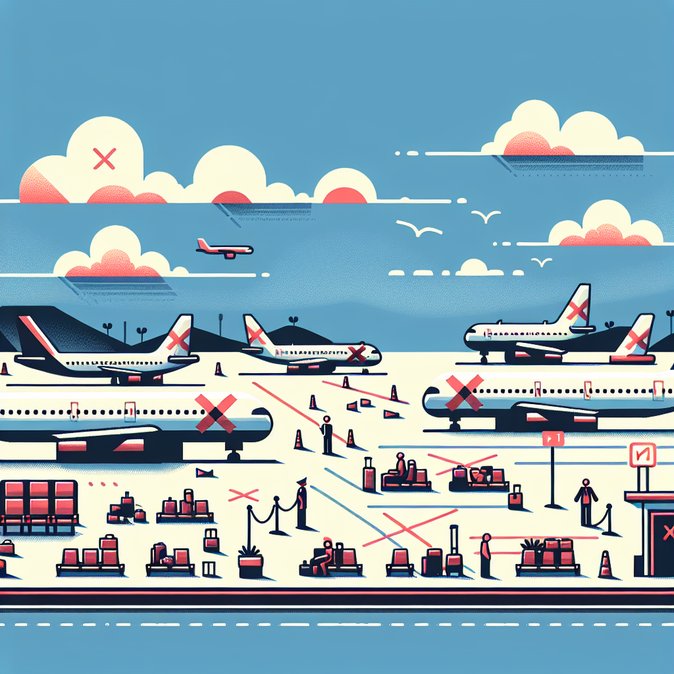
A 24-hour strike by Lufthansa and Lufthansa CityLine cabin crew on Friday, 10 April 2026, reverberated far beyond Germany, causing knock-on disruption for Austrian business travellers returning from Easter holidays. While Austrian Airlines and other group carriers were not on strike, some 520 Lufthansa flights were cancelled at Frankfurt, Munich and seven regional German hubs, stranding an estimated 100,000 passengers. Many of them were ticketed on itineraries that connected through Vienna or onward to Austrian regional airports. Vienna International Airport reported 52 delayed arrivals and 19 cancellations on Friday evening as aircraft and crews fell out of rotation. Ground handlers struggled to re-book passengers because most alternative routings via the Lufthansa Group were already full; several corporate travel managers chartered coaches to move staff from Munich to Vienna to catch evening Austrian Airlines services. Travel-tracking firm Mabrian Analytics recorded a 38 percent spike in real-time re-booking searches for Austrian origin-and-destination traffic between noon and 6 p.m. local time.
![Lufthansa Cabin-Crew Strike Ripples into Austria, Forcing Re-routes and Delays at Vienna Airport]()
During cascading disruptions like these, VisaHQ can be a valuable back-up for stranded travellers and mobility teams. Through its Austria-focused portal (https://www.visahq.com/austria/), the service can fast-track emergency travel documents, provide Schengen-day calculators and arrange courier delivery of passports—helping employees stay compliant if delays force unexpected routings or longer stays.
Under EU Regulation 261/2004, strikes by an airline’s own staff are not considered “extraordinary circumstances,” making Lufthansa potentially liable for up to €600 compensation per affected traveller. The airline urged passengers to file claims online and promised reimbursement for meals, hotels and onward ground transport. Mobility advisers are telling Austrian employers to document all extra costs—including taxi receipts for Vienna-Munich transfers—so they can be reclaimed. Employers should also remind posted workers that the extra days abroad will now be automatically visible in the EES system and may affect 90-in-180-day calculations. Although the strike formally ended at 22:00 CET on Friday, residual disruption continued into Saturday, 11 April, as crews and aircraft repositioned. Lufthansa expects its schedule to normalise by Sunday but has not ruled out further industrial action; the UFO union says talks over pay and rostering rules remain “deadlocked.” Austrian travel managers with high volumes of Germany-bound traffic are reviewing contingency plans, including shifting part of their corporate programme to rail or to non-group carriers. The episode highlights how labour unrest in neighbouring countries can quickly cascade into Austria’s tightly interconnected travel ecosystem. For global-mobility teams, the strike is a fresh reminder to monitor labour negotiations across airlines, build flexibility into assignment travel and ensure travellers have emergency cash or company credit cards to cover last-minute expenses.
During cascading disruptions like these, VisaHQ can be a valuable back-up for stranded travellers and mobility teams. Through its Austria-focused portal (https://www.visahq.com/austria/), the service can fast-track emergency travel documents, provide Schengen-day calculators and arrange courier delivery of passports—helping employees stay compliant if delays force unexpected routings or longer stays.
Under EU Regulation 261/2004, strikes by an airline’s own staff are not considered “extraordinary circumstances,” making Lufthansa potentially liable for up to €600 compensation per affected traveller. The airline urged passengers to file claims online and promised reimbursement for meals, hotels and onward ground transport. Mobility advisers are telling Austrian employers to document all extra costs—including taxi receipts for Vienna-Munich transfers—so they can be reclaimed. Employers should also remind posted workers that the extra days abroad will now be automatically visible in the EES system and may affect 90-in-180-day calculations. Although the strike formally ended at 22:00 CET on Friday, residual disruption continued into Saturday, 11 April, as crews and aircraft repositioned. Lufthansa expects its schedule to normalise by Sunday but has not ruled out further industrial action; the UFO union says talks over pay and rostering rules remain “deadlocked.” Austrian travel managers with high volumes of Germany-bound traffic are reviewing contingency plans, including shifting part of their corporate programme to rail or to non-group carriers. The episode highlights how labour unrest in neighbouring countries can quickly cascade into Austria’s tightly interconnected travel ecosystem. For global-mobility teams, the strike is a fresh reminder to monitor labour negotiations across airlines, build flexibility into assignment travel and ensure travellers have emergency cash or company credit cards to cover last-minute expenses.