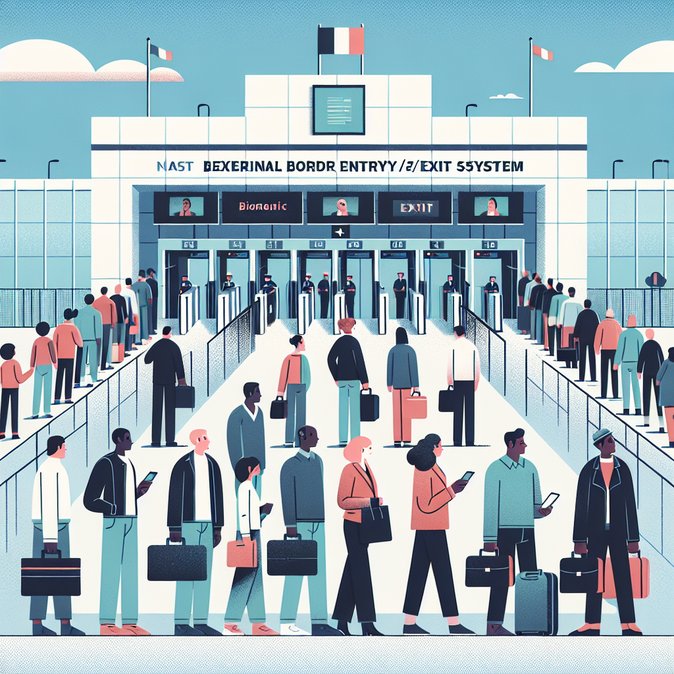
Senior officials from Egypt and France wrapped up a two-day round of strategic migration talks in Paris on 9 April, signalling a pivot from reactive border control to proactive talent mobility. Led by Ambassador Wael Hamed for Cairo and Patrick Stefanini for Paris, the delegations agreed to draft a bilateral framework that will match Egyptian technical graduates with labour shortages in French construction, hospitality and health-care sectors. The programme echoes France’s existing talent-passport scheme but would include Arabic-language support and fast-track visa slots at the French consulate in Cairo. Beyond legal pathways, the sides pledged to intensify joint patrols in the Eastern Mediterranean to disrupt smuggling networks moving migrants toward France via Libya and Italy. French interior-ministry officials said data-sharing agreements will allow real-time checks of fingerprints taken from boats intercepted off Egypt’s north coast against France’s EES database, helping to identify repeat irregular migrants.
![Egypt and France Deepen Partnership on Legal Migration Pathways]()
Stakeholders looking to capitalise on these streamlined mobility channels can turn to VisaHQ for practical assistance. The platform’s France portal (https://www.visahq.com/france/) provides step-by-step guidance on work-permit categories, document assembly and appointment scheduling, enabling employers and recruits alike to navigate the forthcoming quota system with confidence and speed.
Development assistance also featured. Paris promised €60 million for vocational-training centres in Alexandria and Ismailia, aiming to create domestic opportunities that reduce the incentive to attempt dangerous sea crossings. The funding will be channelled through the French Development Agency (AFD) and dovetails with EU Global Gateway infrastructure investment. For French employers, the most tangible benefit is a pipeline of pre-trained workers who can fill roles ahead of the 2026/27 winter tourist season. Mobility managers should note that recruits will receive four-year multi-entry work visas tied to specific industries but not to a single employer—boosting flexibility in regional postings. The next round of consultations is scheduled for November in Cairo, by which time both governments aim to finalise a pilot quota of 5,000 visas. Companies operating in France that face skill shortages—particularly in hospitality hubs such as the Côte d’Azur and ski resorts—may want to register interest early with the Directorate-General for Foreign Nationals in France (DGEF).

Stakeholders looking to capitalise on these streamlined mobility channels can turn to VisaHQ for practical assistance. The platform’s France portal (https://www.visahq.com/france/) provides step-by-step guidance on work-permit categories, document assembly and appointment scheduling, enabling employers and recruits alike to navigate the forthcoming quota system with confidence and speed.
Development assistance also featured. Paris promised €60 million for vocational-training centres in Alexandria and Ismailia, aiming to create domestic opportunities that reduce the incentive to attempt dangerous sea crossings. The funding will be channelled through the French Development Agency (AFD) and dovetails with EU Global Gateway infrastructure investment. For French employers, the most tangible benefit is a pipeline of pre-trained workers who can fill roles ahead of the 2026/27 winter tourist season. Mobility managers should note that recruits will receive four-year multi-entry work visas tied to specific industries but not to a single employer—boosting flexibility in regional postings. The next round of consultations is scheduled for November in Cairo, by which time both governments aim to finalise a pilot quota of 5,000 visas. Companies operating in France that face skill shortages—particularly in hospitality hubs such as the Côte d’Azur and ski resorts—may want to register interest early with the Directorate-General for Foreign Nationals in France (DGEF).