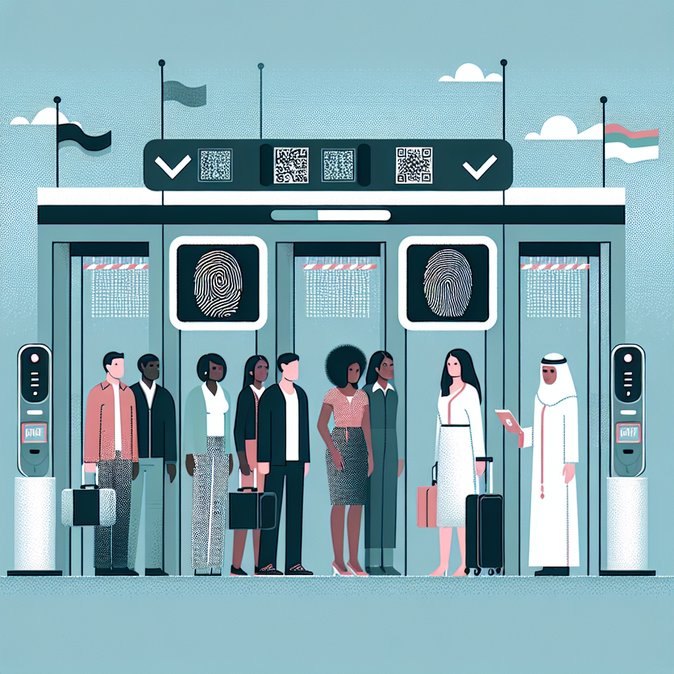
Finland’s border authorities flipped the switch on a new era of passenger processing at 00:01 on 10 April 2026, when the European Entry/Exit System (EES) became fully operational across all Schengen external borders. The Helsinki-Vantaa and Rovaniemi airports, the Port of Helsinki and Finnair’s check-in back-office now capture fingerprints and facial images from third-country nationals instead of stamping passports. According to the European Commission, more than 52 million crossings had already been recorded during the phased roll-out; the live launch makes the digital register mandatory for every non-EU short-stay traveller.
![EU Entry/Exit System Goes Live: Finland Braces for the Digital Border Era]()
For travellers and mobility coordinators who want help navigating these new EES requirements, VisaHQ offers up-to-date guidance and document support for trips to Finland, including Schengen day calculations and carrier compliance checks. Explore their resources at https://www.visahq.com/finland/ to make sure every employee or visitor arrives prepared.
For corporate mobility teams the change is far-reaching. Automated kiosks take up to four minutes to enrol a first-time visitor—quadruple the time of a traditional stamp—so travel managers are adding buffer time to itineraries and advising employees to register on their very first arrival. Carriers serving Finland must also connect to the EU Carrier Interface to verify that passengers still have Schengen days left before they board, or risk fines and liability for removal. Finland’s Border Guard says it has hired 120 seasonal officers and deployed roving “mobile-EES” tablets at gates most used by business travellers to keep queues moving. Still, technical bottlenecks remain. A Sky News report notes that some member states—including France—have struggled to link kiosks to the central database, raising the prospect of temporary manual work-arounds at connecting hubs that feed traffic into Finland. Finnish residents and holders of national D-visas are exempt from EES registration but must carry proof of status. Long-haul carriers have started gate-side checks to separate exempt passengers from those who must enrol. Employers are updating assignment letters to include clear instructions and adding EES compliance to pre-trip checklists alongside Schengen 90/180-day calculations and ETIAS (due in late 2026).

For travellers and mobility coordinators who want help navigating these new EES requirements, VisaHQ offers up-to-date guidance and document support for trips to Finland, including Schengen day calculations and carrier compliance checks. Explore their resources at https://www.visahq.com/finland/ to make sure every employee or visitor arrives prepared.
For corporate mobility teams the change is far-reaching. Automated kiosks take up to four minutes to enrol a first-time visitor—quadruple the time of a traditional stamp—so travel managers are adding buffer time to itineraries and advising employees to register on their very first arrival. Carriers serving Finland must also connect to the EU Carrier Interface to verify that passengers still have Schengen days left before they board, or risk fines and liability for removal. Finland’s Border Guard says it has hired 120 seasonal officers and deployed roving “mobile-EES” tablets at gates most used by business travellers to keep queues moving. Still, technical bottlenecks remain. A Sky News report notes that some member states—including France—have struggled to link kiosks to the central database, raising the prospect of temporary manual work-arounds at connecting hubs that feed traffic into Finland. Finnish residents and holders of national D-visas are exempt from EES registration but must carry proof of status. Long-haul carriers have started gate-side checks to separate exempt passengers from those who must enrol. Employers are updating assignment letters to include clear instructions and adding EES compliance to pre-trip checklists alongside Schengen 90/180-day calculations and ETIAS (due in late 2026).