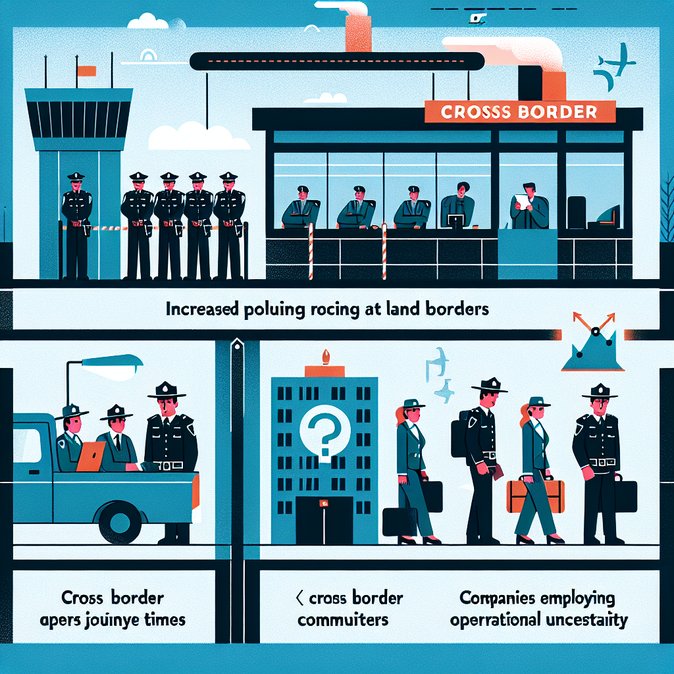
Just hours after Germany celebrated being the fastest EES adopter, the country’s largest police union (GdP) sounded the alarm over the human cost of intensified border policing. In comments published late on 9 April, GdP border-section chief Andreas Roßkopf said the deployment of more than 1,000 riot-police officers to land borders “can only be maintained for a few weeks” without crippling training schedules and piling up overtime debt. The union’s statement follows Interior Minister Alexander Dobrindt’s order last month to step-up spot checks inside Germany’s 30-kilometre border zone. Since the directive took effect, rejections of would-be entrants have surged by almost 50 %, according to internal police tallies. Critics across the political spectrum fear that Germany risks alienating EU neighbours if unilateral controls become the norm.
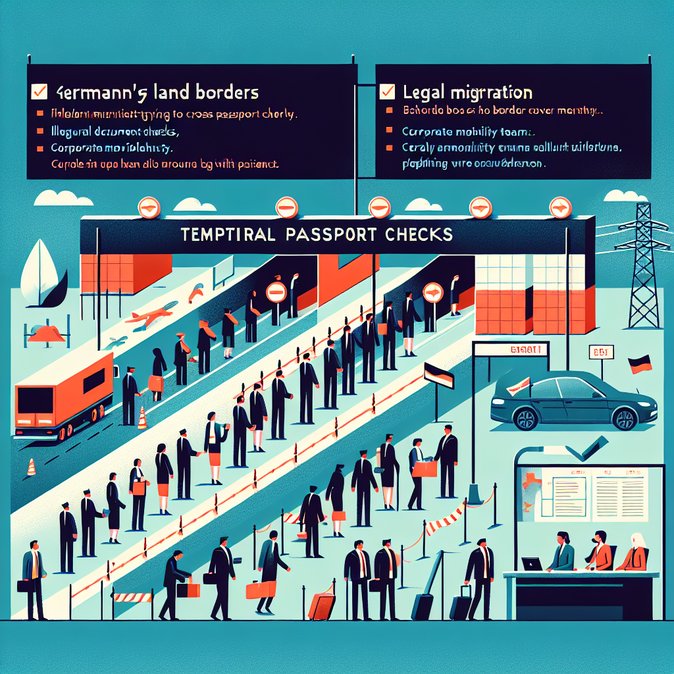
For employers, the debate has practical implications. Staff who commute daily from Austria, Poland or the Czech Republic are again facing random document inspections that can add 20–40 minutes to each journey— an unbudgeted productivity hit for factories and logistics depots clustered near the borders.
At this juncture, many HR teams are turning to specialist visa services such as VisaHQ for up-to-date guidance on which documents commuters must carry and how quickly replacement permits can be arranged. The company’s Germany portal (https://www.visahq.com/germany/) consolidates the latest Schengen and national entry requirements, offers application support for work visas and residence cards, and can even generate invitation letters—resources that help businesses cushion the operational shock of sudden border clamp-downs.
![German Police Union Warns Border Checks Are ‘Unsustainable’ as Rejections Jump 50 %]()
Mobility managers may need to adjust shift timings or provide digital copies of work permits and residence cards that employees can show on demand.
The GdP is calling on the federal government to either scale back controls or boost police headcount permanently. Dobrindt’s ministry has yet to respond, but observers note that the new conservative-led coalition has staked its credibility on tougher migration enforcement. A retreat could prove politically costly ahead of key state elections later this year.
Companies with large cross-border workforces should therefore monitor policy signals closely and consider issuing “border-delay” letters that employees can present to supervisors when inspections cause late arrivals.
In the medium term, digital pre-clearance solutions—similar to those used for trusted-trader freight—may offer relief if labour ministries can align data-protection rules with policing needs.
For employers, the debate has practical implications. Staff who commute daily from Austria, Poland or the Czech Republic are again facing random document inspections that can add 20–40 minutes to each journey— an unbudgeted productivity hit for factories and logistics depots clustered near the borders.
At this juncture, many HR teams are turning to specialist visa services such as VisaHQ for up-to-date guidance on which documents commuters must carry and how quickly replacement permits can be arranged. The company’s Germany portal (https://www.visahq.com/germany/) consolidates the latest Schengen and national entry requirements, offers application support for work visas and residence cards, and can even generate invitation letters—resources that help businesses cushion the operational shock of sudden border clamp-downs.

Mobility managers may need to adjust shift timings or provide digital copies of work permits and residence cards that employees can show on demand.
The GdP is calling on the federal government to either scale back controls or boost police headcount permanently. Dobrindt’s ministry has yet to respond, but observers note that the new conservative-led coalition has staked its credibility on tougher migration enforcement. A retreat could prove politically costly ahead of key state elections later this year.
Companies with large cross-border workforces should therefore monitor policy signals closely and consider issuing “border-delay” letters that employees can present to supervisors when inspections cause late arrivals.
In the medium term, digital pre-clearance solutions—similar to those used for trusted-trader freight—may offer relief if labour ministries can align data-protection rules with policing needs.