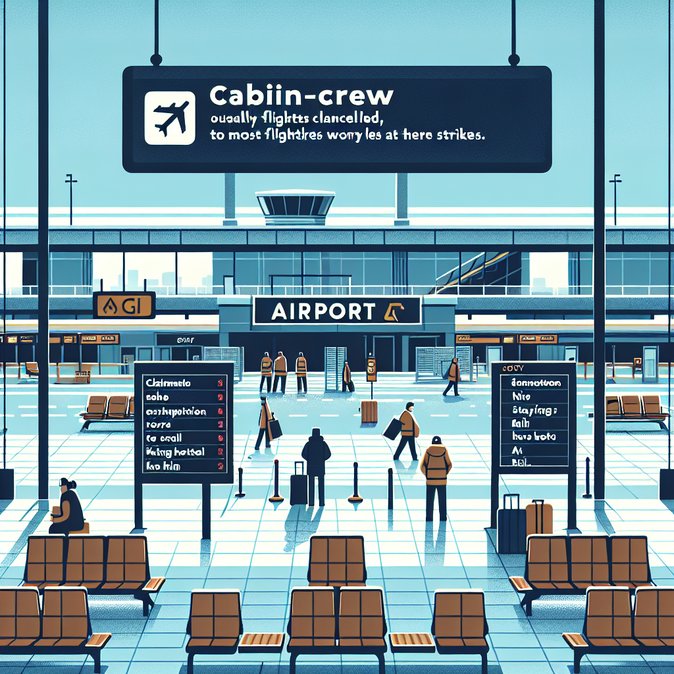
A 24-hour strike by Lufthansa cabin crew has forced the German carrier to cancel roughly 75 percent of departures from Frankfurt today, with cascading effects across the network. While Brussels Airlines flights are operating normally, thousands of Belgian passengers connecting via Frankfurt have been re-routed or stranded.
The walk-out, called by the UFO union after stalled pay talks, began at 00:01 on 10 April. Flight-status boards at Frankfurt showed more than 250 cancellations before noon. Lufthansa long-haul services to North America and Asia were prioritised, leaving short-haul European feeders—including the popular Brussels–Frankfurt shuttle—largely grounded.
![Lufthansa Cabin-Crew Strike Grounds Hundreds of Flights; Belgian Travellers Face Missed Connections]()
During such disruptions, travellers often face last-minute re-routing through unfamiliar hubs where transit-visa rules can change by the hour. VisaHQ’s Belgium portal (https://www.visahq.com/belgium/) lets passengers and corporate mobility managers instantly check whether an unexpected stop in, say, London, Istanbul or Doha requires additional paperwork, and can expedite any necessary visas online—minimising further delays and helping trips stay on track despite the strike.
Travel-management companies in Belgium report a surge in last-minute rail bookings on Deutsche Bahn and Thalys as travellers scramble for alternative routings. Corporate mobility budgets are likely to take a hit: Belgian firms typically rely on Frankfurt for intercontinental connections not offered nonstop from Brussels.
Under EU261 rules, passengers are entitled to rerouting, meals and—in many cases—cash compensation up to €600. Lufthansa says it has activated its “Flight Disruption” tool to automate payouts but warns that processing times may stretch beyond the statutory seven days because of volume. Although the strike ends at midnight, knock-on effects will linger through the weekend. Mobility managers are advised to monitor crew-rostering negotiations; UFO has threatened further action if talks do not progress by the next wage round on 20 April.
The walk-out, called by the UFO union after stalled pay talks, began at 00:01 on 10 April. Flight-status boards at Frankfurt showed more than 250 cancellations before noon. Lufthansa long-haul services to North America and Asia were prioritised, leaving short-haul European feeders—including the popular Brussels–Frankfurt shuttle—largely grounded.

During such disruptions, travellers often face last-minute re-routing through unfamiliar hubs where transit-visa rules can change by the hour. VisaHQ’s Belgium portal (https://www.visahq.com/belgium/) lets passengers and corporate mobility managers instantly check whether an unexpected stop in, say, London, Istanbul or Doha requires additional paperwork, and can expedite any necessary visas online—minimising further delays and helping trips stay on track despite the strike.
Travel-management companies in Belgium report a surge in last-minute rail bookings on Deutsche Bahn and Thalys as travellers scramble for alternative routings. Corporate mobility budgets are likely to take a hit: Belgian firms typically rely on Frankfurt for intercontinental connections not offered nonstop from Brussels.
Under EU261 rules, passengers are entitled to rerouting, meals and—in many cases—cash compensation up to €600. Lufthansa says it has activated its “Flight Disruption” tool to automate payouts but warns that processing times may stretch beyond the statutory seven days because of volume. Although the strike ends at midnight, knock-on effects will linger through the weekend. Mobility managers are advised to monitor crew-rostering negotiations; UFO has threatened further action if talks do not progress by the next wage round on 20 April.