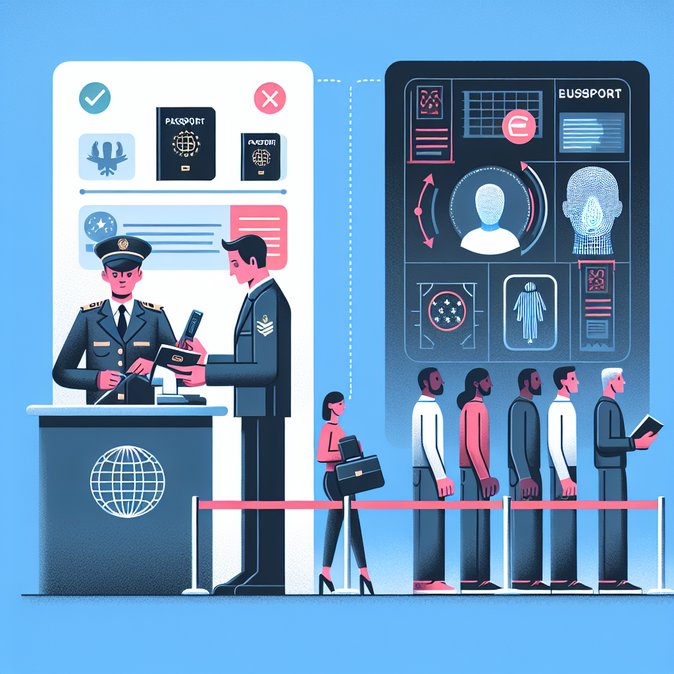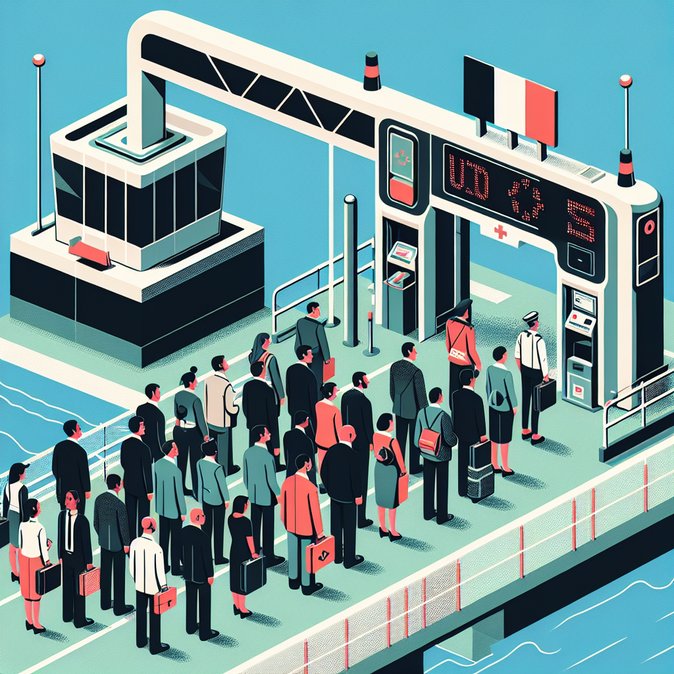
With less than 48 hours to spare, France’s Police aux Frontières (PAF) has confirmed that biometric capture under the EU Entry/Exit System (EES) will *not* begin at Eurostar terminals, Calais and other Channel ports on 10 April as planned. Border-force engineers failed final software tests and discovered there simply is not enough physical space for fingerprint booths without crippling passenger throughput.
• Manual passport stamping will continue for "a few more weeks" while fixes are installed.
• The 90/180-day Schengen limit is still law; it just will not be enforced automatically at these crossings.
• Airports and non-Channel land borders in France remain on schedule for biometric EES processing.
![France postpones biometric checks at Channel crossings days before EES go-live]()
If your organisation needs help tracking Schengen allowances or navigating France’s shifting border procedures, VisaHQ’s digital dashboard can simplify everything from visa applications to day-count management. The platform—available at https://www.visahq.com/france/—delivers live policy alerts, customised reminders and document checklists, ensuring travellers stay compliant even while the EES rollout wobbles.
Business-travel impact: Employers moving staff between London and Paris must keep manual counts of Schengen days to avoid inadvertent overstays. Expect inconsistent experiences—some staff will already be enrolled in EES via airports, others will accumulate new stamps on the UK-France corridor. HR teams should brief employees to keep copies of entry and exit stamps and allow additional buffer time once the biometric kiosks do switch on. The Interior Ministry has not given a revised launch date but insiders talk of "late April" subject to a new acceptance test. Eurostar has added extra manual booths at St Pancras and Gare du Nord to mitigate Easter-holiday queues, while LeShuttle (Eurotunnel) warns car-borne passengers may still face peak-time waits exceeding 45 minutes. For multinational companies this micro-delay is a reminder that systems-integration—not EU regulation—is often the weakest link in border modernisation projects. Compliance teams should monitor official PAF communiqués and update internal traveller-tracking tools the moment a new biometrics date is announced.
• Manual passport stamping will continue for "a few more weeks" while fixes are installed.
• The 90/180-day Schengen limit is still law; it just will not be enforced automatically at these crossings.
• Airports and non-Channel land borders in France remain on schedule for biometric EES processing.

If your organisation needs help tracking Schengen allowances or navigating France’s shifting border procedures, VisaHQ’s digital dashboard can simplify everything from visa applications to day-count management. The platform—available at https://www.visahq.com/france/—delivers live policy alerts, customised reminders and document checklists, ensuring travellers stay compliant even while the EES rollout wobbles.
Business-travel impact: Employers moving staff between London and Paris must keep manual counts of Schengen days to avoid inadvertent overstays. Expect inconsistent experiences—some staff will already be enrolled in EES via airports, others will accumulate new stamps on the UK-France corridor. HR teams should brief employees to keep copies of entry and exit stamps and allow additional buffer time once the biometric kiosks do switch on. The Interior Ministry has not given a revised launch date but insiders talk of "late April" subject to a new acceptance test. Eurostar has added extra manual booths at St Pancras and Gare du Nord to mitigate Easter-holiday queues, while LeShuttle (Eurotunnel) warns car-borne passengers may still face peak-time waits exceeding 45 minutes. For multinational companies this micro-delay is a reminder that systems-integration—not EU regulation—is often the weakest link in border modernisation projects. Compliance teams should monitor official PAF communiqués and update internal traveller-tracking tools the moment a new biometrics date is announced.