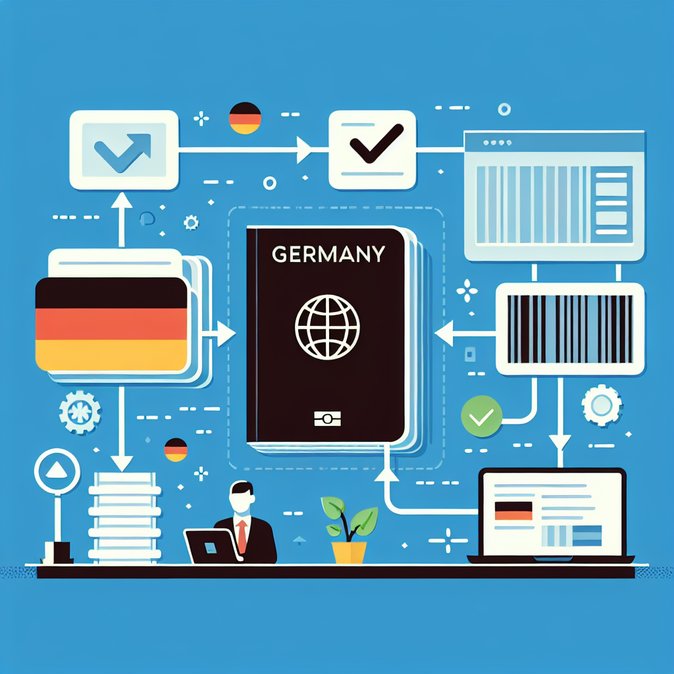
The European Union has formally approved legislation to replace the traditional Schengen visa sticker with a secure, 2D-barcode “e-visa”, with rollout scheduled to begin in late 2026. An article published on 8 April 2026 details how the change will modernise processing for the more than 11 million visas issued annually.
![EU Confirms Digital-Only Schengen Visa—Germany to Retool Consular Systems]()
Travellers and businesses seeking practical support ahead of the transition can turn to VisaHQ, whose Germany page (https://www.visahq.com/germany/) consolidates up-to-date requirements and offers digital tools for completing Schengen applications; the platform can also integrate the forthcoming barcode files into employer mobility workflows, ensuring both individuals and HR teams stay compliant.
Germany—Europe’s largest visa-issuing state after France—will need to upgrade its consular software, training 3,000 staff in biometric data capture and digital forensics. The Federal Foreign Office says pilot issuance will start at the consulates in New Delhi and Istanbul before expanding worldwide. For travellers, the shift means applications and payment will move entirely online; passports will no longer leave the applicant’s possession, and border officers will scan a QR-style code linked to EU databases. Airlines will gain early-check capability via a new validation API, reducing document-fraud liability. Mobility managers should audit their service providers: e-visa files will be delivered in JSON format, so HR platforms must store them securely and delete them when no longer needed under GDPR. Companies that sponsor short-term work visas (e.g., freelancers on assignments) should prepare employee guidance on printing a backup copy of the barcode in case phone batteries die. Although the EU aims for a seamless user experience, data-protection watchdogs are scrutinising centralised storage of facial images. German privacy group Chaos Computer Club warns that breaches could “create a single point of failure for identity theft”. Expect further implementing regulations before the first QR codes are issued.

Travellers and businesses seeking practical support ahead of the transition can turn to VisaHQ, whose Germany page (https://www.visahq.com/germany/) consolidates up-to-date requirements and offers digital tools for completing Schengen applications; the platform can also integrate the forthcoming barcode files into employer mobility workflows, ensuring both individuals and HR teams stay compliant.
Germany—Europe’s largest visa-issuing state after France—will need to upgrade its consular software, training 3,000 staff in biometric data capture and digital forensics. The Federal Foreign Office says pilot issuance will start at the consulates in New Delhi and Istanbul before expanding worldwide. For travellers, the shift means applications and payment will move entirely online; passports will no longer leave the applicant’s possession, and border officers will scan a QR-style code linked to EU databases. Airlines will gain early-check capability via a new validation API, reducing document-fraud liability. Mobility managers should audit their service providers: e-visa files will be delivered in JSON format, so HR platforms must store them securely and delete them when no longer needed under GDPR. Companies that sponsor short-term work visas (e.g., freelancers on assignments) should prepare employee guidance on printing a backup copy of the barcode in case phone batteries die. Although the EU aims for a seamless user experience, data-protection watchdogs are scrutinising centralised storage of facial images. German privacy group Chaos Computer Club warns that breaches could “create a single point of failure for identity theft”. Expect further implementing regulations before the first QR codes are issued.