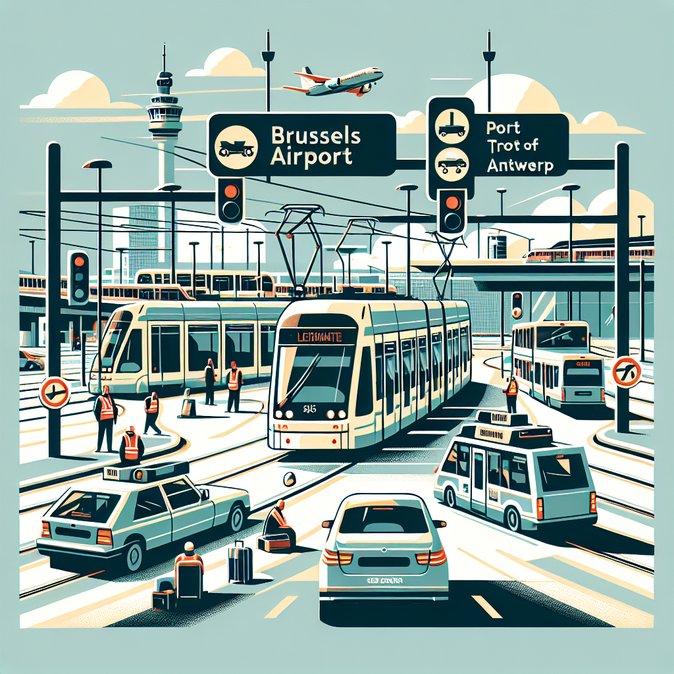
Commuters, international students and corporate travellers relying on Belgium’s extensive public-transport web face a patchy service on Thursday as De Lijn begins a fresh round of “provincial days of action”. The walkouts, called by a joint union front, target different Flemish provinces on a rolling basis between 7 and 10 April; Thursday is the turn of Antwerp and Limburg, home to Brussels Airport’s feeder routes, key chemical clusters and two NATO supply depots. An alert posted by the municipality of Retie on 8 April notes that De Lijn will operate a slimmed-down timetable and that last-minute cancellations will not appear in printed schedules. Instead, real-time information is available only via the operator’s route-planner app and website.
![Flemish bus operator De Lijn warns of service disruptions on 9 April]()
Meanwhile, if visa formalities or residency paperwork form part of your trip, VisaHQ’s Belgium desk can take that administrative weight off your shoulders. Their platform (https://www.visahq.com/belgium/) streamlines everything from tourist visas to work permits, offering real-time status updates so you can focus on juggling train schedules instead of embassy queues.
Travellers connecting to long-haul flights at Brussels Airport or Eurostar services at Brussels-Midi are therefore urged to check journeys shortly before departure and to budget at least an extra hour for contingency. Strikes at De Lijn are not new—staff shortages, an ageing fleet and a government-imposed savings target of €60 million for 2026 have fuelled labour unrest for months. What worries mobility managers is the unpredictable “lightning” nature of the protests: routes may run normally until drivers walk off mid-shift, leaving stranded passengers scrambling for expensive taxis. Ride-hailing platforms in Leuven and Hasselt reported surge pricing of up to 80 percent during Wednesday’s test strikes. For employers, the timing is awkward. The Easter school break has already driven leisure traffic higher and Thursday’s action overlaps with pre-EES training for airport police, compounding pressure on access roads to Brussels Airport. Several relocation companies have re-scheduled residence-permit appointments to avoid missed biometric slots, while manufacturing plants around the Port of Antwerp have activated car-pooling plans to guarantee shift coverage. De Lijn management says an “alternative service” will be in place and that unmanned depots will be monitored remotely to prevent vandalism. Unions insist further action is likely if talks over pay, rostering and investment do not progress before the summer timetable is finalised next month.

Meanwhile, if visa formalities or residency paperwork form part of your trip, VisaHQ’s Belgium desk can take that administrative weight off your shoulders. Their platform (https://www.visahq.com/belgium/) streamlines everything from tourist visas to work permits, offering real-time status updates so you can focus on juggling train schedules instead of embassy queues.
Travellers connecting to long-haul flights at Brussels Airport or Eurostar services at Brussels-Midi are therefore urged to check journeys shortly before departure and to budget at least an extra hour for contingency. Strikes at De Lijn are not new—staff shortages, an ageing fleet and a government-imposed savings target of €60 million for 2026 have fuelled labour unrest for months. What worries mobility managers is the unpredictable “lightning” nature of the protests: routes may run normally until drivers walk off mid-shift, leaving stranded passengers scrambling for expensive taxis. Ride-hailing platforms in Leuven and Hasselt reported surge pricing of up to 80 percent during Wednesday’s test strikes. For employers, the timing is awkward. The Easter school break has already driven leisure traffic higher and Thursday’s action overlaps with pre-EES training for airport police, compounding pressure on access roads to Brussels Airport. Several relocation companies have re-scheduled residence-permit appointments to avoid missed biometric slots, while manufacturing plants around the Port of Antwerp have activated car-pooling plans to guarantee shift coverage. De Lijn management says an “alternative service” will be in place and that unmanned depots will be monitored remotely to prevent vandalism. Unions insist further action is likely if talks over pay, rostering and investment do not progress before the summer timetable is finalised next month.