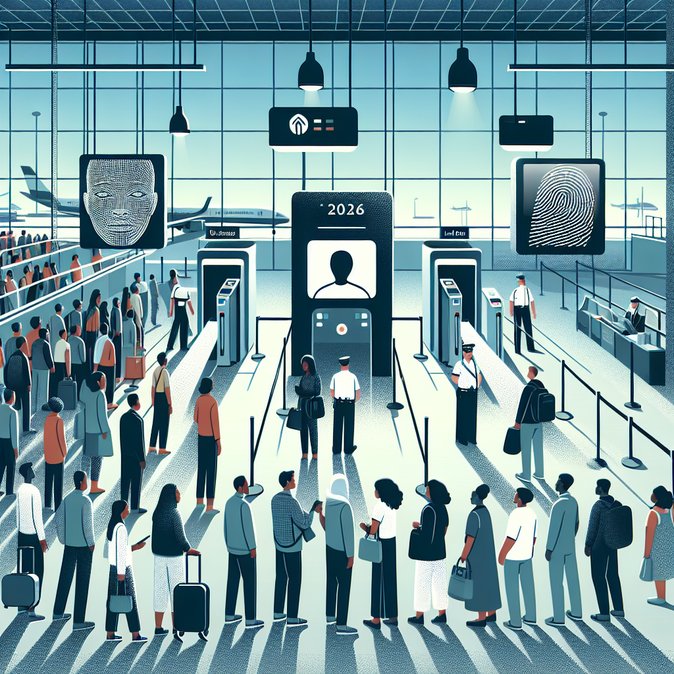
Finland’s border guards are preparing for a decisive technological shift as the European Entry/Exit System (EES) goes live across the Schengen Area on 10 April 2026. An EEAS notice published on 7 April confirms that every external crossing point—from Helsinki-Vantaa Airport to the northern Raja-Jooseppi road post—will replace passport stamps with a biometric scan and a digital record of each traveller’s entries and exits. For Finland, where 18 million third-country travellers transited in 2025, the change is expected to cut inspection times by up to 30 percent while giving authorities an instant over-stay alert. The EES captures four fingerprints and a facial image the first time a non-EU visitor arrives; subsequent crossings require only a quick face match. Data are stored for three years and shared in real time with the Visa Information System and law-enforcement databases, allowing Migri and the Border Guard to see, for example, whether a visitor who applies later for a work permit has respected their 90/180-day limit. Airlines operating at Helsinki and regional airports have been given two days to switch from manual document checks to the new Secure API + Passenger Locator feed that accompanies EES. Carriers and cruise-ship operators worry about bottlenecks during the initial learning curve.
![EU Entry/Exit System Fully Operational on April 10 — What It Means for Finnish Borders]()
Whether you’re a business traveller, tour operator, or HR professional, VisaHQ can streamline the paperwork well before you reach the new biometric kiosks. The company’s online platform (https://www.visahq.com/finland/) breaks down visa and entry-requirement changes in real time, offers document-checking services, and lets users track applications so they arrive at the border with complete, compliant files—minimising the risk of delays once EES goes live.
Finavia told Global Mobility News that 70 self-service kiosks have been installed at Terminal 2, but passenger flow will depend on how quickly fingerprints are enrolled—particularly for travellers unused to biometric capture such as elderly package tourists from Japan. To mitigate queues, Finavia will keep traditional staffed counters open through summer. For Finnish employers, the upside is clearer compliance. HR teams will be able to download an EES “stay report” that proves a business visitor’s legal presence on Finnish soil—eliminating a grey area that has complicated short-term assignment audits. Immigration advisers already recommend that companies update travel policies to tell staff to allow extra time for the first Schengen entry after 10 April and to ensure passports have at least two blank pages for fallback manual stamping if a kiosk is offline. Looking ahead, the Border Guard is testing mobile EES units for the re-opening of select land crossings with Russia once security conditions permit, underscoring that digital borders are becoming Finland’s new normal.
Whether you’re a business traveller, tour operator, or HR professional, VisaHQ can streamline the paperwork well before you reach the new biometric kiosks. The company’s online platform (https://www.visahq.com/finland/) breaks down visa and entry-requirement changes in real time, offers document-checking services, and lets users track applications so they arrive at the border with complete, compliant files—minimising the risk of delays once EES goes live.
Finavia told Global Mobility News that 70 self-service kiosks have been installed at Terminal 2, but passenger flow will depend on how quickly fingerprints are enrolled—particularly for travellers unused to biometric capture such as elderly package tourists from Japan. To mitigate queues, Finavia will keep traditional staffed counters open through summer. For Finnish employers, the upside is clearer compliance. HR teams will be able to download an EES “stay report” that proves a business visitor’s legal presence on Finnish soil—eliminating a grey area that has complicated short-term assignment audits. Immigration advisers already recommend that companies update travel policies to tell staff to allow extra time for the first Schengen entry after 10 April and to ensure passports have at least two blank pages for fallback manual stamping if a kiosk is offline. Looking ahead, the Border Guard is testing mobile EES units for the re-opening of select land crossings with Russia once security conditions permit, underscoring that digital borders are becoming Finland’s new normal.