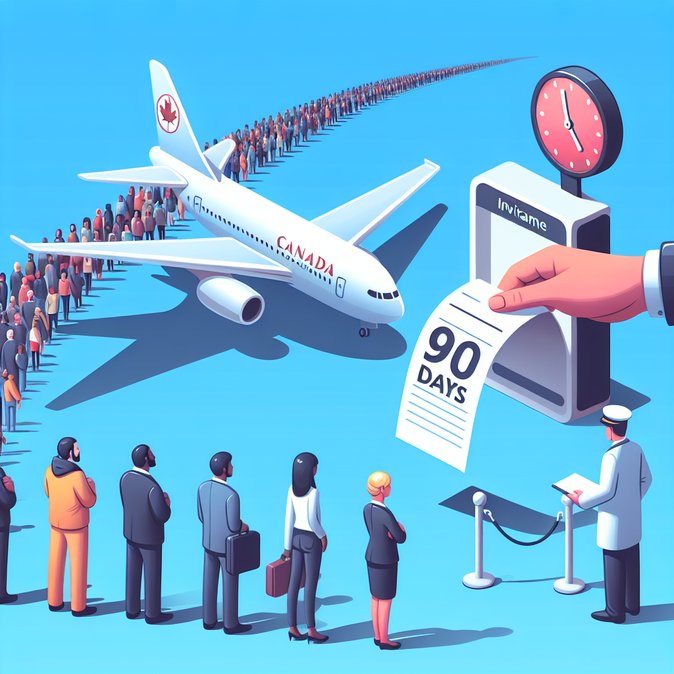
Facing a record 96,000 passenger-rights complaints before the Canadian Transportation Agency (CTA), Air Canada has launched a pilot that diverts 500 cases to an independent arbitrator funded by the airline. Announced 8 April, the scheme is run by U.K.-based CDRL Group and pledges a decision within 90 days of receiving complete information. Under the trial, selected claimants—those seeking refunds or compensation for delays and cancellations—can opt into the parallel process without losing their place in the CTA queue. Decisions are not yet binding, but Air Canada says a successful trial could pave the way for a permanent, faster alternative and reduce the per-complaint fees airlines pay to the regulator. Consumer advocates are sceptical.
![Air Canada Tests Fast-Track Arbitration to Clear Massive Passenger-Rights Backlog]()
Meanwhile, travellers hoping to avoid other paperwork-related hassles can turn to VisaHQ’s Canada portal (https://www.visahq.com/canada/) for quick, online processing of visas, eTAs, and work permits. By outsourcing travel-document administration to VisaHQ, corporate mobility teams free up bandwidth to monitor flight disruptions, track compensation claims, and keep employees moving smoothly.
Air Passenger Rights founder Gábor Lukács likened the move to “letting your ex’s best friend mediate your divorce,” noting CDRL’s low Trustpilot rating. Critics warn the scheme could add confusion by creating multiple dispute channels rather than streamlining the existing one. For business travellers and corporate travel departments, the backlog has real-world costs: delayed reimbursements tie up expense reports and undermine duty-of-care programs. If Air Canada’s experiment trims wait times from years to months, it could become a template for other carriers—and pressure Ottawa to complete long-promised reforms to the Air Passenger Protection Regulations. Global-mobility managers should brief employees that the arbitration outcome is currently non-binding and that participants can revert to the CTA if dissatisfied. They should also monitor whether other airlines introduce similar programs, which could impact compensation timelines across multi-carrier itineraries.

Meanwhile, travellers hoping to avoid other paperwork-related hassles can turn to VisaHQ’s Canada portal (https://www.visahq.com/canada/) for quick, online processing of visas, eTAs, and work permits. By outsourcing travel-document administration to VisaHQ, corporate mobility teams free up bandwidth to monitor flight disruptions, track compensation claims, and keep employees moving smoothly.
Air Passenger Rights founder Gábor Lukács likened the move to “letting your ex’s best friend mediate your divorce,” noting CDRL’s low Trustpilot rating. Critics warn the scheme could add confusion by creating multiple dispute channels rather than streamlining the existing one. For business travellers and corporate travel departments, the backlog has real-world costs: delayed reimbursements tie up expense reports and undermine duty-of-care programs. If Air Canada’s experiment trims wait times from years to months, it could become a template for other carriers—and pressure Ottawa to complete long-promised reforms to the Air Passenger Protection Regulations. Global-mobility managers should brief employees that the arbitration outcome is currently non-binding and that participants can revert to the CTA if dissatisfied. They should also monitor whether other airlines introduce similar programs, which could impact compensation timelines across multi-carrier itineraries.