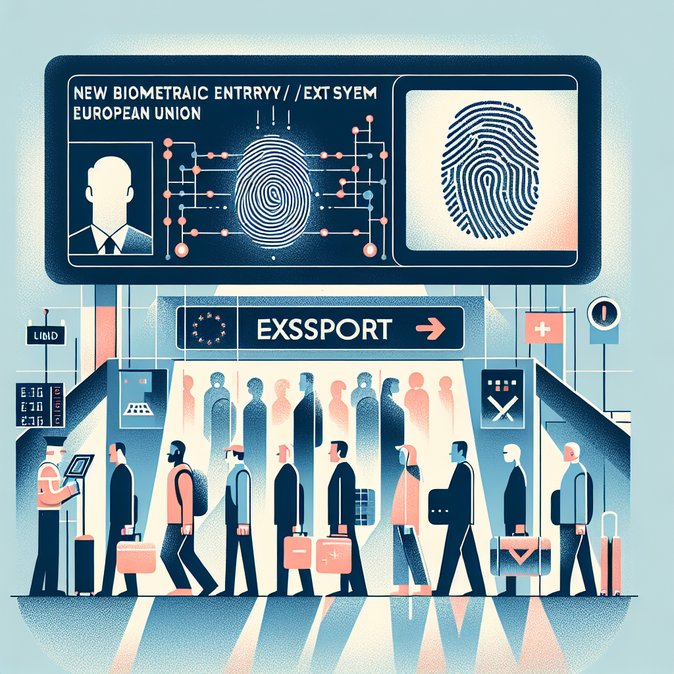
With just two days to go, the European Union’s long-awaited Entry/Exit System (EES) will become fully operational on 10 April 2026, replacing passport stamping with biometric registration at all external Schengen borders—including every Austrian international airport and the Brenner rail frontier. A Euro Weekly News briefing published on 7 April sets out how the digital border controls will work and what travellers should expect during the first weeks of live operation. Under the new rules, non-EU citizens entering the Schengen area for short stays will have their fingerprints, facial image and travel-document data captured and stored for three years in a central database managed by eu-LISA. Austrian border guards have spent the past six months piloting self-service kiosks at Vienna, Salzburg and Innsbruck airports, logging more than 400 000 test crossings.
![Countdown to 10 April: What Austria-Bound Travellers Need to Know About the EU Entry/Exit System]()
For travellers and mobility managers looking for extra support, VisaHQ’s Austria platform (https://www.visahq.com/austria/) provides clear, up-to-date guidance on EES procedures, ETIAS applications and other Schengen compliance matters, helping both individuals and corporations navigate the new requirements with confidence.
From Wednesday, the system becomes mandatory: first-time entrants can expect the enrolment to add three to five minutes per person, while returning travellers will typically clear border control faster than under the old manual-stamp regime. For Austrian employers who routinely fly in third-country consultants or technicians, the key message is to allocate more connection time at Schwechat and to encourage travellers to use the EU’s new “Travel to Europe” mobile app, which allows pre-registration of biometric photos up to 72 hours before arrival. The Interior Ministry has warned that queues are likely during peak morning arrival banks until passengers and officers adjust to the workflow. The EES will automatically calculate a traveller’s permissible 90/180-day allowance, making overstays immediately visible to all member states. That has compliance implications for managers tracking rotational assignments: overstaying by even one day will trigger an alert and could jeopardise future visa applications or result in Schengen-wide re-entry bans. Companies that rely on frequent short-term postings should cross-check existing spreadsheets against the official stay counter once employees exit the bloc. Looking ahead, Austria says the same infrastructure will underpin the launch of ETIAS—the €7 electronic travel authorisation for visa-exempt nationals—later in 2026. Travel-risk teams should therefore update onboarding materials now and budget for small but permanent increases in front-end administration at European borders.

For travellers and mobility managers looking for extra support, VisaHQ’s Austria platform (https://www.visahq.com/austria/) provides clear, up-to-date guidance on EES procedures, ETIAS applications and other Schengen compliance matters, helping both individuals and corporations navigate the new requirements with confidence.
From Wednesday, the system becomes mandatory: first-time entrants can expect the enrolment to add three to five minutes per person, while returning travellers will typically clear border control faster than under the old manual-stamp regime. For Austrian employers who routinely fly in third-country consultants or technicians, the key message is to allocate more connection time at Schwechat and to encourage travellers to use the EU’s new “Travel to Europe” mobile app, which allows pre-registration of biometric photos up to 72 hours before arrival. The Interior Ministry has warned that queues are likely during peak morning arrival banks until passengers and officers adjust to the workflow. The EES will automatically calculate a traveller’s permissible 90/180-day allowance, making overstays immediately visible to all member states. That has compliance implications for managers tracking rotational assignments: overstaying by even one day will trigger an alert and could jeopardise future visa applications or result in Schengen-wide re-entry bans. Companies that rely on frequent short-term postings should cross-check existing spreadsheets against the official stay counter once employees exit the bloc. Looking ahead, Austria says the same infrastructure will underpin the launch of ETIAS—the €7 electronic travel authorisation for visa-exempt nationals—later in 2026. Travel-risk teams should therefore update onboarding materials now and budget for small but permanent increases in front-end administration at European borders.