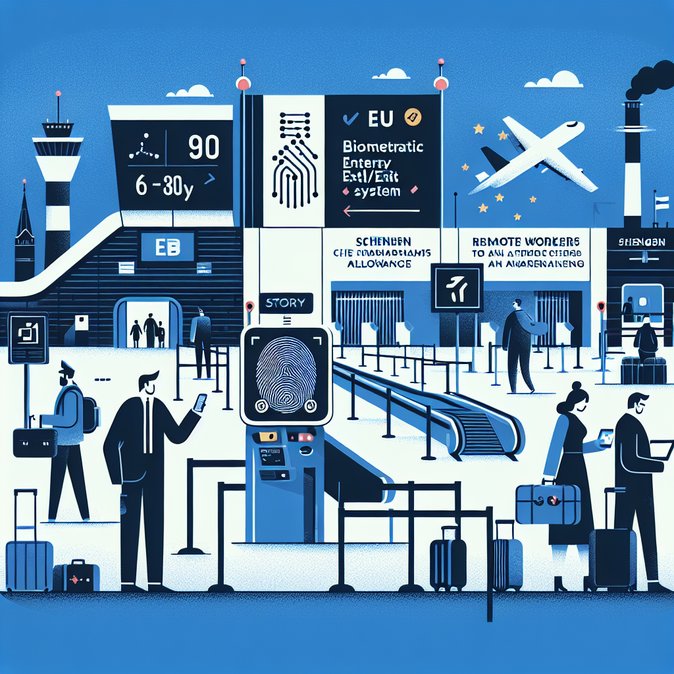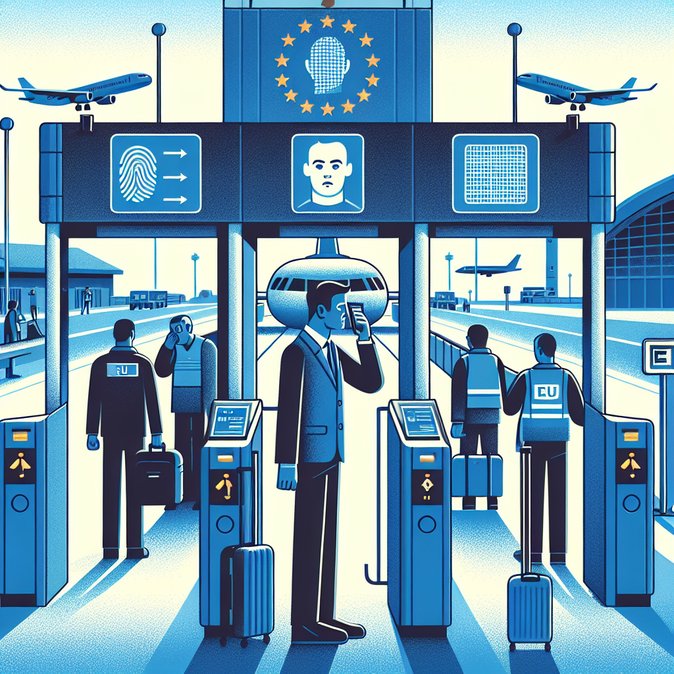
Europe’s long-awaited Entry/Exit System (EES) will reach full operational status on 10 April 2026, ending the six-month transition that began last October. From that date, every non-EU national entering or leaving the Schengen Area—including those arriving through Finland’s Helsinki-Vantaa Airport or the northern land crossings that may reopen later this year—will be biometrically registered and have their travel history stored for three years.
![Schengen Entry/Exit System Fully Operational on 10 April 2026—What It Means for Travel via Finland]()
For travelers and corporate mobility managers looking for a one-stop resource to check visa or permit requirements ahead of the new EES formalities, VisaHQ’s Finland portal (https://www.visahq.com/finland/) offers real-time eligibility tools, document checklists, and concierge assistance that can streamline advance preparations and reduce airport surprises.
EES replaces the manual passport-stamping routine with electronic collection of facial images and four fingerprints upon first entry; subsequent crossings require only a biometric verification. The European Commission projects that the database will record over 200 million movements annually once mature. Airlines, ferry operators, and rail carriers must, from 10 April, use the EU Carrier Interface to verify that short-stay visa holders have unused entries and that visa-exempt travellers have not exhausted their 90/180-day allowance before boarding. For Finland, a key external-border state, the change is operationally significant. Helsinki-Vantaa handled 2.3 million non-EU passengers in 2025; Finavia has installed 60 self-service kiosks and 30 e-gates capable of capturing fingerprints to absorb the expected surge in processing times. The Finnish Border Guard says first-time EES registration can take up to four minutes per traveller—quadruple a routine passport scan—so it is hiring an extra 120 seasonal officers for summer 2026 and advising tour operators to lengthen minimum connection windows by at least 45 minutes. Corporate-mobility teams should update employee travel guidelines immediately. Recommended actions include: building longer layovers on itineraries that route through Helsinki, encouraging executives to avoid tight same-day rail or domestic-flight connections after long-haul arrivals, and reminding staff that overstays will now be flagged automatically. Importantly, holders of Finnish residence permits or national D visas are exempt from EES registration but must carry proof of status to avoid being funnelled into the biometric lanes. Looking ahead, EES is only the first plank of Europe’s digital-border overhaul. The separate ETIAS travel-authorisation scheme—often compared with the US ESTA—is scheduled for the last quarter of 2026. Companies accustomed to visa-free mobility for short business meetings in Finland should therefore map out compliance workflows now, as the combination of EES and ETIAS will create a two-step pre-travel and on-arrival regime by year-end.

For travelers and corporate mobility managers looking for a one-stop resource to check visa or permit requirements ahead of the new EES formalities, VisaHQ’s Finland portal (https://www.visahq.com/finland/) offers real-time eligibility tools, document checklists, and concierge assistance that can streamline advance preparations and reduce airport surprises.
EES replaces the manual passport-stamping routine with electronic collection of facial images and four fingerprints upon first entry; subsequent crossings require only a biometric verification. The European Commission projects that the database will record over 200 million movements annually once mature. Airlines, ferry operators, and rail carriers must, from 10 April, use the EU Carrier Interface to verify that short-stay visa holders have unused entries and that visa-exempt travellers have not exhausted their 90/180-day allowance before boarding. For Finland, a key external-border state, the change is operationally significant. Helsinki-Vantaa handled 2.3 million non-EU passengers in 2025; Finavia has installed 60 self-service kiosks and 30 e-gates capable of capturing fingerprints to absorb the expected surge in processing times. The Finnish Border Guard says first-time EES registration can take up to four minutes per traveller—quadruple a routine passport scan—so it is hiring an extra 120 seasonal officers for summer 2026 and advising tour operators to lengthen minimum connection windows by at least 45 minutes. Corporate-mobility teams should update employee travel guidelines immediately. Recommended actions include: building longer layovers on itineraries that route through Helsinki, encouraging executives to avoid tight same-day rail or domestic-flight connections after long-haul arrivals, and reminding staff that overstays will now be flagged automatically. Importantly, holders of Finnish residence permits or national D visas are exempt from EES registration but must carry proof of status to avoid being funnelled into the biometric lanes. Looking ahead, EES is only the first plank of Europe’s digital-border overhaul. The separate ETIAS travel-authorisation scheme—often compared with the US ESTA—is scheduled for the last quarter of 2026. Companies accustomed to visa-free mobility for short business meetings in Finland should therefore map out compliance workflows now, as the combination of EES and ETIAS will create a two-step pre-travel and on-arrival regime by year-end.