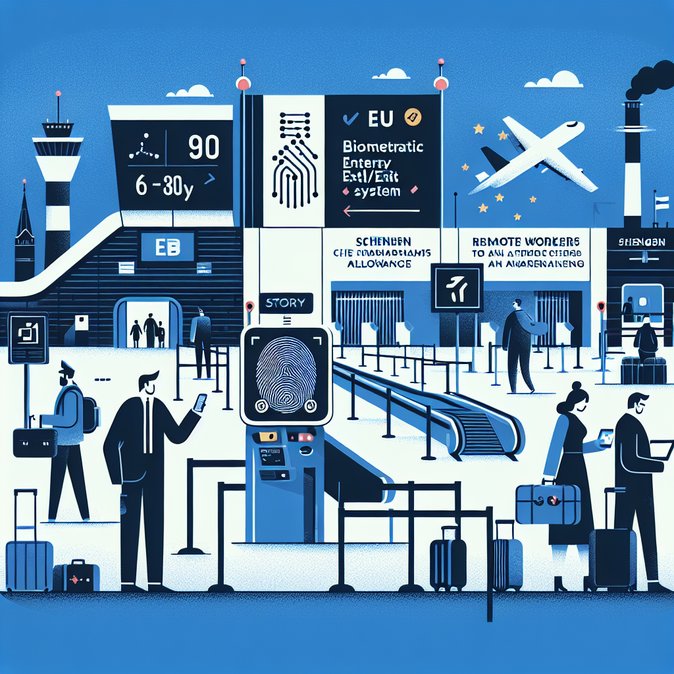
Digital-nomad platform Freaking Nomads has published a practitioner’s guide to Europe’s fully mandatory Entry/Exit System, emphasising the implications for location-independent workers who use Finland as a Schengen gateway. The piece, updated on 6 April 2026, warns that EES queue times at some early-adopter airports rose by up to 70 %, and urges travellers to budget an extra 30–60 minutes when first registering their biometrics. The article highlights three practical pain points: (1) air itineraries involving tight onward connections from Helsinki or Tampere; (2) land crossings that may reopen on Finland’s eastern border, where infrastructure is less automated; and (3) the end of “stamp ambiguity” for digital nomads who previously pushed the 90/180-day rule to the limit.
![Biometric Borders Are Here: Final Tips for Digital Nomads and Business Travellers to Finland]()
For anyone unsure about the exact paperwork they need—or how many Schengen days they have left—VisaHQ offers an easy, self-service way to check requirements and start applications online. Its Finland information hub (https://www.visahq.com/finland/) covers tourist visas, residence permits, and even the upcoming ETIAS waiver, providing step-by-step guidance that can save digital nomads time at the border and help companies keep teams compliant.
Because EES now tracks Schengen-day balances in real time, overstays will trigger automatic alerts, fines, and potential re-entry bans. Freaking Nomads notes that holders of Finland’s residence-permit cards and long-stay study or work visas remain outside EES scope, but these travellers will still pass through the same e-gate corridors. Companies sponsoring remote-work retreats or off-sites in Lapland are advised to double-check guests’ status: tourists on a digital-nomad circuit will be subject to the 90-day cap, whereas Finnish residence-permit holders are not. The guide also points to data published by the European Commission showing that the system has already refused entry to more than 24 000 travellers and uncovered 4 000 overstays during its partial rollout—evidence that enforcement is no longer hypothetical. For nomads juggling multiple Schengen hops, the safest strategy is to log every exit and ensure at least 91 consecutive days outside the zone before attempting re-entry. In the Finnish context, the Border Guard plans a summer information campaign at Helsinki’s main rail station and in coworking hubs popular with foreigners. HR departments managing extended “work-from-anywhere” policies should circulate the Freaking Nomads checklist and remind staff that Finland’s tax residency triggers after 183 days, regardless of EES allowances.

For anyone unsure about the exact paperwork they need—or how many Schengen days they have left—VisaHQ offers an easy, self-service way to check requirements and start applications online. Its Finland information hub (https://www.visahq.com/finland/) covers tourist visas, residence permits, and even the upcoming ETIAS waiver, providing step-by-step guidance that can save digital nomads time at the border and help companies keep teams compliant.
Because EES now tracks Schengen-day balances in real time, overstays will trigger automatic alerts, fines, and potential re-entry bans. Freaking Nomads notes that holders of Finland’s residence-permit cards and long-stay study or work visas remain outside EES scope, but these travellers will still pass through the same e-gate corridors. Companies sponsoring remote-work retreats or off-sites in Lapland are advised to double-check guests’ status: tourists on a digital-nomad circuit will be subject to the 90-day cap, whereas Finnish residence-permit holders are not. The guide also points to data published by the European Commission showing that the system has already refused entry to more than 24 000 travellers and uncovered 4 000 overstays during its partial rollout—evidence that enforcement is no longer hypothetical. For nomads juggling multiple Schengen hops, the safest strategy is to log every exit and ensure at least 91 consecutive days outside the zone before attempting re-entry. In the Finnish context, the Border Guard plans a summer information campaign at Helsinki’s main rail station and in coworking hubs popular with foreigners. HR departments managing extended “work-from-anywhere” policies should circulate the Freaking Nomads checklist and remind staff that Finland’s tax residency triggers after 183 days, regardless of EES allowances.